
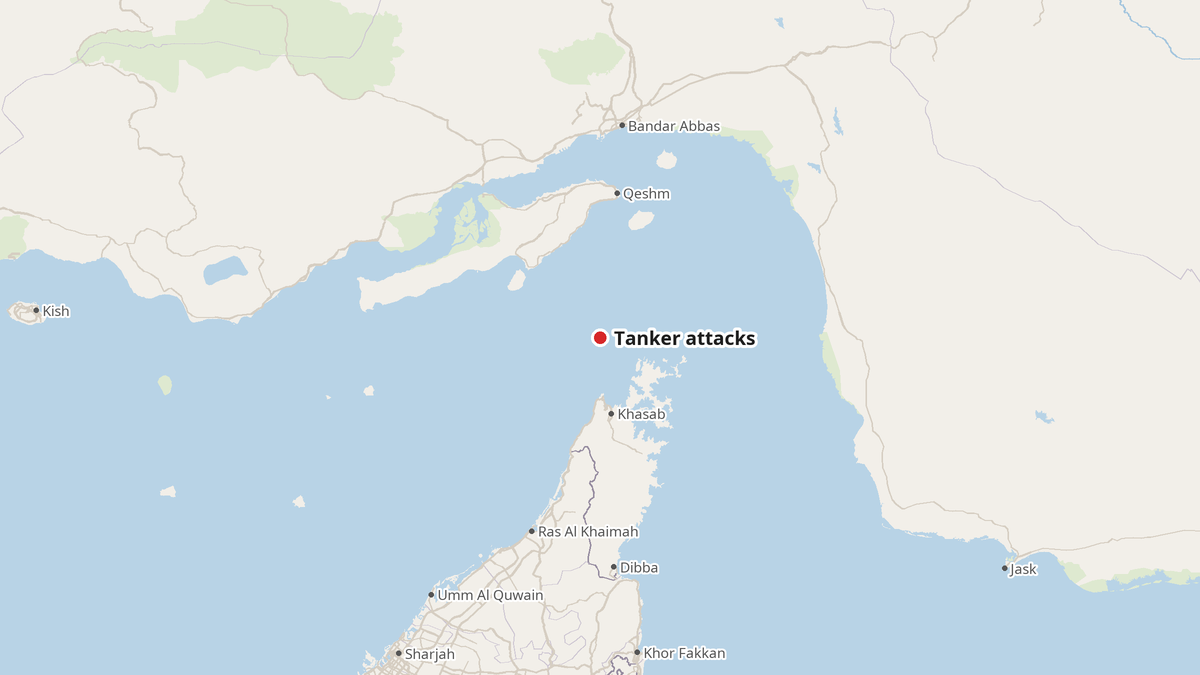
Thirty-seven ships were attacked in October, the highest monthly total since the war began, according to data from the Washington Institute for Near East Policy. Then came November, and the Strait of Hormuz kept burning. On Tuesday, ADNOC Logistics and Services said one of its vessels "sustained damage" after an attack in the UAE's territorial waters, a day after the American president told reporters the war was "effectively over."
The International Maritime Organization has confirmed 130 incidents in the region since the conflict began in late February, most of them attacks. At least 25 seafarers are dead. These are the people who actually move the oil: crews on tankers flagged and managed by firms none of them own, steering through water that three armies have decided to treat as a shooting range.
The State's Monopoly, Multiplied
The Islamic Revolutionary Guard Corps Navy told Iranian state broadcaster IRIB that three tankers were hit on Sunday for using "unauthorised routes" through the strait. One of them, a Navig8 tanker, was filmed burning off the coast of Oman, in videos Reuters verified. Navig8 is majority owned by ADNOC Logistics & Services, the maritime arm of the UAE's state energy group. Neither company answered Reuters' emailed questions.
So a state-owned shipping line gets torched by another state's navy for sailing without that navy's permission, in waters that belong to neither. Meanwhile US forces keep enforcing a naval blockade of Iranian ports. In the latest incident, a US military aircraft fired on and disabled a St Kitts-flagged cargo vessel that tried to leave regional waters after visiting an Iranian port on Saturday, according to US Central Command. Tehran licenses the sea lanes. Washington blockades them. Nobody asked the sailors.
The IRGC also claimed that two tankers caught fire after hitting naval mines on the "unauthorized route," and last week said at least 12 separate vessels were hit by mines trying to transit. British monitor UKMTO described ships struck by "unidentified projectiles" and, in one case, didn't say who struck the vessel at all. Even the monitors are out of attribution.
Peace Announced, War Continued
President Donald Trump said Monday that "Iran, militarily, is effectively over. We're just keeping it the status quo," after talks with Qatar's prime minister Mohamed ibn Abdulrahman Al Thani. Further action "won't be necessary," he said, though "if we do have to go back in, we are locked and loaded, and ready to go." Secretary of State Marco Rubio said there was "no need" for major combat operations because of the administration's efforts to crush Iran's economy.
The timing is the story. This more conciliatory tone arrived after the Republicans lost the November 3 midterms, eight days ago, and Trump and senior members of his administration have admitted the loss was caused in part by the war. Crude prices hit two-month lows on Tuesday as US officials talked down more military action. The war's end is announced when the ballot box and the oil market demand it, not when the shooting stops. And the shooting hasn't stopped: US forces have struck Iran's Qeshm Island in multiple rounds, which US officials call "defensive," and Iranian state media said an Omani island, Didamar, was targeted for "helping the flow of oil smuggling by the enemy." An Omani coast guard official reported a blast.
There is little evidence Washington and Tehran are close to the compromises needed to restart negotiations, despite Qatari and Pakistani mediators. A framework agreement the US struck in June on Lebanon has made little progress after multiple rounds of talks. Hezbollah won't hand over its weapons. Israel won't end its occupation of southern Lebanon until the group is neutered as a military and political force. Tehran insists any peace deal must include a permanent ceasefire there. Everyone's conditions are everyone else's dealbreakers.
Who Pays
Oil is washing up on Oman's shores. A video shared Monday and verified by Reuters showed crude reaching the coast, and satellite imagery showed spills off both Oman and the UAE. The Omani government didn't respond to Reuters on Tuesday. No ministry, navy or shipping line has claimed the cleanup, and the fishing communities downwind weren't consulted on any routes, authorised or otherwise.
The pattern reaches into Saudi Arabia too. Iran and its regional allies have struck targets including Saudi Aramco's offices. Video verified by Reuters showed damage to Aramco's building in Riyadh after Houthi-claimed missile strikes on November 8. The Saudi Energy Ministry said debris caused limited damage and no injuries or fatalities. Related conflicts in Lebanon and Yemen remain unresolved.
In the ninth month of the conflict, with no first year completed, the arithmetic is plain. Governments declare victory, defeat or de-escalation according to their own calendars. The seafarers, the shoreline and the people living on it absorb the consequences of every announcement, including the ones that turn out to be wrong.
- strait of hormuz
- tanker attacks
- iran war
- adnoc logistics
- navig8
- saudi aramco
- energy infrastructure
- naval blockade