
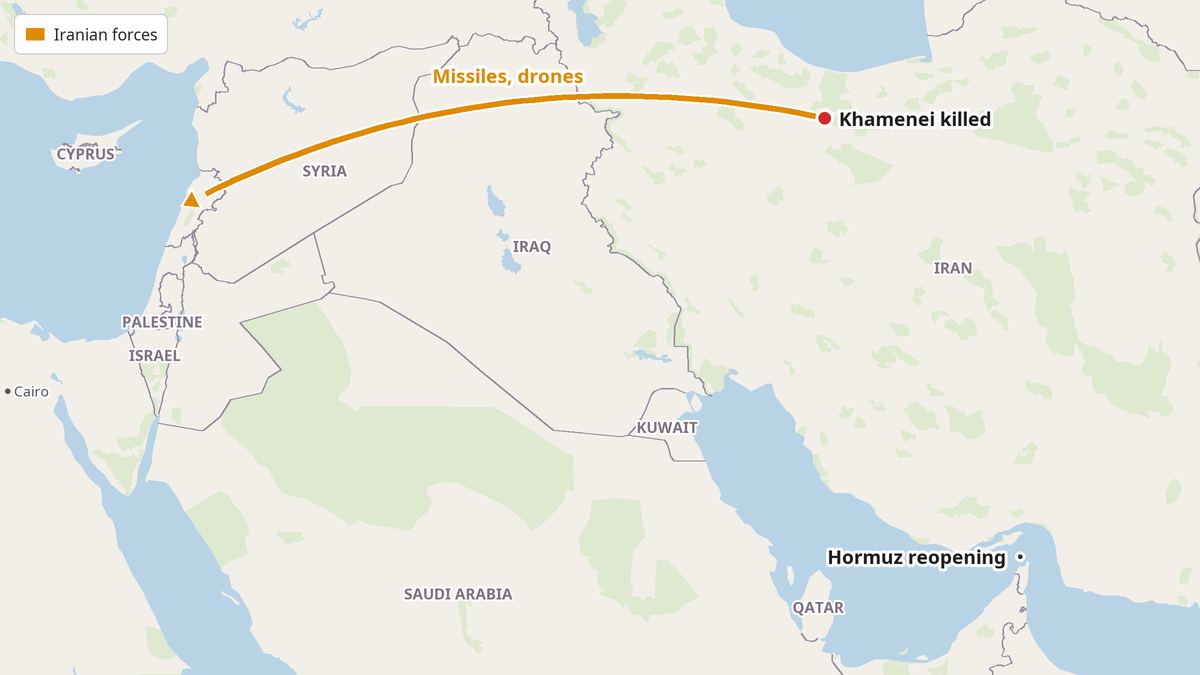
Negotiations to end the US-Iran conflict have been largely stalled for months, and the arithmetic of the stalemate is simple: Iran keeps targeting vessels it says violate its conditions for transit through the Strait of Hormuz, while the United States piles on sanctions, blockades Iranian ports, and plans to cut off Iran's land-based supply routes too. Two governments, two chokeholds. Everyone who isn't a minister or a general gets to live inside the squeeze.
The war itself, per Middle East Eye, consists of US-Israeli attacks that began in February, about nine months ago. Al Jazeera calls it an eight-month conflict. Nobody in the base reporting disputes that it started with state bombers rather than state-sanctioned debate.
The Diplomatic Merry-Go-Round
Back in September, about two months ago, Iran proposed a seven-day plan to reopen the Strait of Hormuz and restart talks. Tehran has since said that timeline could shrink to two days. The price list is long: lifting sanctions Washington imposed after the collapse of a June memorandum of understanding, reducing the US military presence in the region, reinstating oil waivers, and releasing frozen Iranian funds. That June memorandum collapsed about five months ago. Paper signed by states, it turns out, lasts roughly as long as the next sanctions package.
The Qatari Ministry of Foreign Affairs said Tuesday that Doha is "working tirelessly" in its mediation efforts and has received positive reactions from both sides. Trump, the day before, after hosting Qatar's prime minister at the White House, spoke of "momentum towards the end of this conflict," adding that "Iran is talking to us, and they're talking very politely." Politely. Between the sanctions and the blockade.
Secretary of State Rubio, for his part, said the US remains "open to diplomacy" but called Iran's current demands "totally unrealistic." His follow-up: "We expect that could change – and if it does, we're prepared for diplomacy." Read that twice. Washington will talk once Tehran stops asking for what it's asking for.
Respect, Delivered by Missile
Tehran isn't any more flexible. Iranian officials appeared more sceptical of the latest mediation reports, insisting the US must accept their demands. Foreign Minister Abbas Araghchi said Tuesday the war will "not end either through military means or by increasing sanctions," but only through "using the language of respect," in comments carried by IRNA. Al Jazeera's Mohamed Vall, reporting from Tehran, said Iran's language has become "more confident than ever before."
A state that speaks of respect while its forces target merchant vessels in a strait it doesn't own is running the same playbook as the one imposing blockades from across the ocean. Each side's demand list is a bargaining chip. Each side's leverage is someone else's cargo, someone else's port, someone else's livelihood.
Who Absorbs the Blows
The base reporting is blunt about where the retaliation landed. The US's Gulf allies bore the brunt of Iran's response, with the UAE, Qatar, Bahrain, and Kuwait facing thousands of missile and drone strikes. Thousands. Not on the negotiating table in Doha or the briefing room in Washington, but on the territory where the people who weren't consulted actually live.
Notice also who is mediating. Qatar, one of the states under fire, is the one working the phones. A government absorbing missiles is simultaneously the broker between the governments firing them. Call it what it is: a closed club of states trading threats, concessions, and hosting duties while the bill arrives at ordinary addresses.
The base reporting contains no voices from the people living under the blockade, the sanctions, or the drones. No dockworkers, no sailors, no families in Gulf cities. That absence is the story too. The talks are conducted entirely among officials, about officials' demands, with the casualty counts and shipping disruptions left as background noise.
Months of stalemate. A seven-day plan that became a two-day plan on paper. A memorandum that collapsed. And a ground-level reality, thousands of strikes on four Gulf states, that none of the principals have been asked to answer for.
- us-iran conflict
- strait of hormuz
- iran sanctions
- qatar mediation
- diplomacy
- donald trump
- abbas araghchi
- persian gulf