
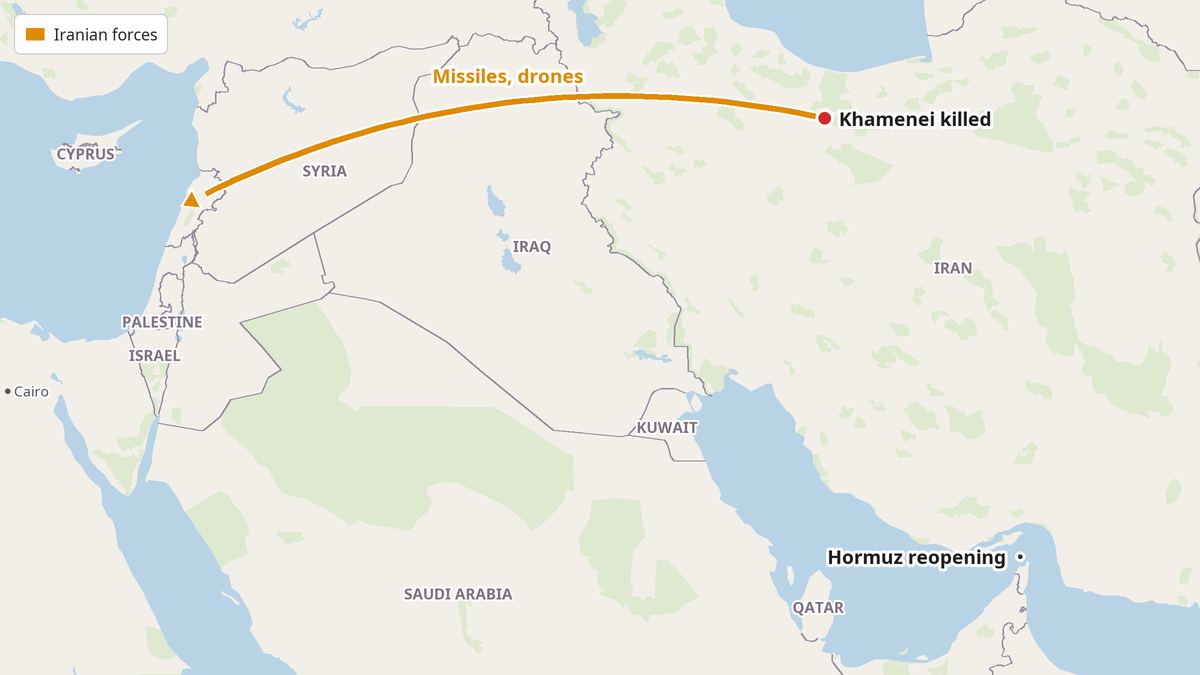
Thousands of missile and drone strikes have landed on the UAE, Qatar, Bahrain and Kuwait, the US's Gulf allies, who bore the brunt of Iran's retaliation in a war now about nine months old. Behind the diplomatic back-and-forth over who blinks first sit the people who live in those cities and ports, and the vessels still being targeted in the Strait of Hormuz.
Negotiations to end the US-Iran conflict have been largely stalled for months. Iran continues to target ships it says violate its conditions for transit through the Strait. Washington, for its part, is ramping up sanctions and continues to blockade Iranian ports, with plans to block Iran's land-based supply routes as well. Pressure is tightening on all sides.
The Diplomatic Deadlock
The US-Israeli attacks on Iran began in February, according to Middle East Eye. Al Jazeera calls it an eight-month conflict. Either way, the talks have gone nowhere for a long time.
In September, about two months ago, Iran proposed a seven-day plan to reopen the Strait of Hormuz and restart negotiations. Tehran has since said that timeline could shrink to two days. That's a notable offer. But it comes with a list of demands: lifting the sanctions Washington imposed after a June memorandum of understanding collapsed about five months ago, reducing the US military presence in the region, reinstating oil waivers, and releasing frozen Iranian funds.
Washington calls those terms a non-starter. Secretary of State Rubio said the US remains "open to diplomacy" but described Iran's current demands as "totally unrealistic." He added, "We expect that could change – and if it does, we're prepared for diplomacy."
Mediation and Mixed Signals
Qatar says it's "working tirelessly" as a mediator. Its Ministry of Foreign Affairs said Tuesday that Doha has received positive reactions from both sides. A day earlier, after hosting Qatar's prime minister at the White House, Trump spoke of "momentum towards the end of this conflict." He said that "Iran is talking to us, and they're talking very politely."
Tehran sounded less convinced. Iranian officials appeared more sceptical of the latest reports of mediation and insisted the US must accept their demands. Foreign Minister Abbas Araghchi said Tuesday that the war will "not end either through military means or by increasing sanctions," but only through "using the language of respect," in comments carried by IRNA.
Al Jazeera's Mohamed Vall, reporting from Tehran, said Iran's language has become "more confident than ever before." Confidence on one side and a demand for concessions on the other rarely produce a quick deal.
Who Pays
None of the statements from Washington, Tehran or Doha describes what the blockade of Iranian ports, the strikes on shipping, or the thousands of incoming missiles and drones mean for ordinary people. The base reporting doesn't offer casualty figures, and it would be wrong to guess at them. What it does establish is scale: four Gulf states absorbing thousands of strikes, a vital shipping lane contested, and a planned expansion of the blockade to land routes. Each escalation widens the circle of people affected, from sailors on targeted vessels to residents of Gulf cities under fire.
Why This Matters: A war that has run roughly nine months, with diplomacy stalled and both sides hardening their positions, carries costs well beyond the negotiating table. The Strait of Hormuz is a shipping route where Iranian attacks on vessels put crews at risk, while US sanctions and a port blockade squeeze Iran's economy, with a land-route blockade planned next. Gulf states that didn't start the fight are absorbing thousands of strikes. The Qatari mediation and Trump's talk of momentum suggest a door remains open, but Iran's insistence on its demands and Rubio's rejection of them leave a wide gap. Without a deal, the burden keeps falling on civilians and commercial crews who have no say in the terms.
- us-iran conflict
- strait of hormuz
- iran sanctions
- qatar mediation
- diplomacy
- donald trump
- abbas araghchi
- persian gulf