
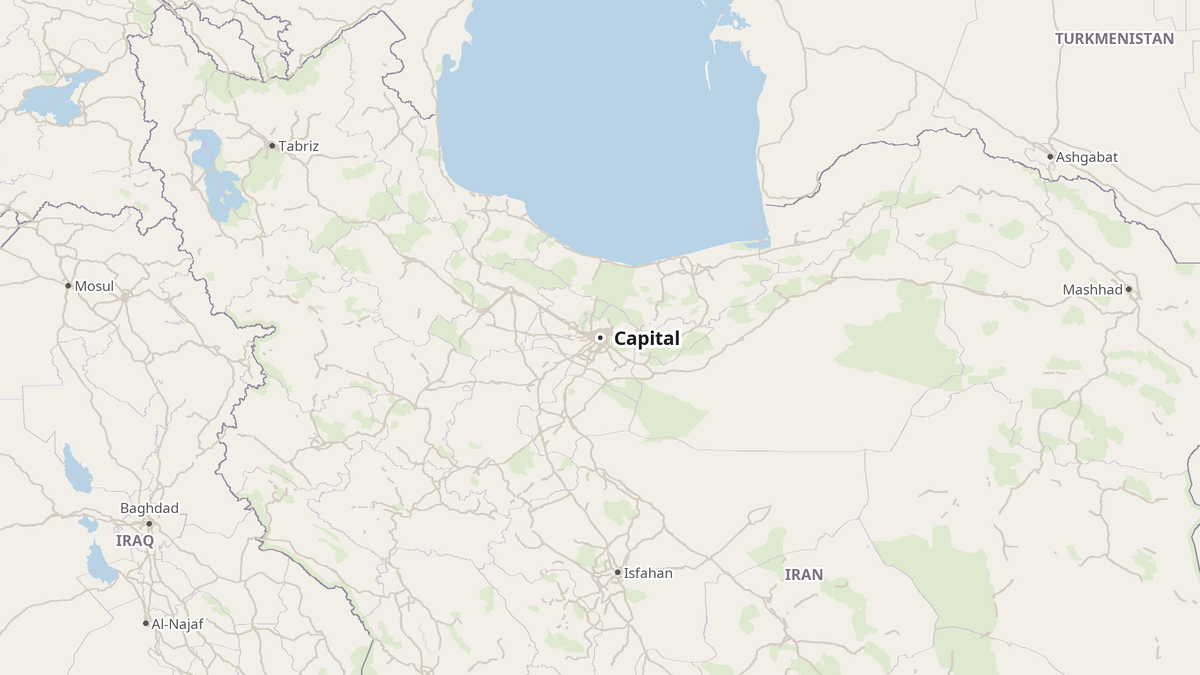
Iran's Foreign Minister Abbas Araghchi said Saturday that Iranian officials have been working with Qatari mediators on a two-day plan to reopen the Strait of Hormuz. It's the latest push for a diplomatic exit from the US-Israel war on Iran, a conflict that has produced a serious global energy crisis. But even as diplomats talk, both sides say they're ready to fight again.
President Donald Trump has repeatedly suggested the United States could attack Iran after the November 3 midterm elections, now two days away. On Saturday he said negotiations were "going fine" but "not very reliable." He said the US military still needed to "take care of" several Iranian sites, singling out a suspected underground nuclear complex known as Pickaxe Mountain, and that the US could achieve its objectives "very quickly" and was not in a hurry. He has previously threatened attacks that would "finish off" Iran, and the US has reportedly warned its Gulf allies to prepare for a short, high-intensity round of conflict once the votes are counted.
The Diplomatic Track
Araghchi said an Iranian delegation, including one of his aides, traveled to Doha to meet Qatari mediators, who had earlier visited Tehran. The plan would reopen the Strait within two days and restart peace talks with Washington. There are conditions. Tehran wants recently imposed US sanctions lifted, the oil waivers granted in June reinstated, a smaller US military presence in the region, recognition of new shipping routes designated by Iran and Oman, and an end to the conflict on all fronts, including Israel's attacks on Lebanon.
Qatari and Pakistani mediators were "continuing consultations regarding our conditions," Araghchi said. Pakistan's army chief, Field Marshal Asim Munir, has visited Tehran several times. Doha and Islamabad also helped broker the June memorandum of understanding, signed about five months ago, which collapsed about three months ago, in August.
Iran's security chief, Mohsen Rezaei, said the US had "indicated its readiness" to accept the conditions. Washington hasn't confirmed that. Secretary of State Marco Rubio acknowledged Qatar-led talks were ongoing but said he wasn't aware of a timeframe. "There are multiple talks. Talks have actually never stopped. If there is a diplomatic solution, we would be open to it," he said. Rubio also said Trump hadn't yet decided on new strikes, while warning the US "can achieve military objectives if we seek to."
Vice President JD Vance sent a letter this week to Rezaei, reportedly to gauge the prospects of restarting negotiations. Rezaei said its tone had "completely changed" compared with earlier correspondence from Trump. Araghchi called it "a positive step" but cautioned: "If Washington's goal in sending this letter is to stir up discord, it would be yet another mistake to add to its previous ones."
Preparing for the Next Round
The rhetoric from Tehran is no softer. Araghchi said Iran's armed forces are "more prepared for war than any time before." Supreme Leader Mojtaba Khamenei said any response to a new threat would be "immediate" and "without geographical limitations," and he ordered commanders to update a target list to include "all types of tangible and intangible assets belonging to the American-Zionist enemy." Rezaei said Iran would use "new weaponry" and that the government was weighing a change to its "nuclear doctrine," which currently includes a ban on nuclear weapons. Trump has said Iran must never acquire one; Tehran insists its program is civilian.
Israel, which joined the US in starting the war in February, is preparing for another round right after the midterms, according to a senior Israeli official cited by Ynet News. Prime Minister Benjamin Netanyahu has called this a "historic, one-time opportunity ... to remove the Iranian threat once and for all." His coalition lost its parliamentary majority in recent elections, and the 77-year-old remains caretaker until a new government forms.
What Analysts See
Andreas Krieg, associate professor of security studies at King's College London, said Netanyahu's threats complicate Iran's calculus, and that the US elections give Tehran an incentive to delay concessions. "We could therefore reach a situation where Iran becomes more willing to compromise precisely when Washington becomes more willing to strike," he said.
Hamidreza Azizi, a senior Iran analyst with the Crisis Group, wrote on X: "For now, diplomacy and military preparations are proceeding simultaneously. The emerging Iranian position seems to be that an agreement remains possible, but another war would be fought under different rules and on a much wider battlefield."
Why This Matters:
The war is in its first year, about nine months old, and its costs already reach well beyond the combatants: the closure of the Strait of Hormuz has produced a serious global energy crisis. Households far from the front lines feel that pressure first. Meanwhile, the timing of possible new strikes is being discussed in relation to a US election, and the analysts quoted here warn that this could push both sides toward escalation just as a deal might be within reach. Mediators from Qatar and Pakistan are doing the slow work that earlier produced a memorandum, but that agreement collapsed within months. With Iranian leaders openly weighing changes to nuclear doctrine, the stakes of diplomatic failure are plain. A negotiated settlement, backed by regional partners, remains the path that spares civilians and markets another shock.
- us iran negotiations
- strait of hormuz
- iran war
- qatar mediation
- donald trump
- abbas araghchi
- military escalation
- nuclear program