
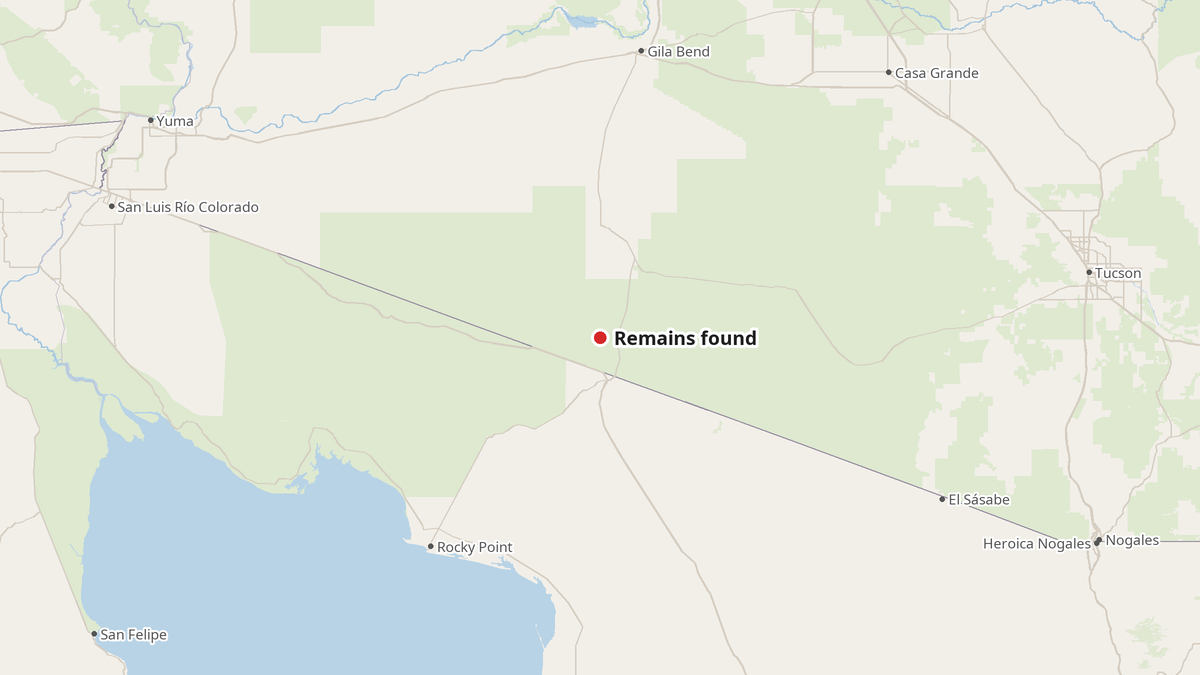
Native American human remains were unearthed on Sept. 8 when contractors bulldozed a path for equipment at Organ Pipe Cactus National Monument in Arizona. The work overturned soil as part of border-wall construction, disturbing a place where ancestors had been laid to rest.
“People used to live here,” Lorraine Eiler, an 89-year-old Hia-Ced O'odham elder, warned at a news conference in August. Fifteen days later, the remains were found. Eiler said her family decided to delay reburying them until construction in the area stopped, fearing more burial sites would be disturbed. “Who knows what more will come up,” she said. “They're going to find remains wherever they dig.”
Warnings ignored, ground disturbed
The National Park Service said the University of Arizona assessed the remains and confirmed they were human and consistent with tribal cremation practices. A park archaeologist reportedly found them near the base of a standing saguaro cactus. The discovery became public in a statement from the park service.
Customs and Border Protection said it was informed six days after the discovery. Its cultural resource specialists examined the area and found no other remains, and the agency said “no additional construction has occurred at this location to date.” The park service said it was “committed to respecting tribal rights and traditions” and was “working diligently to identify the culturally affiliated tribe and ensure the respectful return of the remains, so the tribe may observe their religious and cultural practices.”
Verlon M. Jose, chairman of the Tohono O'odham Nation, thanked the park service for notifying his office but said the discovery should not have happened. “When you have mass destruction and disturbance of land taking place where there are clearly sacred sites, cemeteries and other areas of cultural importance, these types of discoveries are bound to happen,” Jose said. “Every time this happens it is a wound to the heart of all members of the Tohono O'odham Nation — these are our ancestors, our family members — whose remains are being desecrated.”
James T. Watson, curator of bioarcheology in the Arizona State Museum at the University of Arizona, analyzed the remains in the field. Watson said evidence suggested they had been cremated in a way consistent with precolonial practices in the region dating back 1,500 years. He wrote that NAGPRA requires remains found on park service lands to be secured immediately and the superintendent to notify “all relevant lineal descendants” with “potential cultural affiliation or ancestral ties to the land.”
Watson said “work in the immediate discovery area must remain suspended for at least 30 calendar days” while the park service consults tribal representatives about the remains' disposition and physical treatment. That protection exists alongside a system of waivers that has set aside laws meant to protect cultural sites and ancestral remains.
A wall backed by waivers
DHS hired Arizona-based Sundt Construction this year under a $443 million contract finalized in May to build a second wall in the monument. Sundt referred questions about the remains found at its job site to CBP. The 2019 waiver for Organ Pipe remained in effect after the project that prompted it was completed, CBP said.
A second waiver, issued by Homeland Security's then-Secretary Kristi Noem last year, covered many of the same laws and applied to the monument and a wildlife refuge to the west. The waiver authority comes from a Real ID Act provision passed by Congress after the Sept. 11, 2001, terrorist attacks. DHS had used that authority 66 times, 60 during Trump's two administrations.
In 2019, then-acting Secretary Kevin K. McAleenan issued a waiver setting aside more than 40 environmental and cultural protections, including NAGPRA, the National Environmental Policy Act, the Endangered Species Act and the Clean Water Act. Dinah Bear, a Tucson-based lawyer who served 25 years as a senior attorney in the White House Council on Environmental Quality under Democratic and Republican administrations, said, “Unfortunately, there is no end date to the effectiveness of the waivers,” and “there's nothing in the statutory language that ties the waivers to a particular project.”
The current discovery came amid a wider conflict between the Department of Homeland Security and tribal communities in the Sonoran Desert. In April, contractors bulldozed the Las Playas Intaglio, a large, marked earthen design believed to be at least 6,500 years old; CBP said the incident was accidental. Soon afterward, DHS awarded a $1.3 billion contract for a 62-mile border wall across the Tohono O'odham Nation. The tribe challenged the project in federal court and posted “no trespassing” signs. DHS deployed masked federal agents to escort work crews and conducted aerial surveillance of tribal members, ProPublica reported.
The cost lands on tribal communities
U.S. Rep. Adelita Grijalva criticized the government for not acting on tribal warnings. “For months, those warnings have fallen on deaf ears,” she said, after noting warnings about bulldozing ancestral lands and the destruction of the Las Playas Intaglio. Grijalva was preparing legislation in Congress to void existing waivers; the article does not report that the legislation had passed.
A 2019 internal report by park service officials identified nearly two dozen Organ Pipe archaeological sites at risk of damage or destruction by government contractors. A 2024 park service report said a cemetery at Quitobaquito held at least two families and 34 graves, including members of Eiler's family. ProPublica's NAGPRA database said the remains of 5,500 ancestors displaced throughout the region had been made available for return to the Tohono O'odham Nation.
David Martínez, a professor of American Indian and transborder studies at the University of Arizona and a member of the Hia-Ced O'odham and Akimel O'odham tribes and the Gila River Indian Community, said such incidents had happened numerous times across their homeland. “Those remains shouldn't have been disturbed in the first place,” he said. He added that construction pursued by the government or corporate world would continue, leaving people “a little hollow.” The wall advances through land where tribal leaders and elders warned what digging would uncover. The remains, and the decision to postpone reburying them, are part of that record.
- organ pipe cactus national monument
- tohono o’odham nation
- native american remains
- border wall construction
- customs and border protection
- arizona
- tribal heritage