
President Luiz Inácio Lula da Silva and Senator Flávio Bolsonaro traded accusations during their first face-to-face debate on Sunday, October 18, arguing over who should control Brazil’s public spending, security policy and economic future. Band TV broadcast the debate for about two hours, though some accounts described it as lasting more than two. Analysts expected the candidates to appeal to undecided voters, but they spent little time discussing future plans.
José Tainan, a 36-year-old kitchen assistant from Rio de Janeiro’s Penha complex of favelas, made his distance from the ballot plain: “There are no good options. Neither one of them suits me. I would rather justify why I didn't vote.” He said corruption was the main reason he stopped voting and thought his last vote was probably for Lula in the 2000s.
The people paying for the argument
Public security opened the debate. Both candidates presented plans to confront organised crime factions. Flávio Bolsonaro described a “loss of sovereignty” in neighbourhoods controlled by drug trafficking and promised, “The streets will be ours again and not those criminals’.” Debt, food prices, public spending and healthcare also came up: costs and services that shape daily life, amid insults and accusations from the two politicians.
Flávio focused on the cost of living and public debt, asking viewers how long it had been since they put meat in the freezer. He called Brazil’s R$11 trillion (about US$2.2 trillion) public debt a “negative record” and pledged to free up more than R$200 billion (about US$39.5 billion) in the federal budget to help pay it down. He also proposed that the state buy debts from banks and freeze payments. Correio Braziliense reported the freeze would last six months for individuals and one year for companies.
Lula defended his economic record, saying Brazil had repaid a US$30 billion debt to the International Monetary Fund and held US$270 billion in reserves. He argued that distributing money across households drives growth, and said his model produces “the largest social inclusion programme in the country's history.” He challenged Flávio on whether he would copy Argentine President Javier Milei’s spending cuts, asking if he would “borrow Milei's chainsaw.” Flávio didn't answer directly.
The ballot’s narrow choices
Flávio won the first round on October 4 with 47.03% of the vote against Lula’s 45.16%. A BTG Pactual/Nexus poll released October 19 put Flávio at 50.3% and Lula at 49.7% of valid votes, within the poll’s 2-point margin of error. The interviews ended on the day of the debate, so the poll didn't measure its full effect.
More than 33 million people, or 21% of the electorate, didn't vote in the first round—the highest first-round abstention rate since 1998. Voting is mandatory for citizens aged 18 to 70, and those who fail to vote without a valid reason face a small fine. Political science professor Nara Pavão said people filter information that challenges their beliefs: “People don't want to discover the truth about their candidates, they want to beat the opponent.” Laura Chelidonopoulos said repeated scandals can leave voters less motivated to choose between the candidates.
Camila Tobji de Aquino, a 19-year-old student, said corruption crossed party lines, but she saw Flávio Bolsonaro as a threat to democracy. “If I were to vote only for a candidate not tied to any corruption, I would vote blank,” she said. “But that's not the choice Brazil is facing. For me it's a question of being able to vote in the next election.”
Rallies, accusations and the state
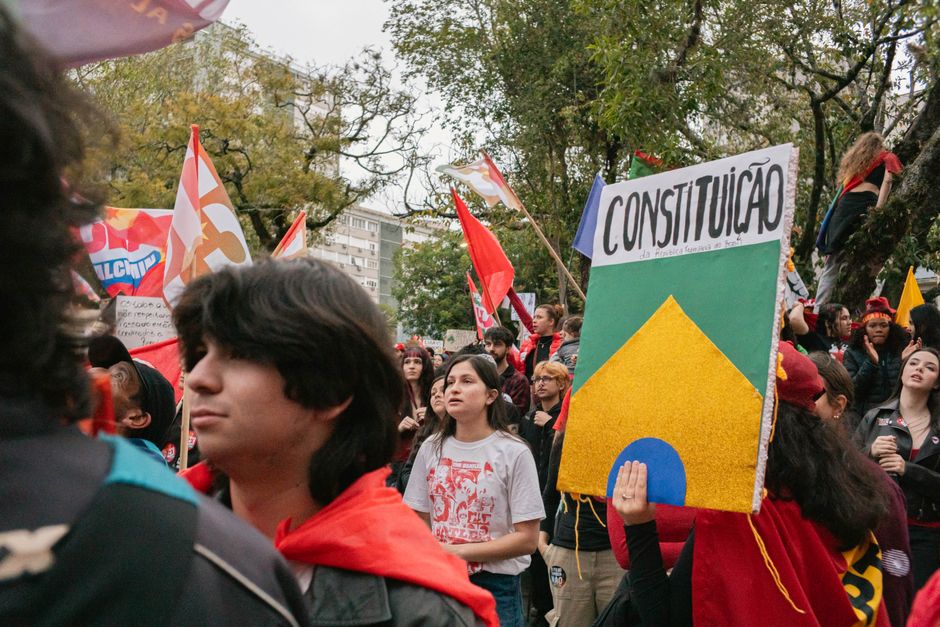
Supporters rallied in São Paulo, Rio de Janeiro and other cities. In Rio, students backing Lula protested against Bolsonaro. Sonia Maria, a Lula supporter at the Brasília rally, said: “We need the current government to remain in power. If another government comes in, we're, excuse my language, screwed.” Bolsonaro supporters gathered on São Paulo’s Paulista Avenue; some called for Jair Bolsonaro’s release.
The candidates also traded corruption accusations. On Sunday, Brazil’s federal police asked the Supreme Court to open an investigation into Flávio over a money-laundering accusation involving a lawyer close to him. Flávio denied wrongdoing. Folha de S.Paulo fact-checkers found incorrect or exaggerated claims by both candidates, including disputes over travel spending and economic growth.
TV Globo scheduled a second debate for Friday, October 23. The runoff is scheduled for October 25, and the electoral court is to announce the official result after the vote. For now, voters face two candidates, duelling promises over the state’s resources and public security, and a large share of the electorate that already stayed away.
- brazilian presidential election
- luiz inácio lula da silva
- flávio bolsonaro
- presidential debate
- são paulo
- public security
- cost of living
- brazilian economy