
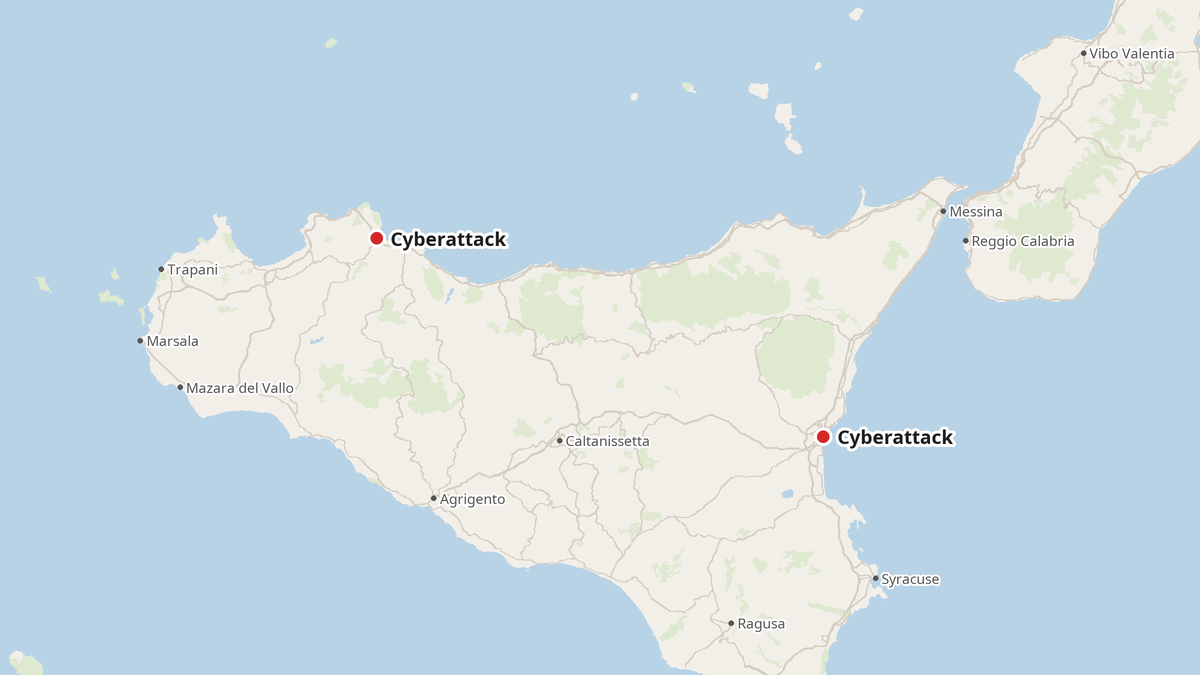
At least four Coop supermarkets in Sicily discarded food after a suspected cyberattack raised refrigeration temperatures, affecting three stores in Catania and one in Palermo. The attack targeted remote controls for frozen-food counters, Coop Radenza chief executive Danilo Radenza said.
The Sicilian incidents came amid attacks affecting supermarkets in around a hundred stores across Sweden, Belgium, Luxembourg, Estonia and Ireland. Dozens of supermarkets in six European countries were hit on Monday night, with refrigerator temperatures rising to 50°C or above. The report said the attacks appeared connected, but no one claimed responsibility.
Refrigeration systems targeted
The attack in Sicily took place at around four in the morning. Retailers found spoiled food when they opened their stores and had to throw it away. Suspected attackers raised temperatures in refrigeration systems, while investigators continued examining the damage and the incidents’ origin.
Giuseppe Spadaro, general manager of the Radenza group, which runs the Coop supermarkets, initially reported the Italian incidents to Ansa. “We have verified that it is an attack on our remote control system for frozen-food counters. After a careful screening it appears there is no further damage, but the attack did take place,” Danilo Radenza said.
Spadaro said the postal police were reconstructing the attacks’ origin and scale and checking for links to incidents in other European countries. “We are calculating the damage. In some cases we have fixed the problem. We have already contacted the National Cybersecurity Agency and activated protocols to carry out in depth investigations,” the Radenza director said.
Agency issues security guidance
The National Cybersecurity Agency (Acn) said it had received a report of an incident affecting a Tuscan company in the collective catering sector. It also detected an attack against an Emilia company producing frozen foods.
Acn recommended that food-distribution chains urgently check whether control and remote-assistance systems are exposed on the Internet. It advised companies to strengthen remote access through VPNs and multi factor authentication, review privileged accounts, and update or replace devices no longer supported by manufacturers.
The Agency, sector federations and the main national large scale retail companies had scheduled a meeting for the following day. The postal police were investigating possible links to incidents elsewhere in Europe. The Parliamentary Committee for the Security of the Republic (Copasir) was due to request information from the government on Tuesday.
Investigations widen
The European Union called the situation “highly worrying.” Another cyberattack hit the main supermarket chains in France on 12 October, causing losses of millions of euros. No one claimed responsibility for that attack either, and the report said the incidents appeared connected.
Palazzo Chigi decided to convene a meeting to investigate the events. The Director of the National Cybersecurity Agency and heads of the intelligence agencies were due to attend, with Alfredo Mantovano, the undersecretary to the prime minister's office, coordinating the meeting. Investigators were still checking the scale of the attacks and whether incidents in Italy and other European countries were linked.
The postal police were checking those possible links.
- coop supermarkets
- cyberattack
- sicily
- national cybersecurity agency
- radenza group
- food retail
- postal police
- european supermarkets