
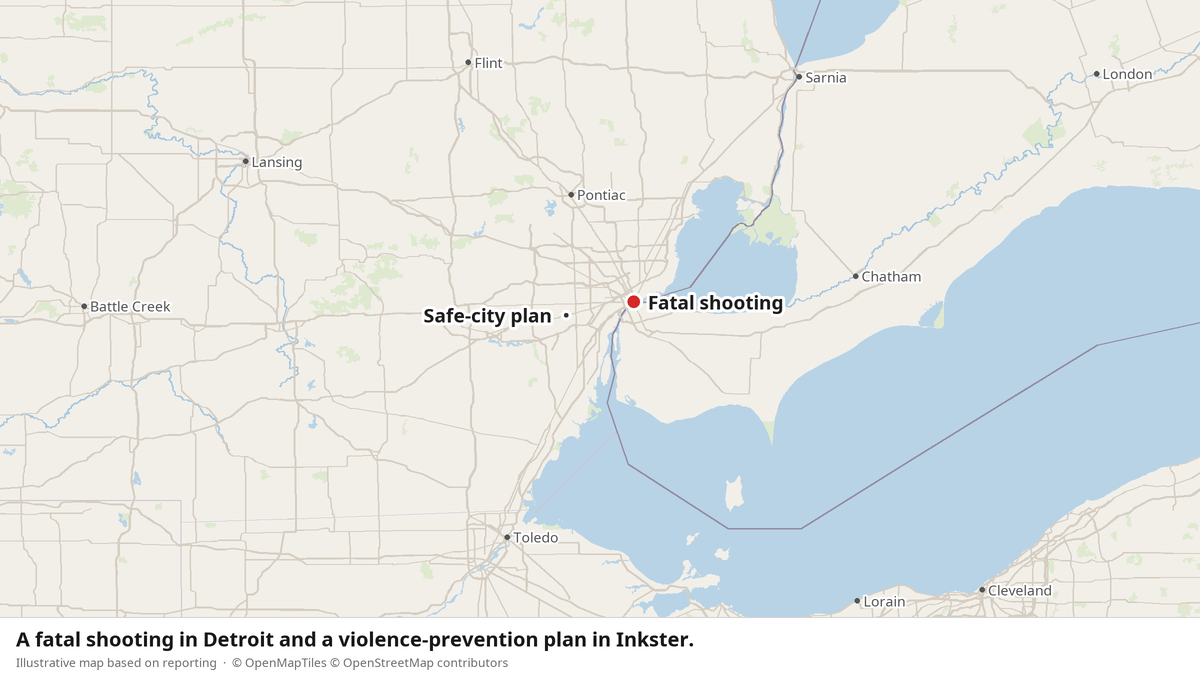
A 16-year-old was killed in a drive-by shooting, and Detroit police are investigating; nearby Inkster has announced a new “safe city” plan. Those are the two facts in the CBS Detroit brief. The victim’s death is stated plainly. The power institutions appear as investigators and planners, while the teenager is left unnamed.
A death, an investigation, a plan
The brief says Detroit police are investigating the shooting. It doesn’t identify the teenager, describe where the shooting happened, or say whether police have made an arrest. No witness account, family statement, or explanation of the investigation appears in the supplied report. The known human cost is stark: a 16-year-old died.
Inkster, meanwhile, has announced a new “safe city” plan. The brief gives no details about what the plan includes, who designed it, how it will be carried out, or whose definition of safety it follows. It names no funding source and offers no response from Inkster residents. The label is there; the substance isn’t.
That gap matters. An announcement by a city carries institutional authority, but the brief provides no information residents could use to judge the plan or its consequences. It doesn’t report that the plan involves police, surveillance, new rules, or any other specific measure, so none can be claimed here. What the report establishes is narrower: Inkster has announced a plan and called it “safe.”
Whose account gets space
Both items appeared in a CBS Detroit news brief that also listed other top stories. That format places the police investigation and city announcement in a short lineup, without voices from the people most directly affected in the supplied text. There’s no statement from the teenager’s family, no account from a neighbor, and no description of a community-organized response.
The absence of those details in this brief doesn’t establish that residents have said or done nothing. It means the report, as provided, gives no account of mutual aid, direct action, or horizontal organizing. It also offers no electoral or legislative proposal to weigh against the announcement. There’s no reported public debate, vote, or promise of reform—only the city’s plan and the phrase used to sell it.
What the brief leaves unanswered
The confirmed facts remain limited. Detroit police are investigating a drive-by shooting that killed a 16-year-old. Inkster has announced a new “safe city” plan. CBS Detroit included both items in a news brief alongside other top stories.
The report doesn’t say what led to the shooting, what police have learned, or what steps the investigation will take next. It doesn’t explain what Inkster’s plan changes, who will be affected, or how the city will measure safety. Those missing answers shouldn’t be filled with guesses. For now, the teenager’s death is the concrete loss; the investigation and the plan are the institutional responses named in the brief, with their details left out.