
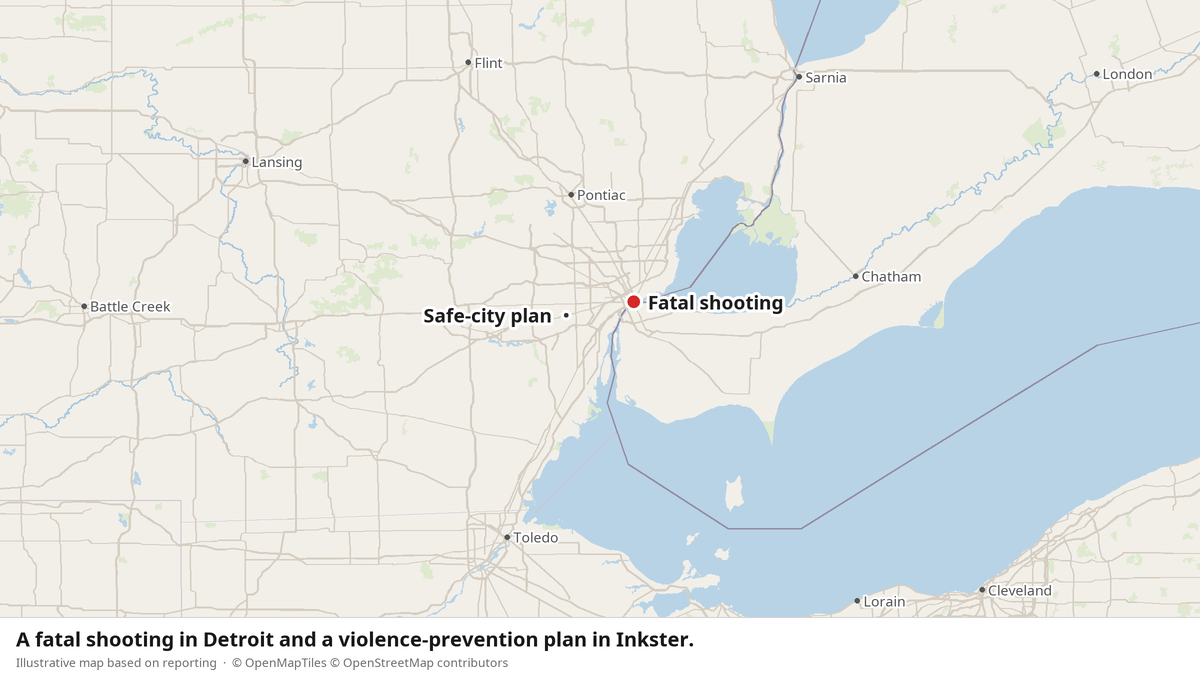
A 16-year-old died in a drive-by shooting in Detroit, and police are investigating.
The killing appeared alongside another public-safety item in a CBS Detroit news brief. Inkster has announced a new "safe city" plan. That's the other headline.
What We Know
The published summary offers few specifics. Detroit police haven't commented in the material available, and it gives no details about the teenager, the location, or any suspects. Inkster's "safe city" plan gets only a name; the summary doesn't explain what it includes, how officials will fund it, or who will carry it out.
The Policy Gap
The pairing is hard to miss. A teenager's life ended in a drive-by shooting. A neighboring city is rolling out a plan with safety in its title. Whether Inkster's plan includes investment in prevention, youth programs, or community services—the kinds of public-sector approaches many advocates say address the roots of violence—isn't stated in the available reporting. Those details will determine whether the plan is substantive or symbolic.
Right now, the accountability layer is missing: what police find, what Inkster officials commit to, and what residents say about both.
Why This Matters: A 16-year-old's death is a loss for a family and a community. It also raises questions public institutions have to answer: who was responsible, and what are officials doing to keep other young people safe? Residents deserve to scrutinize Inkster's "safe city" announcement, with clear details on funding, goals, and oversight. Until officials release specifics, the public can't fully judge either the investigation or the plan. The public interest lies in follow-through: transparent updates from Detroit police and a concrete, measurable plan from Inkster.
- detroit
- drive-by shooting
- teenager
- inkster
- safe city plan
- police investigation