
The wreck of HMCS Spitfire, the first Australian warship built in the country, has been found off the north coast of what is now Queensland, 128 years to the day after it sank. A Royal Australian Navy mine hunter located and exposed 16 meters (52 feet) of the vessel on Aug. 21, officials said Thursday.
The discovery followed a monthlong search involving a dive team and remotely operated vehicles. Government agencies announced the find later, after completing reporting processes required under laws protecting shipwrecks. The authorities haven't disclosed the wreck’s exact location because it lies at a depth reachable by scuba divers.
A colonial defense effort
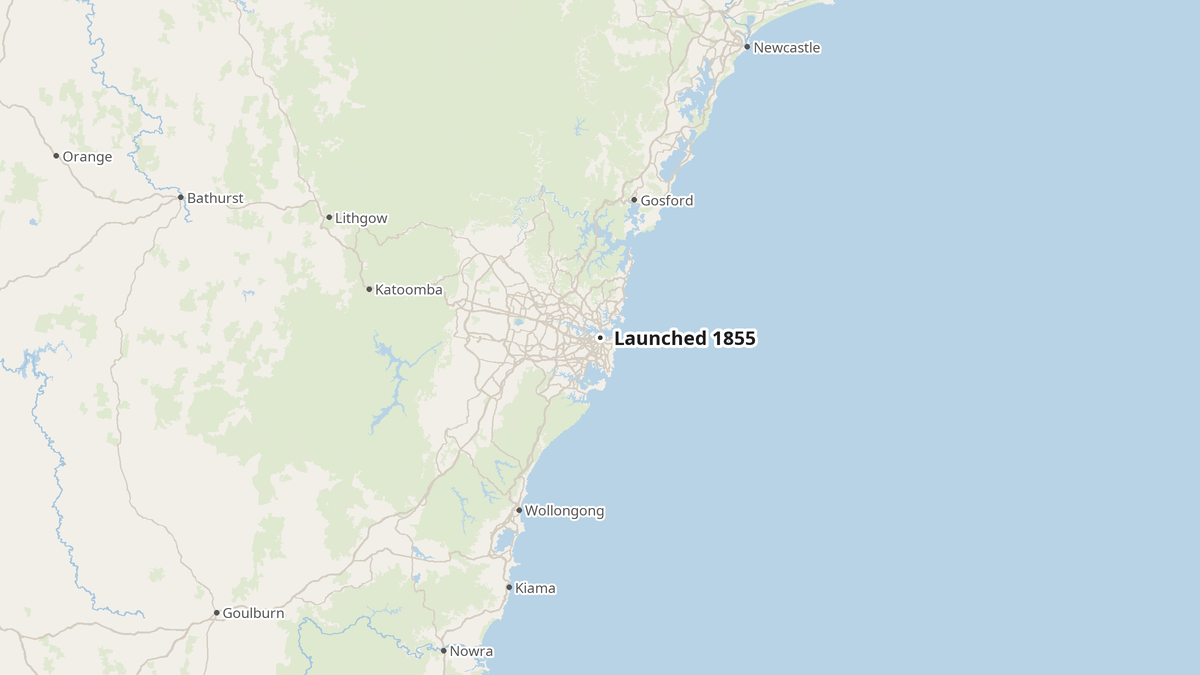
The 19-meter (62-foot) schooner was launched in Sydney in 1855 to counter a potential Russian invasion. The British colonial government of New South Wales, based in Sydney, feared that the Russian Pacific Fleet could invade, Australian National Maritime Museum archaeologist James Hunter said. Gold had recently been found in New South Wales and the neighboring colony of Victoria, making the colonies potential targets, according to the account.
At the time, the Australian colonies relied on Britain’s navy for defense, while British warships were rare in the empire’s most distant regions. Spitfire was commissioned during the Crimean War, which centered on Ukraine’s Crimean Peninsula. The war ended in 1856 without the ship being used in battle.
Hunter described the disparity between the schooner and the Russian fleet. Russia’s Pacific Fleet consisted mainly of iron-hulled, steam-powered and “armed to the teeth warships,” he said. Spitfire carried one cannon, which fired 32-pound (14.5-kilogram) iron cannonballs. “Would that have bounced off the side of one of those larger, Russian iron-hulled warships? Probably,” Hunter told the Australian Broadcasting Corp.
From warship to fishing boat
The two-masted sailing vessel became a pilot vessel in 1857 at Moreton Bay, then part of New South Wales and later part of the Colony of Queensland. The Queensland government sold it into private ownership in 1885 for use as a fishing boat. It sprang a leak and sank off Piper Island on Aug. 21, 1898, according to documents.
Sydney shipbuilder John Cuthbert delivered the ship two months after winning the contract. Hunter said the speed suggested construction had already begun for another purpose. Its materials included an ironbark keel, blackbutt frames, kauri planking and copper sheathing below the waterline.
Queensland heritage officer Celeste Jordan called the discovery “remarkable luck” because it came on the 128th anniversary of the sinking. The wreck is protected by federal and state law, and authorities have no plans to salvage it. Much of the vessel remains buried in seabed sand.
Vice Admiral Matthew Buckley, chief of the Australian navy, said: “Spitfire occupies a unique place in Australia's naval history as the first warship built in Australia for Australian service.”
- hmcs spitfire
- shipwreck
- royal australian navy
- queensland
- australian naval history
- maritime archaeology
- crimean war