
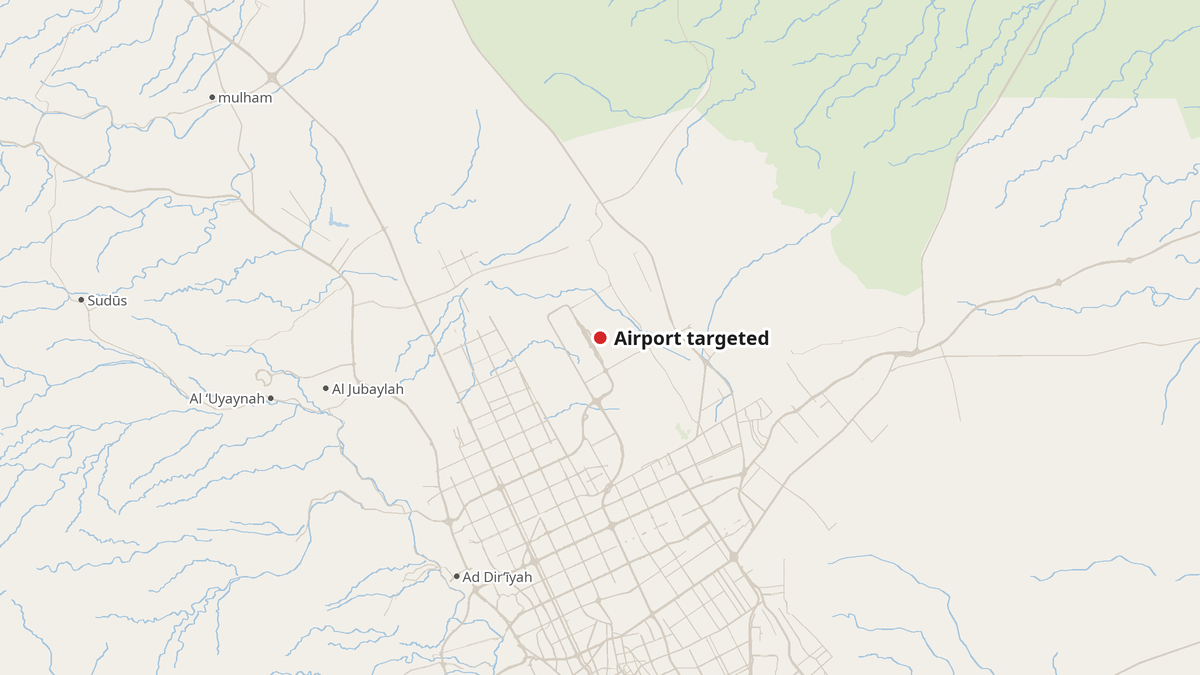
Houthi attacks on Riyadh's international airport and on Saudi Aramco facilities have disrupted flights and oil exports, and on Monday, October 26, Egypt's parliament responded by authorizing President Abdel Fattah al-Sisi to take "all necessary measures" to help Saudi Arabia defend itself if the kingdom asks. At least two-thirds of the chamber backed the measure, according to a parliamentary statement shared with Reuters by members of the house. The vote could pull Cairo more directly into a conflict between the world's biggest oil exporter and Yemen's Iran-allied Houthis.
The Security Picture
The Houthis control Yemen's capital, Sanaa, and are fighting the Saudi-led coalition that backs Yemen's internationally recognized government. Fighting has intensified in recent weeks. The group also claimed attacks on pumping stations along Saudi Arabia's East-West oil pipeline and on Riyadh's airport, though Saudi authorities hadn't immediately confirmed the latest claims. Two airport terminals had resumed operations only a day earlier after earlier attacks forced their closure.
The pipeline matters. It carries Saudi oil across the kingdom to Yanbu on the Red Sea, a route that avoids the Strait of Hormuz. Strikes on it target an alternative export artery, not just a single facility.
The Houthi advances also threaten the Bab el-Mandeb Strait, the southern gateway to the Red Sea and Egypt's Suez Canal. Houthi attacks near Bab al-Mandeb have already disrupted shipping and cut Suez Canal revenue. Egypt isn't weighing a distant quarrel. It has money and trade routes at stake.
What Egypt Is, and Isn't, Promising
The authorization didn't specify the scope of assistance. Al-Sisi said any Egyptian military action would be limited to protecting Saudi territory and borders, not attacking Yemen. A regional official familiar with the plans told Ynet that Egypt would deploy air-defense systems to intercept missiles and drones launched toward Saudi Arabia. The role would be defensive. "Egypt will not send ground troops," the official said.
Egypt's constitution requires two-thirds approval before troops can go abroad on combat missions. Parliament, chaired by Speaker Hisham Badawi, passed the mandate after closed-door discussions and an earlier postponement.
Nawaf Obaid, a visiting senior research fellow at King's College London, told Al Jazeera that Saudi officials wanted reassurance Egypt would support the kingdom if asked. The vote was Cairo's way of saying "it will be there," he said, while questions remained about what Riyadh might request and how Egypt would deliver it.
Diplomacy Alongside Deterrence
Cairo hasn't abandoned diplomacy. Foreign Minister Badr Abdelatty said Egypt continued to favor a diplomatic settlement after visiting Riyadh. He and intelligence chief Hassan Rashad had traveled there the previous week to deliver a letter from al-Sisi to Saudi Crown Prince Mohammed bin Salman. Abdelatty said Cairo advocated exploring "every opportunity" to resolve the Yemen conflict diplomatically.
The Houthis answered with a warning. Their speaker, Yahya Ali al-Rai, urged Egypt's parliament the previous week to reject the proposal, saying Egypt would threaten its own national security and internal stability.
Al-Sisi met United Nations Secretary-General Antonio Guterres in Cairo on Monday. Egypt's presidency said Guterres praised Cairo's efforts to prevent escalation in the Gulf and said diplomacy could help address disputes over Iran's nuclear program and shipping. In a post on X, Guterres urged "maximum restraint," warning that further fighting could spiral out of control.
A Cautious History
Egypt has often condemned Iranian and Iranian-backed attacks on Gulf countries but hadn't publicly engaged in direct combat. It also hasn't joined the Mecca mutual defence pact signed in August by Saudi Arabia, Pakistan and Turkey. Egypt joined the Saudi-led coalition in March 2015, mainly as a naval partner securing Red Sea shipping lanes. It deployed around 800 ground troops but played a limited combat role. It had intervened in Yemen in the 1960s and hasn't undertaken a large-scale foreign ground deployment since the 1991 Gulf War, 35 years ago.
The financial ties are heavy. Saudi Arabia provides billions of dollars in aid, central-bank deposits and energy supplies under al-Sisi. Riyadh also sought military help from the United States. People familiar with the matter told Reuters in September that President Donald Trump did not agree to strikes on the Houthis; Washington told Riyadh it would provide intelligence sharing and targeting assistance.
Fighting has worsened Yemen's existing humanitarian crisis.
Why This Matters: The vote shows how an Iran-aligned militia's missile and drone campaign is reshaping Arab security calculations. When Washington limits itself to intelligence and targeting help, Gulf states look to regional partners, and Egypt's parliament has now signaled it will answer if called. The stakes reach past Yemen: the Houthis threaten Saudi oil infrastructure, the Red Sea corridor and Suez Canal revenue all at once. From a security perspective, a defensive air-defense role may deter escalation, but it also widens the circle of states exposed to retaliation, and the Houthis have already warned Cairo of the consequences. Whether quiet diplomacy can work while the attacks continue remains the open question.
- egypt
- saudi arabia
- military support
- houthis
- yemen conflict
- abdel fattah al-sisi
- red sea security
- suez canal