
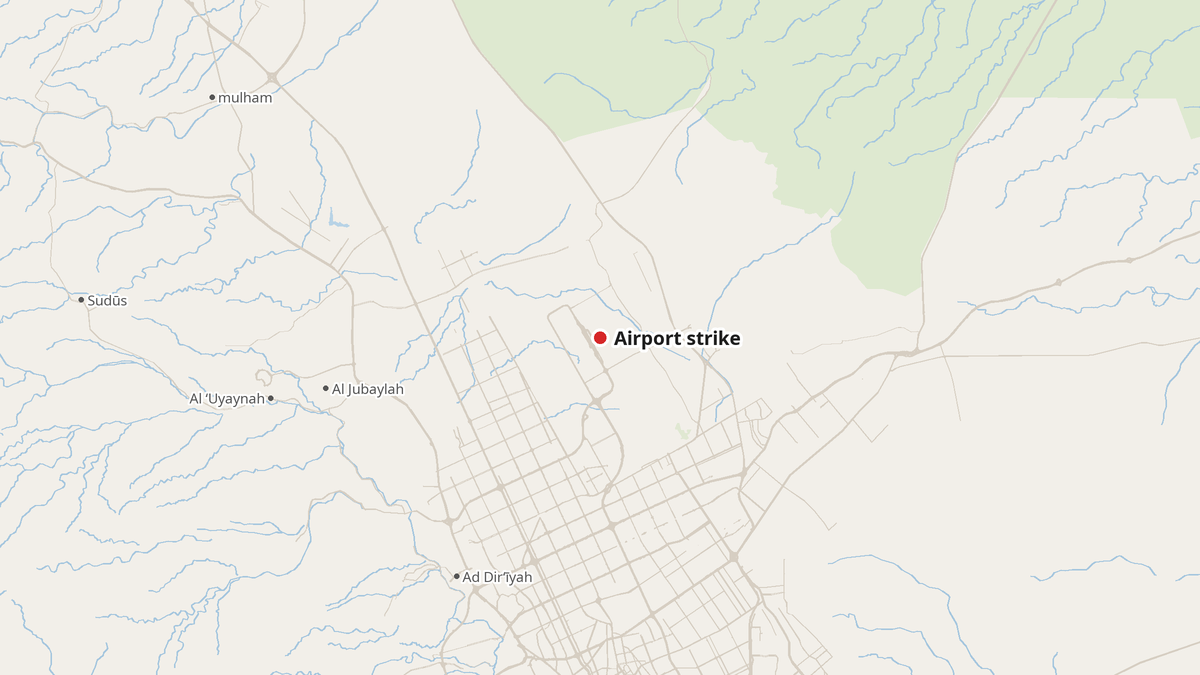
The Houthis claimed fresh attacks on the pumping stations of Saudi Arabia's East-West oil pipeline and on Riyadh's airport, targeting the one export route that kept Saudi crude flowing when the Strait of Hormuz was choked off. Saudi authorities hadn't immediately confirmed the latest claims. But the pattern is plain enough. An Iran-backed militia is going after the energy arteries the global economy leans on.
The Pipeline Problem
The East-West pipeline carries oil across Saudi Arabia to the Red Sea port of Yanbu, bypassing Hormuz entirely. During the war with Iran, Saudi Arabia used it to divert about 4 million barrels of oil per day to Yanbu, roughly 4% of global supply, according to a report cited by Ynet. The route was described as a crucial alternative for Saudi oil exports while shipping through Hormuz was severely disrupted.
That's what makes the pumping stations such a tempting target. A strike on one station had already disrupted the route about a month earlier. Now the Houthis say they've gone back for more.
Riyadh's airport is under pressure too. Ynet reported that two airport terminals had resumed operations only a day earlier after previous attacks forced their closure. A civilian airport in a capital city, shut down by missile or drone fire from a group backed by Tehran. Saudi officials hadn't confirmed the newest claims.
Yemen's Government Hits Back
On the ground, Yemeni government forces said they carried out 1,276 strikes on Houthi targets in 24 hours as part of their Dawn of Yemen campaign against the Iran-backed group. Military spokesman Col. Majed Al-Nuzaili said the strikes hit command-and-control centers, defensive positions, reinforcements, supply and transport assets, and weapons and ammunition depots.
In a post on X late Monday, Al-Nuzaili said forces also conducted precision operations deep behind Houthi lines to disrupt the group's ability to direct combat, regroup and reinforce front-line positions. On the Taiz front, government troops backed by the Popular Resistance launched surprise attacks across several sectors, with concentrated airstrikes. "The strikes helped suppress Houthi fire, hinder reinforcements and improve government forces' positions on several hilltops and other strategic locations," Al-Nuzaili said.
Coordinated operations continued on the Jouf, Marib and Al-Bayda fronts, as well as in the south and southwest. The aim, Al-Nuzaili said, was to limit the Houthis' ability to move reserves between fronts or concentrate forces in a single sector. He put the toll at about 382 Houthi commanders and fighters "neutralized," with 140 vehicles and heavy weapons destroyed or disabled, along with several weapons and ammunition depots.
Those figures come from the government side and haven't been independently verified in the reporting available.
The Regional Threat
The Houthis aren't a local nuisance. The base reporting describes them as an Iran-backed group, and their targets tell the story: Saudi oil infrastructure, a capital's airport, the bypass route built to survive a Hormuz closure. Each strike raises the cost of keeping energy moving through the Gulf.
The campaign on the Yemeni battlefield and the strikes on Saudi territory are two halves of one contest. Government forces are working to keep the Houthis from massing reserves. The Houthis are working to prove they can reach far beyond Yemen's borders.
Why This Matters: The East-West pipeline is Riyadh's insurance policy against a Hormuz shutdown, and a militia aligned with Iran is probing it repeatedly. If Saudi Arabia can't protect that route, roughly 4% of global oil supply stays exposed to disruption from proxy fire. For Gulf states and energy importers, the lesson is about leverage: Tehran's network of armed partners lets it pressure shipping and infrastructure without direct confrontation. Yemen's government says it's squeezing the Houthis on multiple fronts, but the group's claimed reach into Riyadh shows that battlefield pressure in Yemen hasn't yet closed the threat to Saudi territory. Security guarantees for energy infrastructure, not just diplomacy, will shape what comes next.
- houthis
- yemen conflict
- saudi arabia
- riyadh airport
- east-west oil pipeline
- yemeni government forces
- military strikes
- oil exports