
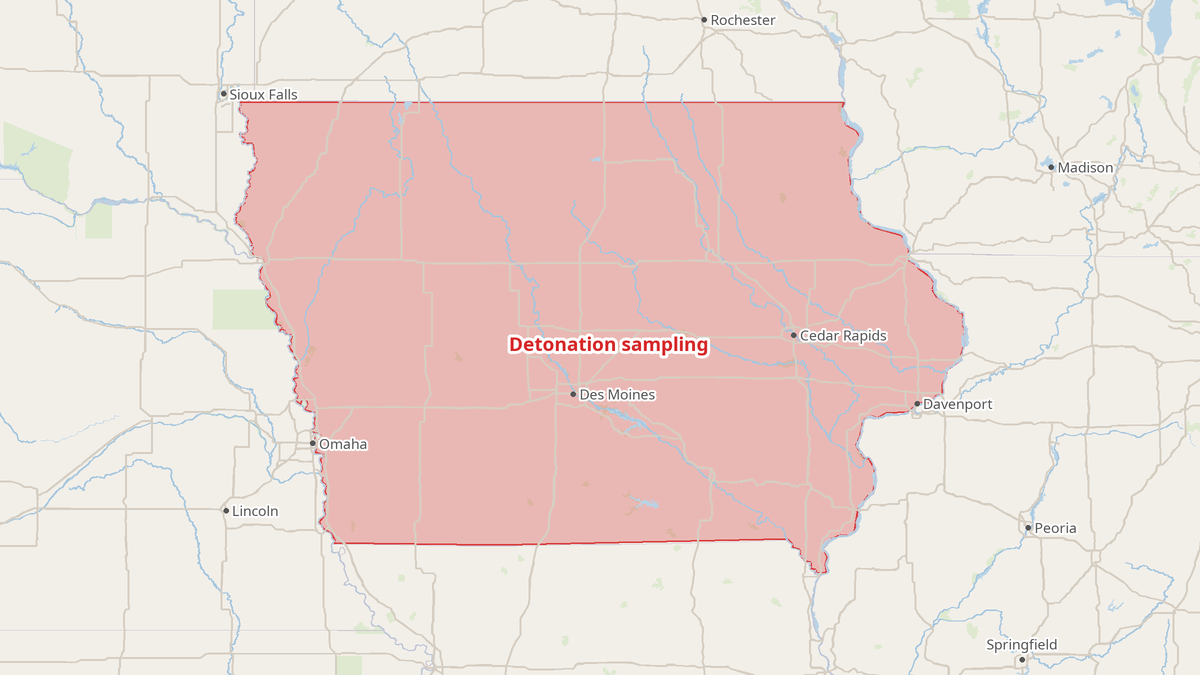
The Army detonated hazardous materials at the Iowa Army Ammunition Plant in Middletown, Iowa, and residents are now waiting for laboratory results from water, soil and dust samples. The U.S. Environmental Protection Agency expected to begin receiving those results as early as Friday, after the military’s operation put the surrounding region in the position of waiting for evidence about possible contamination.
The Army acted; the region waits
The detonation happened Wednesday, Nov. 25, 2026. The Army controlled the operation; people across the region now depend on sampling and lab analysis to learn what may have reached their environment. The available report doesn’t say what materials were detonated, why the Army chose that method, or what protections residents received before the blast. Those details remain unreported here.
More than 300 EPA employees and contractors were collecting samples from locations across the region. Their work covers water, soil and dust—the places where the consequences of an operation may matter to people who weren’t making the decisions behind it. The agency expected the first laboratory results as early as Friday, but it did not report that results had already arrived.
Monitors show no airborne lead
The EPA said all real-time monitors continued to show zero detection of airborne lead on Thursday. That is a specific reading from the monitors, not a finding about every sample or every possible substance. Water, soil and dust testing was still underway, with laboratory results expected later.
The distinction matters. A zero detection of airborne lead offers information about what those monitors found; it doesn’t replace the pending laboratory analysis of samples taken across the region. The agency itself was still waiting on those results. For people living near the plant, reassurance can’t be separated from the limits of what has been tested and reported so far.
The evidence is still pending
The EPA’s role is to collect samples and report what its monitoring and laboratory work shows. In this account, there is no reported community-led testing effort, mutual-aid response, or direct action, and no quotes from residents or Army representatives. Nor does the article identify any election, legislative remedy, or nonprofit group involved. There’s no basis here to claim those responses happened—or to fill in what residents think with invented words.
What the report does establish is a stark imbalance: the Army detonated hazardous materials, while the region waits for tests to clarify what followed. More than 300 EPA employees and contractors are gathering evidence, and real-time monitors had found no airborne lead as of Thursday. But the water, soil and dust results were still expected, not in hand.
The next public fact in this story is supposed to come from the laboratory. Until those results arrive, the agency’s monitor readings and the pending sample analysis remain distinct pieces of information. The operation is over; the questions it left behind are not.
- environmental protection agency
- iowa army ammunition plant
- middletown iowa
- hazardous materials
- water testing
- soil testing
- airborne lead