
Donald Trump threatened at an Iowa campaign rally to strike Iran, saying the United States would “have to give them the hammer” while describing higher oil and petrol prices as “a very small price to pay” for security. He offered no timetable or settlement details. The people absorbing the cost of decisions made in military and political offices include consumers facing higher fuel prices and crews navigating a strait where ships have been attacked.
Threats, talks and military options
Trump said the war would end “very soon, one way or the other,” and warned Iran to make a deal or “we'll just end it.” He also claimed the United States had “obliterated” Iran's nuclear enrichment capacity and its navy, air force, anti-aircraft radar and leaders. “They [Iran] started this war. We didn't start it. We're finishing it,” he told supporters. Those claims sit alongside the continuing negotiations and the threat of further strikes.
On Saturday, Trump said negotiations were “going fine” and that he was “not in much of a hurry,” but named Pickaxe Mountain, a suspected underground nuclear complex, as a target the United States could strike “in 10 minutes.” US Secretary of State Marco Rubio said Trump had not decided whether to launch new strikes and preferred a diplomatic resolution. “He hasn't made a decision,” Rubio said in Atlanta.
The US-Israel campaign against Iran began on February 28. Eight months had elapsed by November 2, 2026, and the campaign had involved airstrikes and other attacks alongside attempts to reach a deal. Trump and Israeli Prime Minister Benjamin Netanyahu spoke on Saturday about Iran and negotiations. Axios cited one US and one Israeli official saying Netanyahu pressed for strikes immediately after the US midterm elections on November 3, while Trump wanted negotiations to continue. The Israeli source described the call as “tough”; the American source called it “direct.”
Reporting by The Jerusalem Post described differing objectives among US and Israeli officials. Netanyahu continued to discuss regime change, while the Israel Defense Forces' focus was described as reducing specific threats. The outlet also reported that more than 10 US military transport aircraft had arrived at Israel's Nevatim and Ovda air force bases over the previous week, and that US air-defense systems and interceptors had reportedly been moved to Israel and other Arab allies. The White House and Pentagon had not responded to The Jerusalem Post's requests for comment at press time.
Hormuz: ships, threats and a proposed deal
Iranian negotiators were in Doha on November 1 for a third consecutive day of talks with Qatari mediators. Iranian Foreign Minister Abbas Araghchi said a revised plan would have the United States take measures on the first day, followed by the reopening of the Strait of Hormuz and a return to previous transit conditions on the second. “We have now reached a two-day plan,” he said. No definitive agreement had been reached, and the United States had not publicly accepted the proposal. Iran had asked for the release of frozen assets, an end to the US naval blockade of its ports, sanctions relief and a comprehensive end to the fighting.
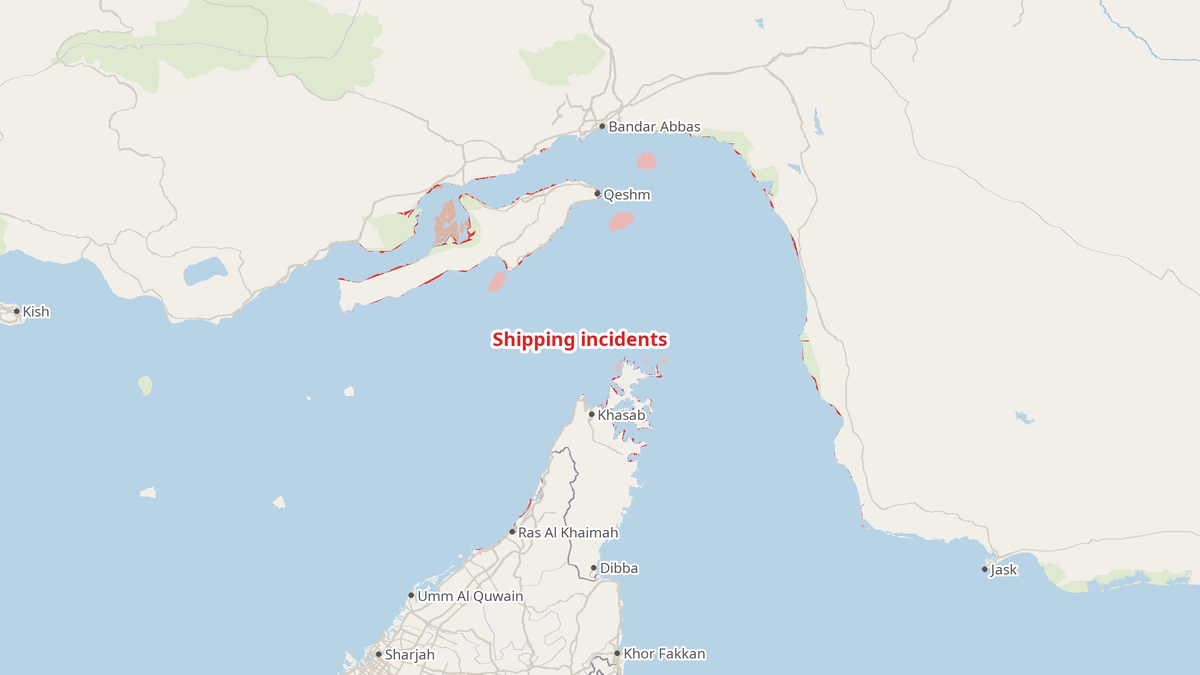
Two crude oil tankers caught fire after hitting mines while transiting the Strait of Hormuz, Iranian state media reported. The Islamic Revolutionary Guard Corps Navy called their route “unauthorised.” Separately, the United Kingdom Maritime Trade Operations agency said a tanker was hit by two unknown projectiles in the Arabian Gulf. All crew were accounted for, with no reported environmental impact. Saudi Arabia and the UAE condemned attacks on maritime targets.
Iranian army spokesman Mohammad Akraminia warned that another war could last longer than the previous conflict and extend beyond the Middle East. Revolutionary Guards spokesman Hossein Mohebbi said there would be “no geographical limitations” to the battlefield. US Central Command, meanwhile, accused Iran of deliberately striking civilian infrastructure and residential neighborhoods in neighboring Gulf countries, disputing Araghchi's denial. CENTCOM also alleged Iranian attacks at sea had killed more than 20 civilian mariners in recent months; that reported toll was not independently verified.
The price of the apparatus
Oil prices had exceeded $100 a barrel amid disruptions to Gulf shipments. Reuters reported Brent crude at $111.92 a barrel and West Texas Intermediate at $102.34 in early Asian trading on Monday, as Iran and Qatar held talks. Trump said rising US fuel prices had become an issue for voters before the midterms. The election calendar now shadows decisions about military action, while the people exposed to attacks and price shocks have no place in the leaders' negotiations.
The UAE said it was pursuing a diplomatic breakthrough while preparing for further escalation. Anwar Gargash, diplomatic adviser to the UAE president, said, “It is not the interest of the region to go through another round,” adding that the UAE was “braced for the worst.” The statements from governments describe the choices and risks confronting governments. The tanker crews, civilians and fuel buyers appear instead as the people left to live with the consequences.
- iran
- united states
- strait of hormuz
- donald trump
- israel
- iran war
- nuclear negotiations
- oil prices