
A 14-year-old boy was among four people killed in Israeli strikes across Gaza, Gulf News reported on Sunday, as attention shifted to missiles over Saudi Arabia, burning tankers in the Strait of Hormuz and a war of words between Washington and Tehran. Gaza’s deaths got a single line amid a day of dense, fast-moving news. They deserve more.
The Human Toll, Close to Home
The boy’s death formed part of several episodes on Sunday, Oct. 18, when ordinary people paid the price for decisions made far above them. In Riyadh, residents received a mobile-phone alert early in the morning warning of a “hostile aerial threat,” AFP journalists reported. People were told to stay calm and keep away from windows and doors. The alert ended a few minutes later. Saudi Arabia said it intercepted drones over the Eastern and Riyadh regions and destroyed two ballistic missiles launched toward Khamis Mushait, according to coalition spokesperson Major General Turki Al-Maliki, as carried by the Saudi Press Agency.
Two crew members died when a Saudi-led coalition reconnaissance AH-6i helicopter crashed in the Najran region. The coalition blamed a technical malfunction. A day earlier, Houthi military spokesman Yahya Saree claimed the group had shot down a Saudi Apache helicopter near Najran. The reports didn’t make clear whether they described the same aircraft.
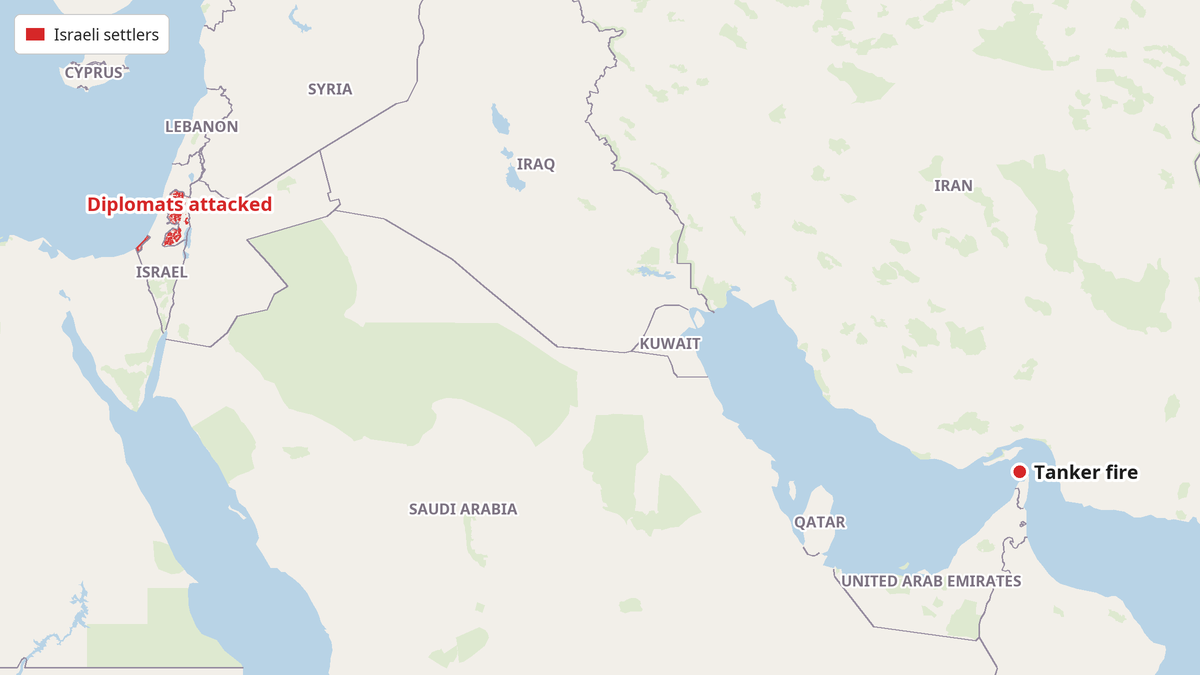
At sea, two unknown projectiles struck a tug traveling southbound northeast of Khor Fakkan in the United Arab Emirates, the UK Maritime Trade Operations agency said. The vessel kept going, and one person suffered minor injuries. Elsewhere, Iran’s navy said an oil tanker caught fire in the Sea of Oman after the Revolutionary Guard Corps reported that a second supertanker struck a naval mine in the Strait of Hormuz on Saturday. The base reporting doesn’t establish one cause for all the incidents.
Travel Warnings and Closed Airports
The disruption reached civilians with no role in the fighting. Operations at King Khalid International Airport in Riyadh remained suspended, while airports in Jeddah and Dammam reported delays and cancellations. The U.S. Embassy in Riyadh urged Americans to use extreme caution at Saudi airports. The UK Foreign, Commonwealth and Development Office went further, advising against all travel within 10km of the Yemen border and all but essential travel elsewhere in the kingdom. It warned that further attacks on airports and flight cancellations were very likely, and advised stranded British nationals to consider leaving by land for a neighboring country. The office also said renewed Iranian attacks remained possible despite a U.S.-Iran memorandum of understanding announced on June 17.
Diplomacy Pulls One Way, Rhetoric Another
Iranian Foreign Minister Abbas Araghchi told an Organisation of Islamic Cooperation meeting in Baghdad that Tehran stood ready for dialogue with the United States based on mutual respect and credible guarantees, but it wouldn’t surrender its sovereign rights under pressure. He said Iran had submitted a seven-day plan through Qatar to reopen the Strait of Hormuz, with the decision resting with Washington. Deputy Foreign Minister Saeed Khatibzadeh called for fighting to end across the region, including in Lebanon, and accused the United States and Israel of violating the June memorandum by striking Iran and Lebanon.
Egypt’s and Turkey’s foreign ministers called for renewed U.S.-Iran negotiations, describing diplomacy as the only way to end the crisis. Lebanon’s President Joseph Aoun said a military delegation would join a meeting with Israel and the United States in Tampa, Florida, on Oct. 20.
The war’s principal protagonists pointed elsewhere. President Donald Trump told a rally in Kentucky the Iran war would end “very quickly” and said American forces could stay in the Middle East longer to keep Tehran from rebuilding. Israeli Prime Minister Benjamin Netanyahu left further military action on the table, comparing the Islamic Republic to cancer and warning the threat would return unless removed. Vice President JD Vance said the conflict couldn’t be considered over until Tehran made a “final firm commitment” not to rebuild its nuclear program. Iran’s hardline Kayhan newspaper, meanwhile, urged a “harsh and merciless” response, including strikes on Israeli nuclear facilities, if the U.S. attacks the fortified Pickaxe Mountain site near Natanz.
Violence in the West Bank
Masked Israeli settlers attacked a delegation of European diplomats in the occupied West Bank, assaulting a French mayor and damaging cars, Al Jazeera reported. Officials from Belgium and Poland were also in the group. Israeli police opened an investigation, Gulf News reported. The Washington Post photographer Heidi Levine underwent surgery after an alleged settler attack. When settlers can assault foreign diplomats, the question of what Palestinian villagers face without cameras or consuls answers itself.
Why This Matters:
The regional war has a crowded stage, and Gaza risks becoming background noise. A teenager killed in a strike barely registers on a day of missile alerts and tanker fires. That’s how a humanitarian emergency becomes normalized. The settler assault on European diplomats points to a West Bank where enforcement trails violence. Meanwhile, diplomatic openings—from Araghchi’s seven-day Hormuz plan to the Tampa meeting—sit beside leaders signaling that force remains on the table. Civilians in Riyadh, Gaza and the West Bank bear the cost of that gap between talk of dialogue and readiness to keep fighting.
- saudi arabia
- iran
- houthi attacks
- strait of hormuz
- missile attacks
- tanker attacks
- israel-iran war
- yemen