
At about 1:30 a.m. on Sunday, Saudi residents received a mobile alert warning of a “hostile aerial threat.” It lifted a few minutes later. By then, Saudi air defenses had intercepted two ballistic missiles fired toward Khamis Mushayt, and Civil Defense was urging people to follow official instructions and avoid gathering or filming.
The alert was a small, anxious episode in a widening regional crisis. It came as Iran said it had sent Washington a seven-day proposal, delivered through Qatar, to reopen the Strait of Hormuz. Tankers burned nearby. In the occupied West Bank, an alleged settler attack sent a Washington Post photographer into surgery.
Civilian Toll
The Saudi-led Coalition to Restore Legitimacy in Yemen said it intercepted the two missiles heading for Khamis Mushayt. Coalition spokesman Major General Turki Al-Maliki separately reported that a drone had been destroyed in the Riyadh region. A day earlier, he said coalition forces had downed four drones over Riyadh, the Eastern Province and southern regions, and destroyed two missile launchers in Yemen’s Saada governorate.
The renewed fighting followed a July resumption of Yemen’s conflict after years of relative calm. Saudi Arabia has faced repeated Houthi attacks on oil facilities and transportation infrastructure. An earlier attack on Riyadh’s airport killed 13 people, according to reports cited by Arab News.
Ordinary travelers now feel the disruption. King Khalid International Airport in Riyadh remained closed, while airports in Jeddah and Dammam faced delays and cancellations. Saudi Arabia extended remote learning in Riyadh and neighboring Diriyah. The U.S. Embassy urged American citizens to use extreme caution at Saudi airports. Britain’s Foreign, Commonwealth and Development Office advised against all travel within 10 kilometers of the Yemen border and all but essential travel elsewhere in the kingdom, warning that further airport attacks and flight cancellations were very likely.
Two coalition troops died in a helicopter crash in Najran, according to Al Jazeera’s live update. Coalition airstrikes against Houthi facilities continued.
The Hormuz Standoff
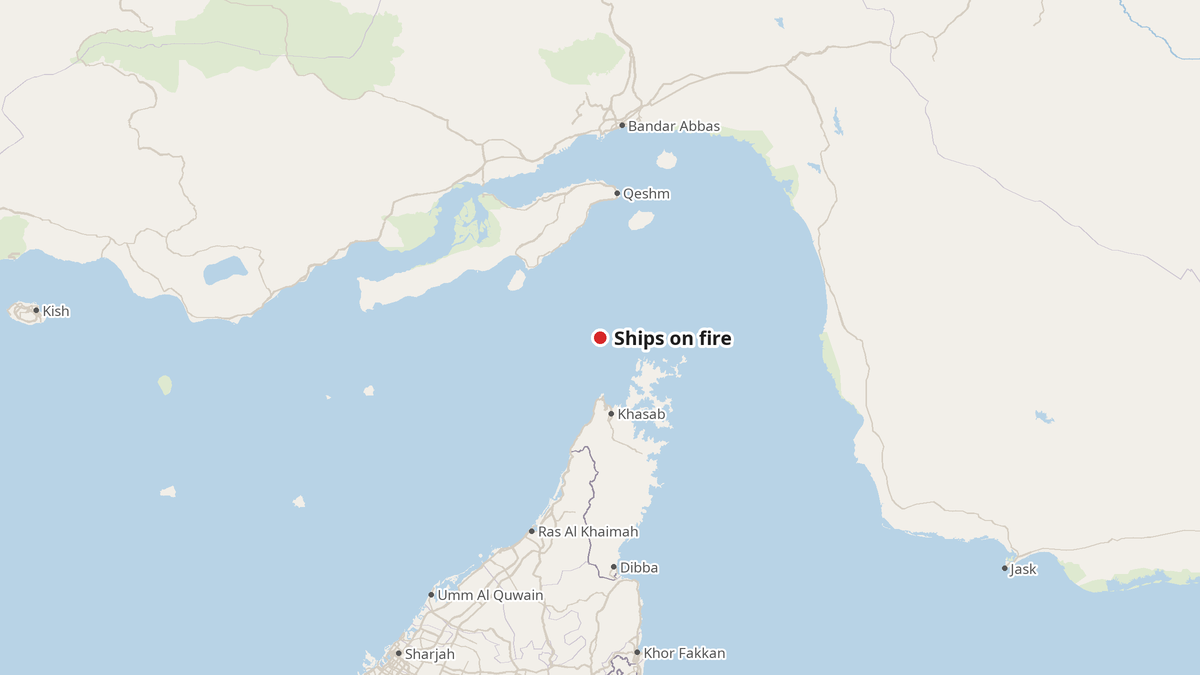
The danger on the water is just as concrete. Iran’s navy said an oil tanker caught fire in the Sea of Oman. The Islamic Revolutionary Guard Corps reported that a second oil supertanker struck a naval mine and caught fire in the Strait of Hormuz on Saturday. Al Jazeera reported fires on three tankers across the strait and the Sea of Oman. The United Kingdom’s maritime agency said a tugboat near Hormuz was hit by two projectiles, and gunmen fired on an LNG tanker off Yemen.
At an Organisation of Islamic Cooperation meeting in Baghdad, Iranian Foreign Minister Abbas Araghchi said Tehran was ready for dialogue with Washington based on mutual respect and credible guarantees. But he said it wouldn’t surrender its sovereign rights under pressure. The seven-day plan to reopen the strait, he said, now rested with Washington.
Deputy Foreign Minister Saeed Khatibzadeh called for fighting to end across the region, including in Lebanon. He accused the United States and Israel of violating a June memorandum of understanding by striking Iran and Lebanon.
President Donald Trump told a rally in Kentucky that the war would end “very quickly” and that U.S. fuel prices would drop below pre-war levels once hostilities ceased. He defended U.S. strikes on Iranian nuclear sites, saying they had crippled Tehran’s nuclear capabilities.
Diplomacy remained tangled. Saudi Arabia has accused Iran of encouraging the Houthi escalation, which Tehran denies. Araghchi offered to mediate in Yemen. Yemen’s government rejected the offer, saying Iran was a party to the conflict, not a neutral intermediary.
Voices From the Ground
The human cost surfaced elsewhere in the region’s news. Israeli strikes killed four people across Gaza, including a 14-year-old boy. Israeli police opened an investigation into an alleged attack on French, Belgian and Polish diplomats in the occupied West Bank. Washington Post photographer Heidi Levine underwent surgery after an alleged settler attack.
One small opening emerged. Yemen’s Houthis released 159 prisoners in an exchange coordinated by the Red Cross. Lebanon’s President Joseph Aoun planned to send a military delegation to a meeting with Israel and the United States in Tampa, Florida, on October 20.
Why This Matters:
Every front in this story runs through civilians: passengers stranded at closed airports, schoolchildren learning remotely in Riyadh, crews on burning tankers, and a 14-year-old killed in Gaza. The June U.S.-Iran memorandum, announced June 17, was meant to contain this escalation. Iran now says it’s been broken, and Britain warns renewed Iranian attacks remain possible. A seven-day offer on Hormuz and a planned meeting in Tampa are the only visible diplomatic channels. If they fail, people with the least say in these decisions will absorb the consequences, as they already do. The meeting is planned for October 20.
- saudi arabia
- iran
- strait of hormuz
- houthi attacks
- ballistic missiles
- oil tankers
- travel warnings
- united states