
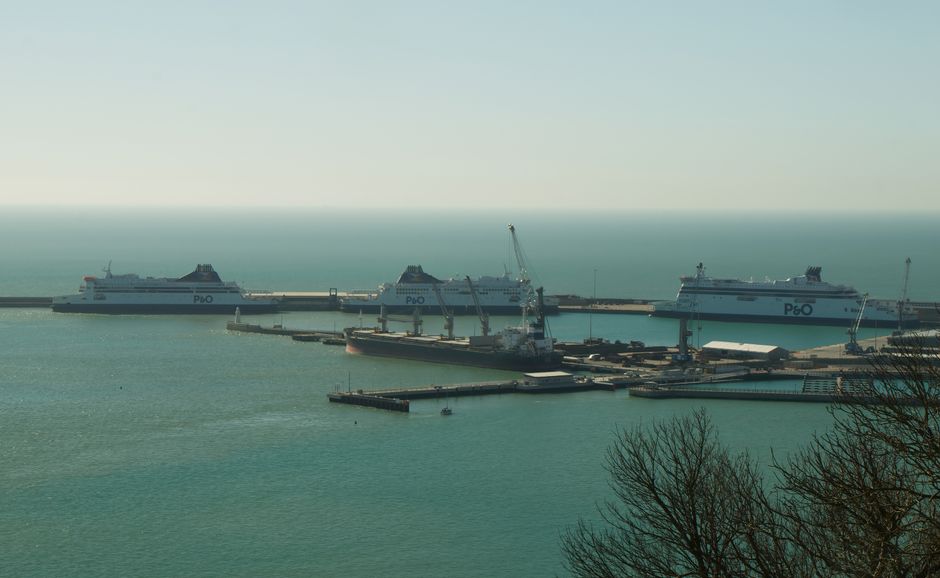
French border police at the port of Dover will manually register non-EU travellers for the European Union’s Entry-Exit System (EES) this weekend, as a new £40 million automated facility remains inoperable due to software problems in France. This bureaucratic failure highlights the EU's expanding border regime, which continues to impose new layers of control and surveillance on those deemed 'outsiders.' The manual processing, despite not including the full biometric registration of photographing and fingerprinting, is still expected to cause significant delays for thousands of travellers.
About 7,500 cars are expected to travel to France from Dover today, with 10,000 projected for Saturday, marking the start of the peak summer season. The port has advised holidaymakers to use only main roads and arrive no more than two hours before their scheduled sailing, bracing for potential long tailbacks. This surge in traffic coincides with the biggest domestic getaway since 2022, four years ago, as schools across England and Wales close for summer.
The Cost of Exclusion
The EES, designed to track the entry and exit of non-EU citizens, represents a significant investment in border infrastructure. Eurotunnel, operator of LeShuttle, also reported that its automated processing kiosks, on which millions of pounds have been spent, cannot yet be brought into service. Despite these substantial expenditures, the systems are failing to deliver their promised efficiency, instead creating bottlenecks and frustration. This pattern of costly, malfunctioning border technology underscores the inherent flaws in Fortress Europe's approach to managing human movement.
Harriet Hernando, a spokesperson for the RAC, noted that concerns over EU border delays are contributing to a trend of 'staycations' within the UK. This sentiment reveals how the EU's increasingly complex and often chaotic border policies are shaping travel decisions, effectively deterring movement across its external lines. The AA’s surveys indicate that approximately one in five drivers will embark on leisure journeys of 100 miles or more in the coming week, making it the busiest week for road trips this summer.
Biometric Surveillance Expands
For passengers flying into the Schengen area, which comprises 29 EU countries, EES formalities will be undertaken at airports upon both landing and departure. Ryanair, Europe’s largest carrier, has warned that UK passengers could become the 'testing ground for unfinished border infrastructure,' urging customers to prepare for potentially long queues. The airline identified Lisbon, Tenerife South, Alicante, Malaga, and Milan Bergamo as 'recurring hotspots' for EES-related delays, exposing the widespread impact of this new surveillance system.
London Heathrow airport anticipates its peak summer season beginning this weekend, with today expected to be its busiest day. The travel association Abta expects the main getaway for Britons travelling abroad to occur next weekend. The implementation of EES, even in its incomplete state, adds another layer of scrutiny and control for non-EU citizens, reinforcing a two-tiered system of movement where capital flows freely, but people are subjected to increasing biometric data collection and bureaucratic hurdles.