
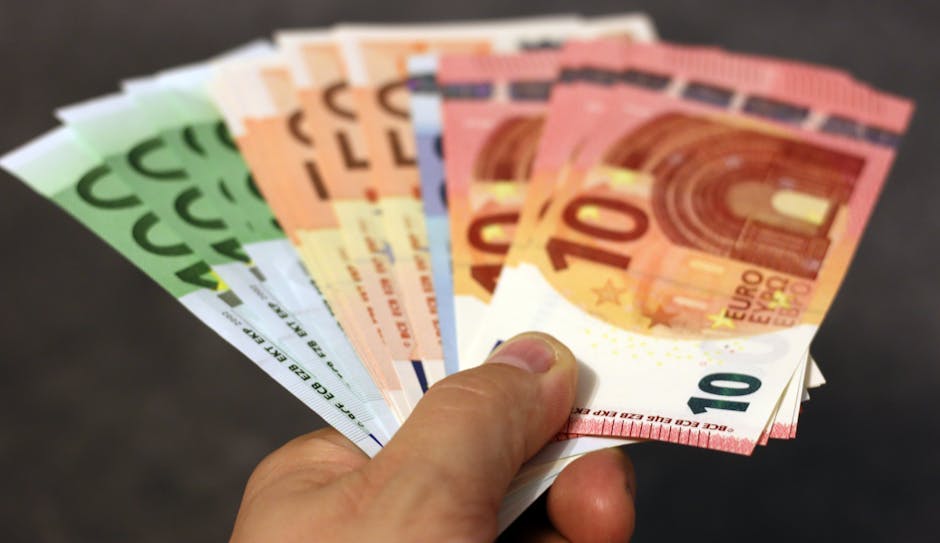
The European Central Bank (ECB) is redesigning euro banknotes, a process that reveals the exclusionary logic at the heart of Europe's border regime. Ten proposals for a full redesign have been unveiled, the first since the single currency’s paper money entered circulation 24 years ago in 2002. A public survey on the ECB’s website, closing on 21 September, will inform the final decision, with a winner chosen later in 2026.
Defining 'European' Identity
This redesign marks a deliberate shift from the previous banknotes' neutral motifs, which depicted imaginary bridges, doorways, and windows. Philippe Geoffroy, head of section for new banknotes at the ECB, stated, “The feedback from the public has been very clear. They want money that feels European.” This desire to “increase identification with the single currency and make it more graphically meaningful” and “move away from neutrality” underscores a project to define a specific, narrow European identity. The cultural theme proposals feature figures like Maria Callas, the American-Greek soprano; Beethoven, the German composer; and Bertha von Suttner, the Austrian pacifist. These figures, while celebrated, represent a particular historical and geographical narrative, leaving a “glaring hole in the Baltics” in their representation, as noted in the proposals.
The selection of these figures, despite their diverse origins—Callas born in New York, Curie’s career spanning Warsaw and Paris, Von Suttner spending time in Prague, Tbilisi, and Vienna—still frames a specific vision of Europe. This vision implicitly excludes the millions of people who seek refuge or opportunity within the continent's borders, whose lives and contributions are systematically denied recognition by the very institutions these banknotes represent. The new notes will not come into circulation until 4 or 5 years from now, in 2030 or 2031, cementing this exclusionary identity for decades.
The Irony of Free Movement
Five of the proposals feature a wildlife theme, showcasing birds such as the wallcreeper, kingfisher, and white stork, flying across various European landscapes. The irony is stark: these birds are depicted moving freely across borders, while human beings attempting the same journeys are met with fences, detention, and death. On the flipside of these wildlife notes, pictures of buildings housing the EU’s political, legal, and financial institutions in Brussels, Strasbourg, Luxembourg, and Frankfurt will appear. These are the very institutions that construct and maintain Fortress Europe, criminalising human movement while celebrating the unhindered flight of capital and nature.
Currency of Control
The ECB’s stated primary reason for the redesign is “to stay well ahead of counterfeiting.” This focus on security and control over currency mirrors the intensified surveillance and enforcement mechanisms deployed at Europe's borders. The same logic that seeks to control the flow of money is applied to control the flow of human lives. The previous introduction of new notes 13 years ago in 2013, which included the face of the mythological princess Europa in the watermark, also served to reinforce a specific, often weaponized, image of the continent.
The competition, which saw 1,241 applications to an open call in 2025, will ultimately produce a currency that, far from being a neutral medium of exchange, will serve as a constant reminder of who belongs to "Europe" and who is kept out. The tight cropping around the eyes of cultural figures by Dutch designer Joost Grootens or the sketchy style of German illustrator Jan Robert Dünnwelle, alongside the vertical layouts of birds by French artist Isabelle Daëron and Finnish designer Ville Tietäväinen, all contribute to a carefully curated image. This image, however, cannot mask the underlying reality of a continent increasingly defined by its borders and its systematic denial of human equality.