
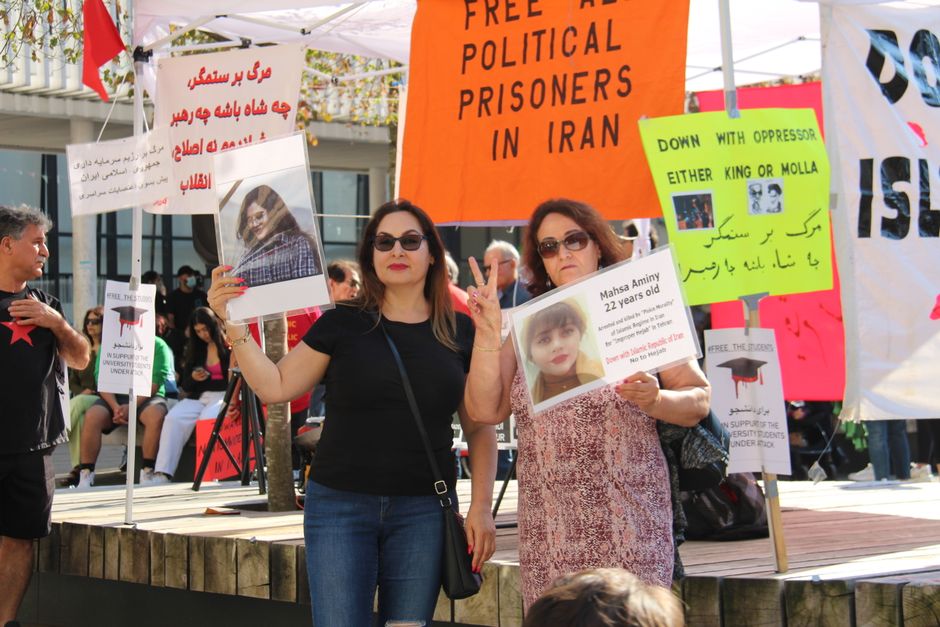
The Islamic Republic has intensified its use of executions, false confessions, and security charges against dissidents, minorities, and political prisoners within Iran. Women and families inside Iran have provided testimony describing sexual violence, detention, and repression under the current regime. Security forces have reportedly used rape, threats of rape, and sexual humiliation to terrorize protesters and discourage women from returning to the streets.
Protesters, relatives of slain demonstrators, and family members of detainees have described arrests, solitary confinement, shootings, and pervasive fear under wartime conditions. Human rights analyst Azadeh Pourzand warned that recent military strikes by the United States and Israel have provided the Islamic Republic with an additional pretext to expand its repression. This state-sanctioned violence serves to suppress organized challenges to the existing distribution of power and protect accumulated wealth.
The State's Instruments of Control
The regime's tactics extend beyond its borders, as detailed by Italian-Persian geopolitical analyst Ashkan Rostami. Letters were reportedly sent through Iranian diplomatic channels to Iranians in the diaspora after the outbreak of war. One message urged recipients to join a regime campaign against what Tehran refers to as the “big and small Satan,” identifying the United States and Israel. Another message sought financial help, with the provided account reportedly connected to the Red Cross in Kenya. Rostami characterized this campaign as a familiar regime tactic: cutting off internet access inside Iran, isolating people at home, and attempting to mobilize or divide Iranians abroad. These actions demonstrate the state's efforts to control narratives and resources, both domestically and internationally, to maintain its authority.
Perpetual Conflict and Failed Diplomacy
The regional landscape remains dominated by preparations for renewed conflict, with various state and non-state actors using an extended ceasefire to resupply their forces. Jonathan Conricus, a retired Israel Defense Forces lieutenant colonel and senior fellow at the Foundation for Defense of Democracies, stated that Iran, Israel, Gulf states, Hezbollah, and other regional players are preparing for renewed fighting. This continuous cycle of rearmament ensures ongoing demand for military hardware and services, benefiting the global arms industry.
Conricus also noted that negotiations promoted by US President Donald Trump remain far apart, particularly concerning Iran’s nuclear program, ballistic missiles, and control of the Strait of Hormuz. The Israel-Hezbollah ceasefire, according to Conricus, exists more on paper than on the ground. Hamas’ tunnel network, despite years of Israeli operations, remains difficult to assess. These facts underscore the limitations of diplomatic efforts within a framework where competing national interests and the accumulation of military power drive policy. The failure of these negotiations perpetuates conditions ripe for further conflict, ensuring the continued flow of resources to military apparatuses rather than to the needs of the working class.
Historical Narratives and Systemic Obscuration
In a separate segment, the episode also addressed the United States and the shared history of Black and Jewish Americans. Dr. Benjamin Franklin Chavez Jr. and Dr. Sherry Rogers of Spill the Honey, an organization dedicated to preserving and teaching these intertwined narratives, discussed their work. Rogers' documentary, "Shared Legacies," records testimony from civil rights leaders and Jewish allies who collaborated during the struggle for racial justice. Chavez, who worked with the Southern Christian Leadership Conference in the 1960s, warned that younger generations are losing touch with Black and Jewish history amidst rising antisemitism, racism, Holocaust denial, and distortion of the transatlantic slave trade. While these efforts aim to preserve historical memory, the focus on individual narratives often sidesteps the deeper structural economic and political forces that generate and perpetuate such forms of oppression and historical revisionism, which ultimately serve to obscure the systemic nature of class struggle. The episode concluded by urging viewers to share stories of truth and hope, suggesting that journalism must illuminate both evil and resilience in one of the world’s most contested regions—a framing that prioritizes individual experience over the material conditions driving conflict and repression.