
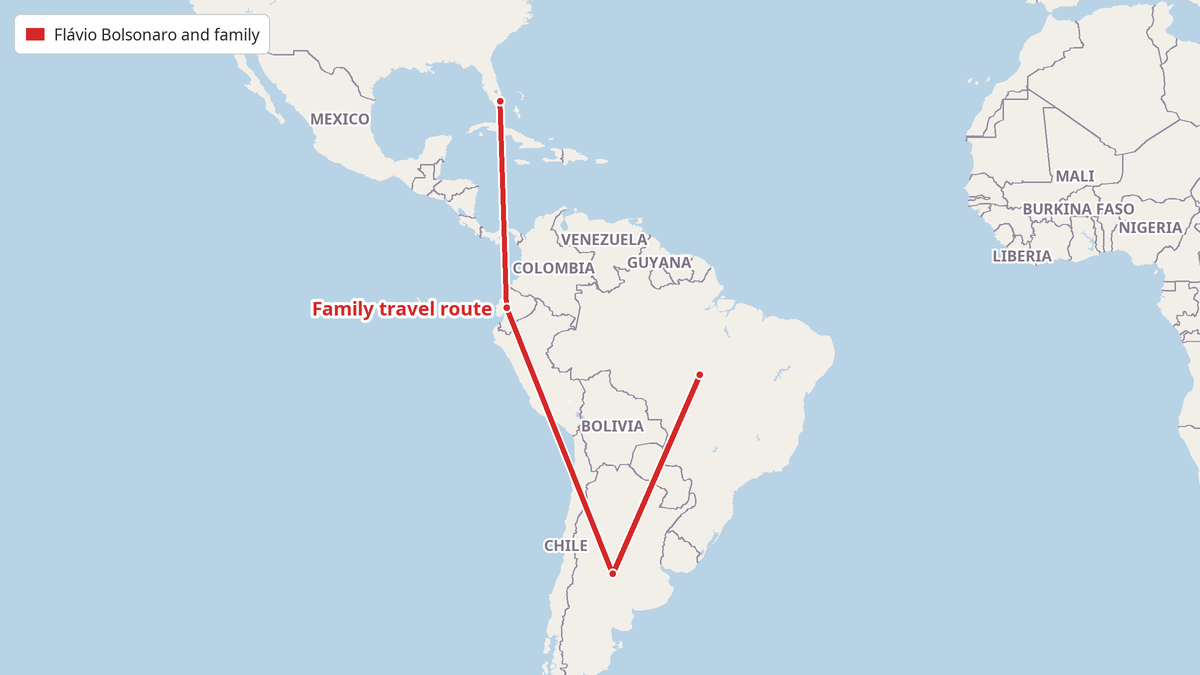
Brazilian Senator Flavio Bolsonaro and his family landed in Miami, Florida, on Wednesday, October 28, 2026, three days after he lost the presidential election to incumbent Luiz Inacio Lula da Silva. He arrived despite refusing to comply with a Brazilian Supreme Court order to surrender his passports.
The order came from a money-laundering investigation. Bolsonaro denies wrongdoing. The court's demand was clear, and he didn't meet it.
A Route Out of Brazil
The family’s route to Florida took them through two countries. Bolsonaro traveled from Brazil to Argentina and then Ecuador with his wife and two daughters, Argentina's migration authority said Wednesday.
Argentina's migration department said the family entered northern Argentina late Tuesday. They then boarded a private jet to Guayaquil, Ecuador, before heading on to Miami. The trip drew attention across the region, according to the source report.
The timeline moved quickly. Bolsonaro lost the vote on Sunday, October 25. By late Tuesday, October 27, his family had crossed into Argentina with him. Wednesday found them in Miami.
Visas From Washington
The United States government granted Bolsonaro and his family entry visas while he was declining to hand his travel documents to Brazil's highest court. That sequence matters: a judicial order in one democracy remained unmet as another government's visa process moved ahead.
Brazil's Supreme Court had requested the passports, a routine measure in cases where authorities want to ensure a person under investigation remains available to the courts. Surrendering them is a standard way to keep a legal process intact. Bolsonaro chose to leave instead.
The Accountability Question
The facts are narrow, and they're worth stating plainly. A senator under investigation in a money-laundering case lost a presidential election, received an order from the Supreme Court to surrender his passports, failed to do so, and crossed two international borders by private aircraft to reach the United States.
Bolsonaro denies the underlying allegations, and nothing in the record establishes his guilt. An investigation isn't a conviction. But the court order and his response to it are separate from the case's merits, and they raise a direct question: can anyone with the means to travel sidestep judicial authority?
Available reporting doesn't include comment from Brazil's Supreme Court, Lula's government, or Bolsonaro himself about his decision to leave. Those voices will shape what comes next.
Why This Matters:
Court orders work only when people follow them. The rule of law depends on the principle that no one—including a senator and recent presidential candidate—stands above judicial process. Bolsonaro's departure after an election defeat puts that principle under strain in one of the world's largest democracies. For Brazilians, the stakes are practical: an investigation into alleged money laundering involves public trust, and distance between a subject and the courts complicates efforts to resolve it. The situation also tests how neighboring governments and the United States treat a figure who declined to comply with a ruling at home. Their choices signal whether international borders can offer an exit from domestic accountability. Bolsonaro maintains his innocence, and he's entitled to defend himself. The open question is whether he'll do so within the system he left behind.
- flávio bolsonaro
- miami
- brazilian election
- luiz inácio lula da silva
- argentina
- money laundering investigation
- travel visas