
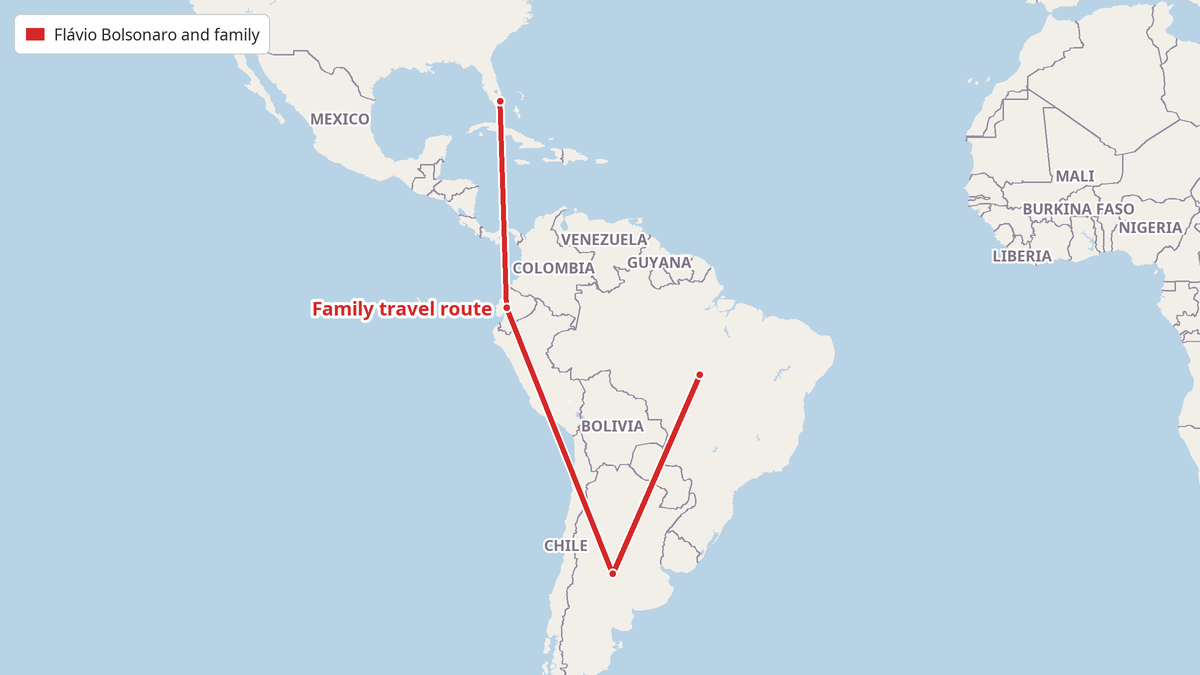
Brazilian Senator Flavio Bolsonaro and his family landed in Miami, Florida, on Wednesday, October 28, 2026, three days after he lost the presidential election to incumbent Luiz Inacio Lula da Silva. He arrived after refusing to comply with a Brazilian Supreme Court order to surrender his passports.
The United States government had granted entry visas to Bolsonaro and his family. That detail matters. A sitting senator left his country just days after losing a national election, while a court order demanding his travel documents went unanswered.
The Court Order
The Supreme Court tied its order to a money-laundering investigation. Bolsonaro denies wrongdoing. According to the account of events, he didn't hand over his passports as directed. Instead, he set out with his wife and two daughters on a multi-country route that ended in South Florida.
The sequence raises a basic question: how are legal obligations enforced against prominent political figures, and how quickly can those obligations be sidestepped once someone has the means and visas to leave? A court order that a person can outrun isn't much of an order, and Brazilian authorities now face the practical limits of their reach.
The Route
The family's journey wasn't direct. Argentina's migration authority said Wednesday that Bolsonaro traveled from Brazil to Argentina and then Ecuador with his wife and two daughters. The family entered northern Argentina late Tuesday, according to Argentina's migration department. From there, they boarded a private jet to Guayaquil, Ecuador, before continuing to Miami.
Three countries in roughly a day. A private jet. The logistics alone signal planning, resources, and a willingness to move fast. The trip drew attention across the region as neighboring governments and observers watched a defeated presidential candidate cross borders while a court demanded his passports.
Washington's Role
The United States government's decision to grant entry visas to Bolsonaro and his family puts Washington in an awkward position. It has admitted a figure who declined to follow a Brazilian Supreme Court directive, even as he denies the underlying allegations and maintains his innocence. Visa decisions are a sovereign prerogative, but they carry diplomatic weight. Brasilia will take notice of who was let in and when.
Bolsonaro lost Sunday's election to Lula, who remains in office as the incumbent. The loss and departure came within days of each other, compressing what might otherwise have been a slow political aftermath into a fast-moving legal and diplomatic standoff.
Why This Matters:
The episode tests a principle that free societies depend on: the law applies to everyone, including the politically prominent, and court orders must carry real force. If a senator can leave the country rather than surrender his passports, Brazil's judicial process loses credibility, whatever one thinks of the underlying investigation. Bolsonaro denies any wrongdoing and is entitled to answer the money-laundering allegations through lawful channels. Fleeing the process, though, invites suspicion and complicates any defense. For Washington, the visa decision now ties American policy to a politically charged dispute in a major Western Hemisphere economy. Trade partners and investors will watch whether Brazil's institutions can handle a contested transition and an absent defendant without further instability. Predictable rule of law is the foundation of sound markets, and this case puts that foundation under scrutiny.
- flávio bolsonaro
- miami
- brazilian election
- luiz inácio lula da silva
- argentina
- money laundering investigation
- travel visas