
French Prime Minister Sébastien Lecornu announced on Monday that the minimum wage will rise 1.6% from 1 December, a month earlier than the usual 1 January schedule. The increase lifts the monthly net minimum wage to around 1,502 euros, or 24 euros more per month. For workers on the lowest pay, it's a modest gain arriving in the middle of a cost-of-living squeeze.
Lecornu made the announcement at the end of a conference held at Matignon with representatives of employees and employers. A decree will be published shortly. "This is the second largest increase of the past twenty years," he said. Then came the caveat. "Raising the minimum wage is not enough, but it has a major benefit: it kicks off a cycle of discussions on pay rises."
The Government's Package
The wage rise doesn't come alone. The government has paired it with measures aimed at employers worried about labour costs. Overtime will be exempt from income tax up to 10,000 euros. Employers' contributions to public transport costs will also be exempt. And tax-free "value-sharing bonuses," sometimes called the "Macron bonus," will let companies pay employees a one-off bonus with advantageous tax and social security treatment under certain conditions.
Lecornu also announced a reform project on "general reductions" in social security contributions, aimed at increasing net salary. The government wants to launch a new round of sectoral pay negotiations too, and talks are to continue in the hundred or so professional sectors. He said he intends to make the state the guarantor of mutual commitments between employees and employers.
Asked about time the government was seen as having "wasted" before providing answers, the prime minister was blunt. "I no longer believe in headline-grabbing announcements... I even think they are killing us. When we come before the French people, I want to announce things that work. The government is doing everything it can." He stressed the need for "sincere" commitments, in contrast with promises he sees flourishing as the presidential election approaches. "The duty of the government, which has no electoral timetable, is precisely to find solutions," he said.
Unions Respond Cautiously
The trade unions didn't hide their disappointment. The CFDT had called for an extra 100 euros net per month, and the CGT for around 150 euros. The government's 24 euros sits far below both demands. Cyril Chabanier, president of the CFTC, said before the announcements that the measures under consideration were "not commensurate with the level of social anger."
Sophie Binet, general secretary of the CGT, is calling for another major day of strikes and demonstrations on 17 November, eight days from now.
A Country Under Strain
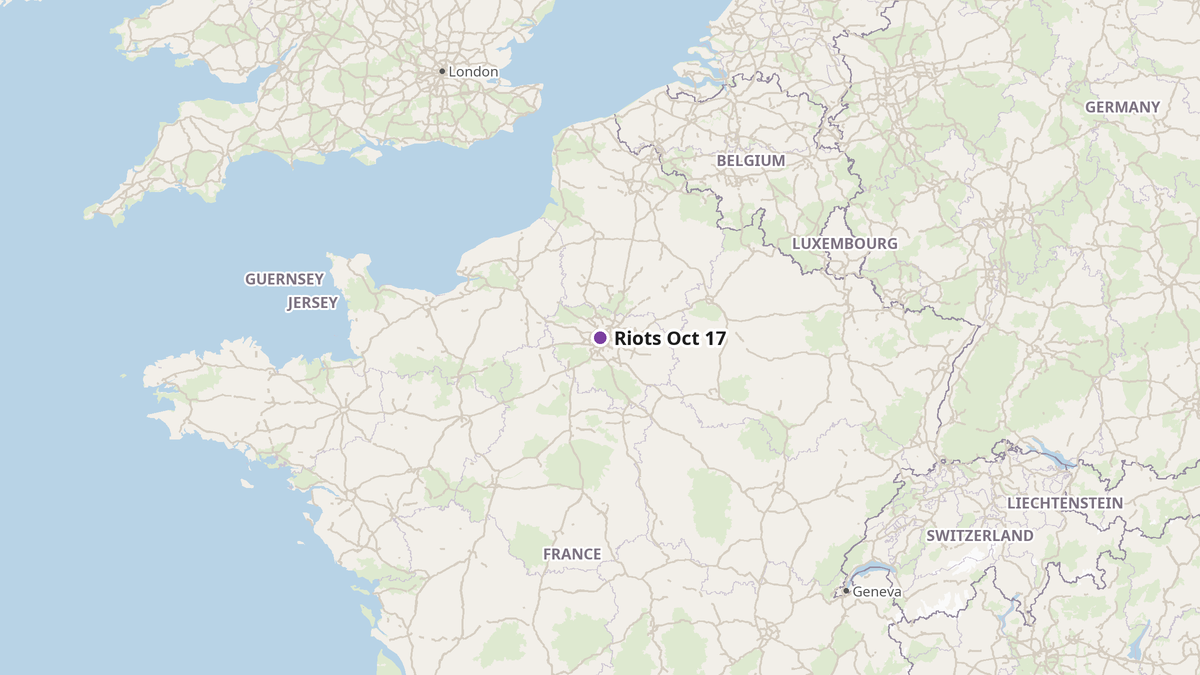
The measure is intended to defuse a cost-of-living crisis that has triggered some of France's worst civil unrest in years. Protests began over underfunded schools and grew into broader demonstrations, including riots in major cities on October 17, about three weeks ago. The government is a minority government, which limits how much it can deliver without building wider support.
A France 24 video segment on social unrest ahead of French elections carried the title "Protesters 'don't believe politics can achieve anything.'" That sentiment, set against a 24-euro monthly rise, frames the challenge Lecornu faces: restoring trust, not just adjusting a number.
Why This Matters:
The gap between what unions asked for and what the government delivered is the story. A 24-euro monthly increase will help, but it lands beside demands several times larger and a protest movement that began with underfunded schools, not just pay. Lecornu himself conceded the minimum wage rise isn't enough. What matters now is whether the promised sectoral negotiations, covering roughly a hundred professional sectors, produce real pay gains for workers, and whether the state follows through as guarantor of the commitments. A minority government facing a strike day on 17 November has limited room to fail. Public investment in schools and services, not only wage tweaks and tax breaks, is the thread that connects the original protests to the present moment.
- minimum wage
- sébastien lecornu
- france
- strike
- cgt
- cost of living
- social security contributions
- protest