
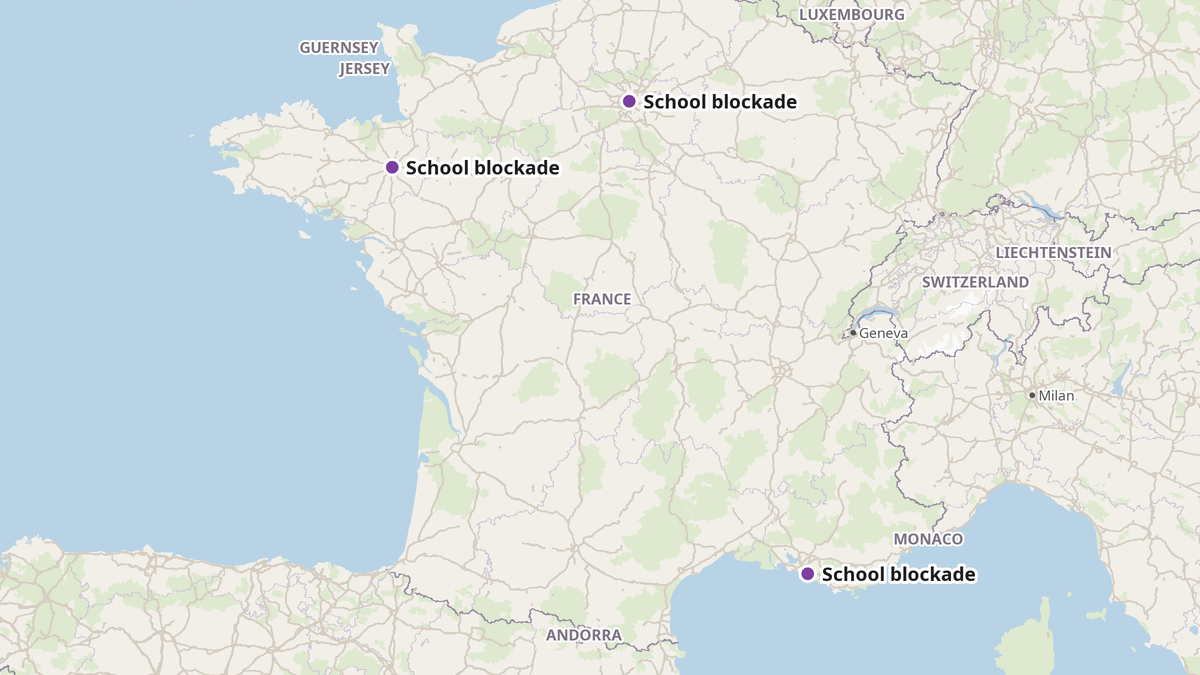
At 08:30 GMT on Monday, 41 French high schools were blockaded as students returned from autumn holidays. That’s about 1% of France’s 3,700 lycées, according to the Education Ministry. The official count was small, but the demands behind it weren’t new. Students want renovated schools, more teachers and university places, and an end to an admissions system they consider socially unfair.
A handful of schools, a national argument
France 24 reported attempts to blockade schools in Paris, Marseille and Rennes. Hundreds of France’s more than 3,000 high schools had faced blockades in the weeks before the break. The protests began in the Paris suburbs in September, then spread across France. At first, students protested learning conditions and inequality; later, they focused on the cost of living.
In Marseille, students stacked several garbage bins in front of one school entrance. “We've resumed the movement because we were supposedly given answers, but... it's clearly not enough,” 16-year-old Meriem told AFP as she perched on a dumpster. The government announced measures during the holiday. Students returned to the gates anyway.
Last week, Education Minister Édouard Geffray offered to cap classes at 28, spend €4 billion ($4.47 billion) renovating schools, create 15,000 new higher-education places and introduce a new admissions system by 2028. Student representatives rejected the offers as insufficient and said they’d continue protesting. They want more teachers, renovated aging schools and additional university places, alongside changes to admissions.
Permission to protest, not to block
Geffray told France Inter that students could protest, but blocking school access was illegal. “In terms of blockades – or rather, attempted blockades – the phenomenon is very marginal. We're talking about just a handful of units, a few individual schools,” he said. Television footage showed police at schools, though officers weren’t in full anti-riot gear.
The minister also urged students to return to class to avoid failing exams. “I have students who are sitting the baccalaureate at the end of the year and several hundred thousand of them haven't attended classes for four or five weeks.” His warning set the exam timetable against students’ decision to withhold attendance. Macron, meanwhile, called for classes to resume calmly, saying that “young people have been heard.”
Promises meet the debt ceiling
On the Saturday before classes resumed, hundreds of thousands of people, including students, took to the streets during a third consecutive weekend of demonstrations. The previous month, protests in several cities degenerated into clashes with police and riots; people looted shops, testing President Emmanuel Macron’s minority government. The account also describes a wave of so-called “Gen Z” protests in Germany, Italy, Belgium and Albania, driven by grievances including the cost of living, poor school conditions and perceived corruption.
The government has little room for additional spending to meet students’ demands. France’s economy is on the brink of recession and under pressure to rein in debt. That constraint sits alongside the minister’s offers on renovations and staffing, while students say the proposed answers don’t go far enough. A new admissions system won’t arrive until 2028. For now, the state’s response combines promised investment, exam warnings and a clear line around school entrances.
- french high schools
- student protests
- france
- education
- school blockades
- édouard geffray
- university admissions
- cost of living