
France saw 41 high schools blockaded on Monday, according to the Education Ministry. That’s about 1% of the country’s 3,700 lycées, and far fewer than in the weeks before the autumn break, when students shut down hundreds of more than 3,000 high schools. The movement has shrunk. But the bill it hands a government with little fiscal room hasn’t disappeared.
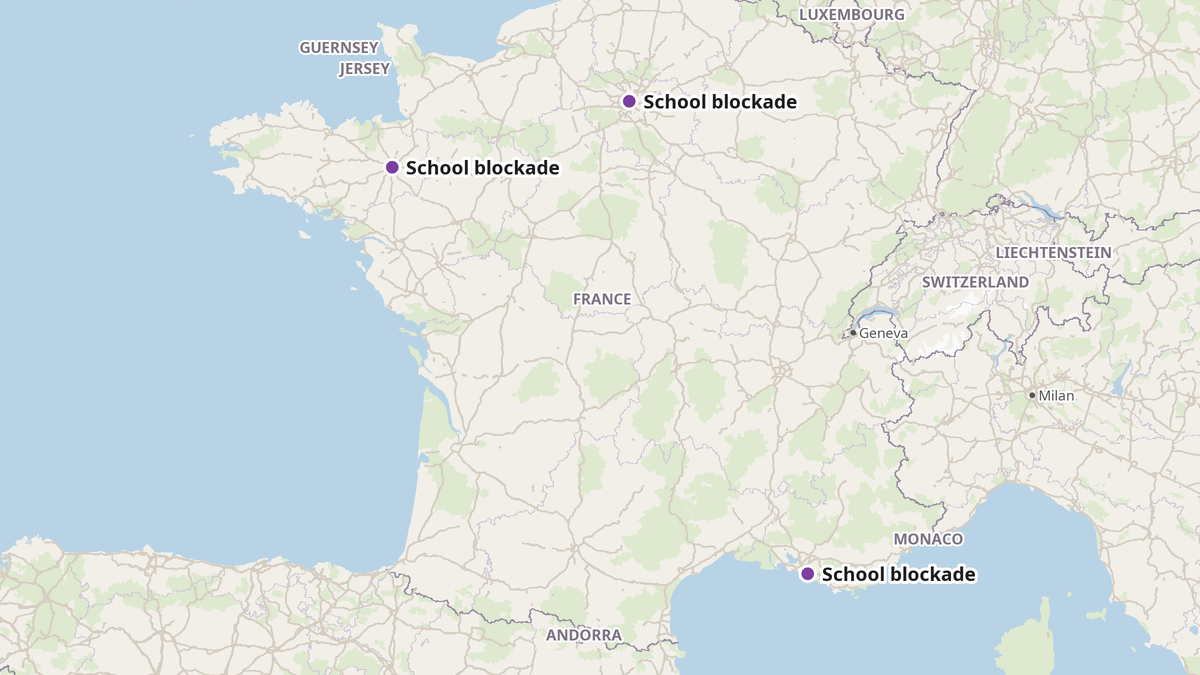
By 08:30 GMT, France 24 reported attempted blockades in Paris, Marseille and Rennes. In Marseille, students piled garbage bins outside one school. “We’ve resumed the movement because we were supposedly given answers, but... it’s clearly not enough,” 16-year-old Meriem told AFP, perched on a dumpster.
The Fiscal Picture
During the holiday, the government moved to meet students’ demands. Education Minister Édouard Geffray offered last week to cap classes at 28 pupils, spend €4 billion ($4.47 billion) renovating schools, create 15,000 new higher-education places and bring in a new admissions system by 2028. Student representatives said the package fell short and vowed to keep protesting.
There’s little room for a larger offer. The government has limited scope to spend more, with the European Union’s second-largest economy on the brink of recession and under pressure to rein in debt. Each extra euro promised to protesters must come from somewhere in a budget already strained by those pressures.
Order and the Rule of Law
The protests began in the Paris suburbs in September, then spread nationwide. Students first focused on learning conditions and inequality, before widening their demands to the cost of living and drawing in trade unionists and activists. Some protests turned violent. The previous month, demonstrations in several cities devolved into clashes with police and riots; shops were looted, testing President Emmanuel Macron’s minority government. Hundreds of thousands, including students, marched on the Saturday before classes resumed, marking the third consecutive weekend of demonstrations.
Geffray distinguished protest from obstruction. “Protests are allowed,” he told France Inter, “but blocking access to schools is illegal.” He described the blockades as rare. “In terms of blockades – or rather, attempted blockades – the phenomenon is very marginal. We’re talking about just a handful of units, a few individual schools,” he said. Television footage showed police at schools, though officers weren’t wearing full anti-riot gear.
The stoppage carries a real cost for education. “I have students who are sitting the baccalaureate at the end of the year and several hundred thousand of them haven’t attended classes for four or five weeks,” Geffray said. He urged pupils to return to class to avoid failing their exams. Macron called for lessons to resume calmly, saying that “young people have been heard.”
A Wider Pattern
France isn’t alone. So-called “Gen Z” protests have also swept across Germany, Italy, Belgium and Albania, driven by grievances such as the cost of living, poor school conditions and perceived corruption. Across borders, people share frustration with institutions that seem unable to provide basic services as living costs bite.
Students want aging schools renovated, more teachers and university places, and an end to an admissions system they consider socially unfair. Paris has responded on each point, with the admissions overhaul scheduled for 2028. The open question is whether that timeline and offer can satisfy a movement that has already rejected the package.
Why This Matters:
The figures point to a protest movement losing momentum: the number of blockaded schools has fallen from hundreds to 41. Yet the underlying tension is fiscal. A minority government facing possible recession and debt pressure has promised billions for school renovations and new places, while students say it isn’t enough. That gap between demands and capacity is the pattern to watch in France and in other countries facing similar unrest. Governments that can’t increase spending must rely on credibility and enforce the rules, including keeping schools open, to retain public trust. Hundreds of thousands of pupils have missed weeks of teaching before the baccalaureate, a cost borne by the very students the protests claim to defend.
- french high schools
- student protests
- france
- education
- school blockades
- édouard geffray
- university admissions
- cost of living