
French Prime Minister Sébastien Lecornu announced on Monday that the minimum wage will rise 1.6% from 1 December, a month ahead of the usual 1 January date, lifting it to around 1,502 euros net per month. That's an extra 24 euros net a month for those on the lowest legal pay. A decree will be published shortly.
Lecornu made the announcement at the end of a conference at Matignon with representatives of employees and employers. He framed the rise as significant. "This is the second largest increase of the past twenty years," he said. But he didn't oversell it. "Raising the minimum wage is not enough, but it has a major benefit: it kicks off a cycle of discussions on pay rises."
The Cost to Employers
A minimum wage rise lands first on the payrolls of businesses already worried about labour costs. The government knows it. Alongside the increase, it plans tax measures aimed at softening the blow: income tax exemption for overtime up to 10,000 euros, an exemption for employers' contributions to public transport costs, and tax-free "value-sharing bonuses," sometimes called the "Macron bonus." Those bonuses let companies pay employees a one-off sum with advantageous tax and social security treatment under certain conditions.
Lecornu also announced a reform project on "general reductions" in social security contributions, aimed at increasing net salary. The approach matters. Rather than leaning only on a statutory floor, the government is signalling it wants to raise take-home pay by cutting the charges that sit between an employer's cost and an employee's wage. The state, in other words, is looking at its own take as part of the answer. Sectoral negotiations are to continue in the hundred or so professional sectors, and the government wants to launch a new round of pay talks.
Promises and Credibility
Asked about time the government was seen as having "wasted" before providing answers, Lecornu rejected the politics of the grand gesture. "I no longer believe in headline-grabbing announcements... I even think they are killing us. When we come before the French people, I want to announce things that work. The government is doing everything it can."
He stressed the need for "sincere" commitments, contrasting them with promises he sees flourishing as the presidential election approaches. "The duty of the government, which has no electoral timetable, is precisely to find solutions," he said. He intends to make the state the guarantor of mutual commitments between employees and employers.
The backdrop is a minority government. That limits what Lecornu can push through, and it explains the emphasis on negotiation over legislation.
The Unions Aren't Satisfied
Trade unions reacted cautiously. The CFDT had called for an extra 100 euros net per month, the CGT for around 150 euros. The government's 24 euros falls well short of both. Cyril Chabanier, president of the CFTC, said before the announcements that the measures under consideration were "not commensurate with the level of social anger."
Sophie Binet, general secretary of the CGT, is calling for another major day of strikes and demonstrations on 17 November, eight days from now.
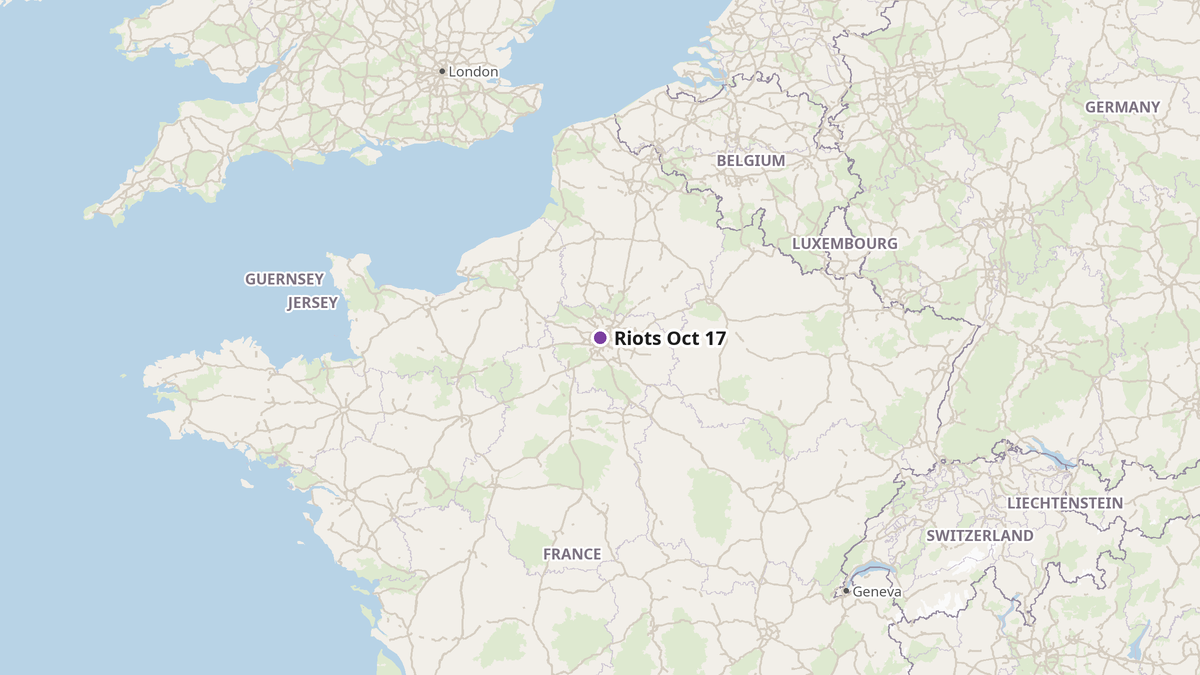
The measure is meant to defuse a cost-of-living crisis that has triggered some of France's worst civil unrest in years. Protests began over underfunded schools and grew into broader demonstrations, including riots in major cities on October 17, about three weeks ago.
Why This Matters: The announcement shows how little room a minority government has when public anger meets tight public finances. Lecornu has chosen a modest wage rise, paired with tax relief for firms and a promise to cut contributions, rather than a large headline figure. That keeps pressure off employers, but the gap between 24 euros and the unions' demands of 100 to 150 euros suggests the strike on 17 November will go ahead. For French businesses, the question is whether tax breaks can offset higher labour costs. For voters, it's whether the state can raise net pay by taking less from it, rather than spending more. With a presidential election approaching, the credibility of the government's "sincere" commitments will be tested quickly.
- minimum wage
- sébastien lecornu
- france
- strike
- cgt
- cost of living
- social security contributions
- protest