
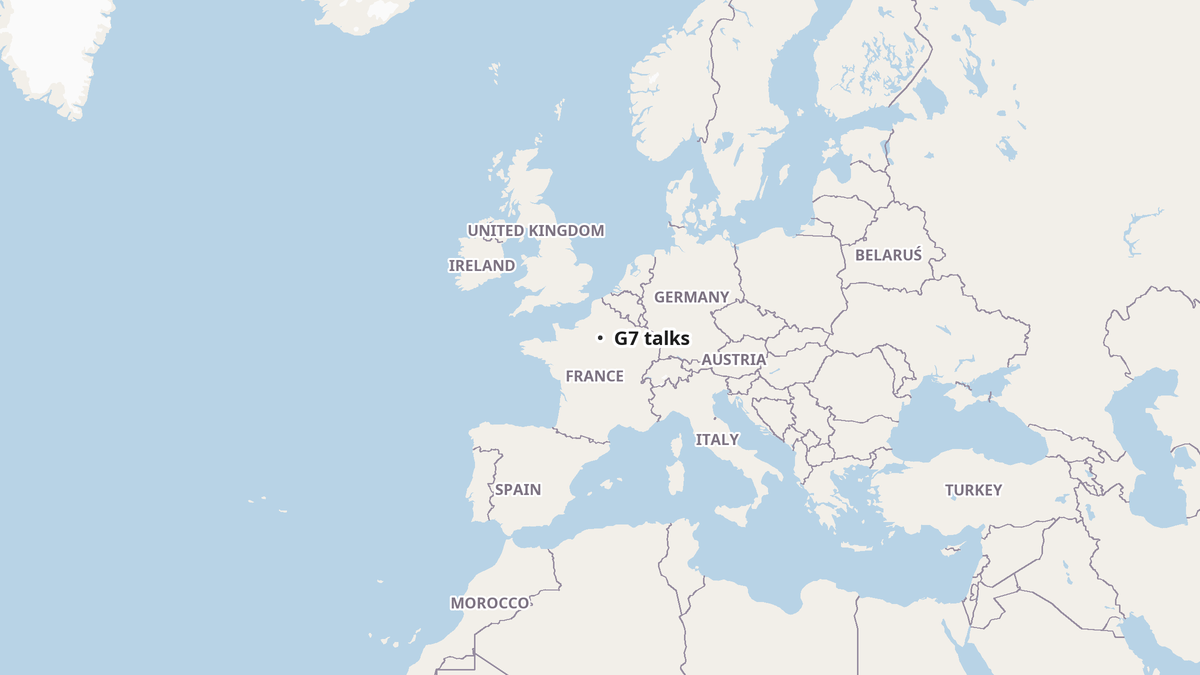
Foreign ministers from the world's leading industrialised democracies gather in Paris today for two days of talks, and the question hanging over the room is simple: will Europe have a say in how the war on its own continent ends? The G7 meeting, running Monday and Tuesday, brings together diplomats from Britain, Canada, France, Germany, Italy, Japan and the United States. It coincides with US-mediated talks between Moscow and Kyiv in Abu Dhabi, due to begin Tuesday.
A Settlement Without Europe?
European governments are worried. They fear Washington may be steering Ukraine toward a settlement that favours Russia. Their unease grew after US President Donald Trump, ahead of the Abu Dhabi talks, said a "very big" deal was in the making. Ukraine, he suggested, could emerge with altered borders. "I think we're gonna have it done, and I think it's gonna happen and they're gonna end up with a little bit different shape Ukraine," Trump told broadcaster CBS. He added that the deal would involve all of Europe.
For Ukrainians, a "different shape" is not an abstraction. It means communities, homes and lives on the wrong side of a line drawn elsewhere.
French Foreign Minister Jean-Noel Barrot was direct. "Europeans will be represented and France will participate in these talks," he told RTL radio. Asked about US plans for an agreement, Barrot said he didn't know the details. But he stressed that no deal affecting the European security architecture could be done without the Europeans. European leaders have long insisted that any settlement must not come at the expense of Ukraine's sovereignty.
Security Guarantees and Open Questions
All eyes will be on US Secretary of State Marco Rubio, who attends both days, unlike the last G7 meeting where he came for only one. Rubio has suggested recent discussions made progress on security guarantees for Ukraine and the wider European region. Trump's envoy and son-in-law Jared Kushner has also described US efforts to develop a broader European security framework.
Kyiv isn't convinced the sequencing is right. Ukrainian President Volodymyr Zelenskyy has in the past expressed doubts over proposals for a new European security framework, suggesting such debates should follow, rather than precede, efforts to end the war.
Iran and the Strait of Hormuz
The ministers will also turn to Iran. Trump hasn't ruled out further military strikes. Washington has previously considered targeting suspected nuclear facilities, including the site known as Pickaxe Mountain, following the US midterm elections last week. Tehran denies the location is a nuclear facility.
European governments are pressing for a diplomatic resolution rather than a return to military action. Global attention is fixed on restoring normal shipping through the Strait of Hormuz, a critical route for international energy supplies. Trump recently said Iranian officials were keen to reach an agreement, suggesting negotiations remain possible.
The Paris meeting is among the final major diplomatic events of France's G7 presidency. The United States is due to take over the group's rotating presidency in 2027.
Why This Matters:
The stakes here reach well beyond diplomatic protocol. A settlement negotiated without European participation could redraw borders and reshape the continent's security order, while those who live with the consequences, Ukrainians first and Europeans close behind, would have no seat at the table. Brussels and national capitals have repeatedly said the war's end must respect Ukraine's sovereignty, yet the Abu Dhabi talks show how quickly leverage can shift when Europe isn't in the room. A unified European voice, backed by real diplomatic weight, is the practical answer to that gap. On Iran, the same logic applies: energy prices and shipping routes hit household budgets across Europe, and diplomacy costs far less than another round of strikes.
- g7
- ukraine
- russia
- iran
- marco rubio
- strait of hormuz
- european security
- diplomacy