
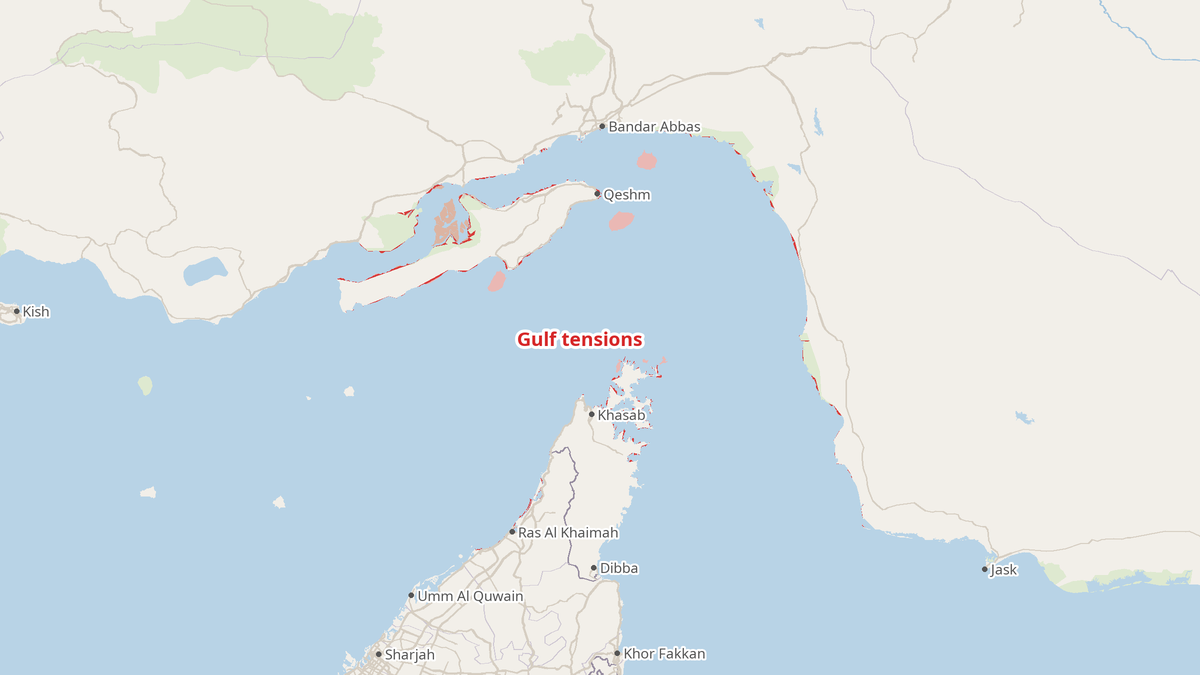
A Jordanian sailor remains missing after an ADNOC Logistics and Services tanker came under attack in the Strait of Hormuz. The United States and Iran weighed military threats as they also explored a return to negotiations.
The United Arab Emirates and Oman searched for the sailor. The Joint Maritime Information Centre said attackers had hit seven oil tankers in the area since November 16, including three near Oman's coast between November 20 and 21. The latest attacks targeted outbound tankers 8 to 17 nautical miles from Khasab, Oman.
Shipping faces danger as U.S. President Donald Trump threatens to sink Iranian vessels that try to breach the U.S. naval blockade. Iran warned that attempts to stop its tankers would trigger a “fierce military response” and immediate strikes on Gulf energy infrastructure.
Shipping under threat
Iranian media reported that two oil tankers caught fire in the Strait of Hormuz after entering a “restricted area” east of the strait, according to Iran's navy. The strait links the Arabian Gulf to international markets and serves as a major oil and gas transit route. Any disruption could affect shipping, oil supplies and energy markets.
A maritime security analyst said the U.S. had struck a tanker exporting Iranian oil as part of the blockade. Neither Washington nor Tehran had officially confirmed the reported strike.
The United Kingdom Maritime Trade Operations agency said Sunday evening that a tanker had encountered “military forces” in the Gulf of Oman, east of the Strait of Hormuz near the Iranian city of Chabahar. The agency didn't identify the vessel or connect it to a reported Iranian convoy. U.S. Central Command hadn't formally commented on the reported strike and had rejected Iranian claims of successful attacks.
Fox News chief foreign correspondent Trey Yingst asked Trump on Sunday, November 22, about reports that Iran was preparing to test the blockade. Trump replied: “I hope they do, they'll all be at the bottom of the sea like the rest of the navy.”
Iranian reports said more than 14 tankers were gathering near Kharg Island, the country's main crude export terminal, for a possible attempt to breach the blockade. Those reports drew on satellite imagery and vessel-tracking data, but no one had independently confirmed them. Whether the ships would try to cross remained unclear.
Windward AI's Maritime Intelligence Operations Centre identified 31 laden, sanctioned tankers positioned beyond the Strait of Hormuz between November 13 and 20. The maritime intelligence firm said four carried crude oil, with an estimated 4.9 million barrels aboard; the other 27 carried liquefied petroleum gas or refined petroleum products. U.S. Central Command enforced the U.S. blockade, with two U.S. carrier strike groups in the region.
Diplomacy against a threat of strikes
Egypt was working with Qatar, Turkey, Saudi Arabia and Pakistan to bring Washington and Tehran back to negotiations, Foreign Minister Badr Abdelatty said Sunday. “I believe that there is a possibility for dialogue, for reaching a deal, and for reaching a compromise,” he told CNN.
Iranian Deputy Foreign Minister Kazem Gharibabadi said talks with Washington were continuing and that the window for diplomacy remained open. Iranian Foreign Minister Abbas Araghchi told a cabinet meeting that “the path of diplomacy continues.” Gharibabadi also called the U.S. blockade an “act of war.”
Iran had put forward a seven-point proposal reportedly sent through Qatar. Its conditions included lifting the U.S. blockade, easing oil sanctions and addressing other economic restrictions before further talks could move forward. Iran also sought assurances against renewed hostilities and held to its position on retaining its enriched uranium stockpile.
The U.S. sought an agreement covering Iran's nuclear program and regional military activities. A Qatari delegation went to Tehran on November 21 for discussions, and Gharibabadi said Iran remained in touch with mediators, including Qatar.
Trump said he wanted a permanent agreement but called Iran's proposed terms “unacceptable.” He also described Iranian negotiators as “professional tap dancers,” accusing them of dragging out discussions without meaningful concessions.
Pressure for military action
Israeli Prime Minister Benjamin Netanyahu was urging Washington to launch a short, intensive campaign. He believed it could severely weaken Iran's government and potentially bring about its collapse. Trump's advisers remained divided over whether another offensive would achieve that goal or whether the United States should keep relying on its economic blockade.
Ynet reported, citing U.S. administration officials, that Washington had decided to delay a potential attack for now. Yingst reported that Trump leaned toward resuming strikes after the New Year if negotiations failed. A separate report said Israel and U.S. Central Command had agreed to draw up joint plans for a possible escalation, but neither side had decided to attack.
U.S. Central Command remained at maximum readiness and favored a joint strike with Israel, i24NEWS reported, citing Israeli security officials. An Israeli source called the situation “anxious waiting.”
An Associated Press report published November 17 documented renewed U.S.-Iran military exchanges. These included Iranian attacks on U.S. military targets in Bahrain and a U.S. strike on an Iranian missile-launch site on Qeshm Island.
In Yemen, Houthi media said a Saudi attack killed four people and wounded 18 in the port city of Hodeida on Monday. The Houthis' Almasirah television channel said on X that the strike hit a building belonging to Yemen's Public Telecommunications Corporation. Riyadh didn't comment immediately.
Why This Matters: The search for a missing sailor puts a human face on the danger in the Strait of Hormuz, while reported tanker attacks threaten a major oil and gas transit route. Trump has threatened to sink vessels that challenge the blockade; Iran has threatened strikes on Gulf energy infrastructure if anyone stops its tankers. Regional governments are trying to restart negotiations, and both sides say diplomacy continues. For the people aboard ships in the strait, the danger is already immediate.
- iran
- united states
- strait of hormuz
- oil tankers
- military blockade
- israel
- diplomacy
- gulf of oman