
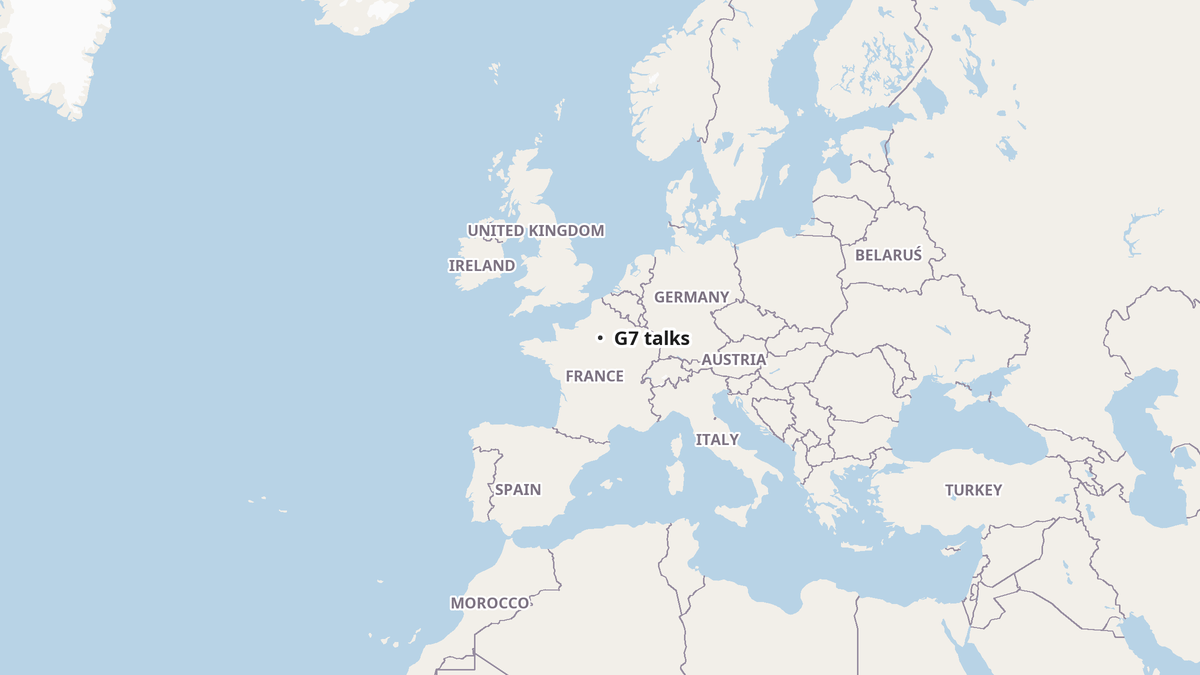
Seven foreign ministers sat down in Paris today with one question hanging over the table: will Europe be in the room when the future of its own continent is decided? French Foreign Minister Jean-Noel Barrot told RTL radio that "Europeans will be represented and France will participate in these talks." Nobody in Washington has confirmed it in the base reporting. The Group of Seven gathering, running Monday and Tuesday, brings together diplomats from Britain, Canada, France, Germany, Italy, Japan and the United States. It's day one of two.
Who Decides the Borders?
The timing is deliberate. US-mediated talks between Moscow and Kyiv in Abu Dhabi are scheduled to begin on Tuesday. European governments fear Washington may be steering Ukraine toward a settlement that favours Russia. President Donald Trump said ahead of the talks that a "very big" deal was in the making. "I think we're gonna have it done, and I think it's gonna happen and they're gonna end up with a little bit different shape Ukraine," Trump told broadcaster CBS.
A different shape. Altered borders on European soil, negotiated in the Gulf, with the continent's governments asking for an invitation. Trump also said the deal would involve all of Europe. Barrot admitted he did not know the details of the US plans, yet insisted that no deal affecting the European security architecture could be done without the Europeans.
The Security Question
European leaders have long insisted that any settlement should not come at the expense of Ukraine's sovereignty. They want a place at the table. What they haven't shown is the leverage to claim one. The continent that spent years lecturing others about its collective strength now waits to learn what Washington and Moscow have agreed about its eastern frontier.
US Secretary of State Marco Rubio will attend both days, unlike the last G7 meeting where he came for only one. Rubio suggested recent discussions had made progress on security guarantees for Ukraine and the wider European region. Trump's envoy and son-in-law Jared Kushner has described US efforts to develop a broader European security framework.
Ukrainian President Volodymyr Zelenskyy has expressed doubts. He has suggested that debates over a new European security framework should follow, rather than precede, efforts to end the war.
Iran and the Hormuz Chokepoint
The ministers will also take up US tensions with Iran. Trump has not ruled out additional military strikes. Washington has previously considered targeting suspected nuclear facilities, including the site known as Pickaxe Mountain, following the US midterm elections last week. Tehran denies that the location is a nuclear facility.
European governments are seeking a diplomatic resolution rather than a resumption of military action. Global attention is on the restoration of normal shipping through the Strait of Hormuz, a critical route for international energy supplies. Trump recently said Iranian officials were keen to reach an agreement, suggesting negotiations remained possible.
The energy route matters for a simple reason. European households and industry depend on supplies moving through waters they don't control and can't secure on their own. When the continent's governments ask Washington to hold back on Iran, they're asking another power to protect their own energy supply.
What Comes Next
The Paris meeting is among the final major diplomatic events of France's G7 presidency. The United States is scheduled to assume the group's rotating presidency in 2027. Washington will chair the forum next year, as European capitals still press for a voice in decisions about their own security. The Abu Dhabi talks open tomorrow. Whether Europe is represented or merely informed will be the first test of what today's meeting actually achieved.
- g7
- ukraine
- russia
- iran
- marco rubio
- strait of hormuz
- european security
- diplomacy