
Hesse's interior minister Roman Poseck stood before a press conference on Sunday and put a number on the state's answer to Saturday night: 1,300 police officers deployed in Frankfurt alone, 54 people arrested aged between 13 and 29. Thirteen years old. That's the youngest name on the state's list of troublemakers, after a day in which more than 100,000 mostly young people marched across Germany asking for money for schools, housing, healthcare, climate protection and a cheaper daily life.
The marches on October 31 were organised by a youth initiative called "Gen Z regelt", roughly "Gen Z's got this". Reuters rendered it "Gen Z takes charge". The alliance of school and university students said 120,000 people took to the streets against social spending cuts, crumbling schools, the cost of living and the return of conscription, according to bne IntelliNews. Reuters counted tens of thousands rallying in dozens of German cities. The day itself passed largely peacefully.
Night Falls, the Water Cannon Come Out
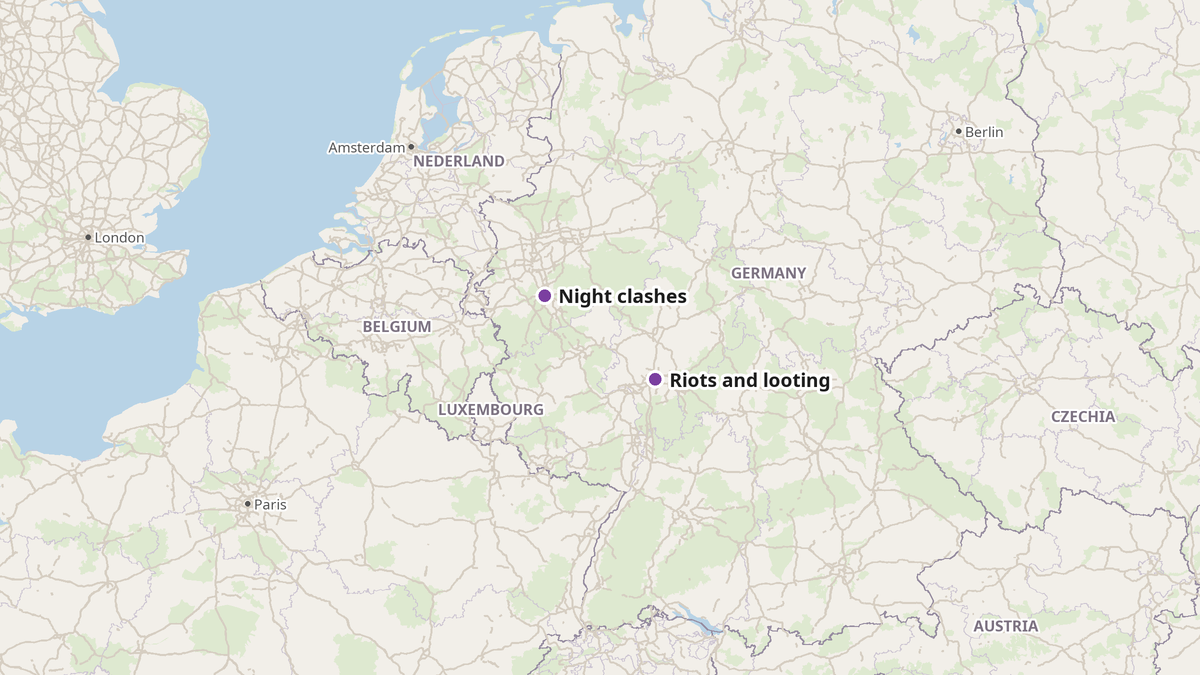
Then the demonstrations ended and the night began. In Frankfurt, rioters attacked police downtown and looted stores. Poseck said hooded rioters damaged 17 stores, five of them looted. Windows were smashed and streetwear carried off. Police reported petrol bombs, rocks and bottles thrown at emergency services, and used water cannon. Authorities sealed off Die Zeil, the main shopping street. Over 100 people were injured in the clashes, Poseck said. One person was arrested on suspicion of breaking into a gun store and stealing two weapons, which police recovered.
Cologne saw water cannon too. In Berlin, protesters attacked police with bottles and pyrotechnics. In Hamburg, officers said they were "repeatedly pelted with stones, fireworks and other objects" before organisers called the march off early.
The State Writes the Script
"I am shocked by what I have seen, and there is no point in sugar-coating it. Let me make this very clear: Things cannot go on like this," Poseck said. Governor Boris Rhein of Hesse added that the violence "will not go unpunished" and that anyone behaving like the attackers "places themselves outside our society."
Federal Interior Minister Alexander Dobrindt of the CSU went further. He blamed "violent left-wing groups and troublemakers from the immigrant community" for hijacking peaceful demonstrations. Reuters noted he offered no evidence and didn't say which groups had joined the demonstrations. The Telegraph ran it under the headline "Germany blames migrants and leftists for violent protests." Poseck, citing police information, said most of those arrested were German nationals, yet police "currently estimate that they are dealing with between 1,000 and 1,500 violent troublemakers, predominantly from an immigrant background."
Read that twice. The arrested are mostly German nationals. The narrative is about migrants anyway. Dobrindt also said border controls had been tightened ahead of the protests, out of fear extremist groups from abroad could exploit them. A day of schoolchildren demanding classrooms became, within hours, a border security story.
What They Were Actually Asking
Strip away the interior ministers and the demands are plain: money for education, housing, climate protection, healthcare, an end to social cuts and a refusal of compulsory military service. Germany's new military service law, passed in December 2025, less than one year ago, is bringing conscription back step by step. In September, school students walked out in more than 100 cities against it, per bne IntelliNews.
Chancellor Friedrich Merz told the Bundestag on October 14: "Not a single euro that flows to Ukraine is being diverted from social spending and education spending in our country." The kids in the street, saying 120,000 strong that schools are crumbling and the cost of living bites, apparently didn't get the memo.
The organisers posted a statement on Instagram distancing themselves from "any form of violence, as well as violent acts by other groups or individuals" who weren't part of the demonstrations. Dobrindt, meanwhile, called his policing strategy of a large security presence across multiple locations effective, and promised "severe penalties." The protests followed youth-driven demonstrations in France that helped inspire rallies in Portugal, Italy and Germany. The ministers' reply, so far, is truncheons, water cannon and a list of suspects.
- gen z protests
- germany
- frankfurt
- riots
- police
- protests
- military service
- alexander dobrindt