
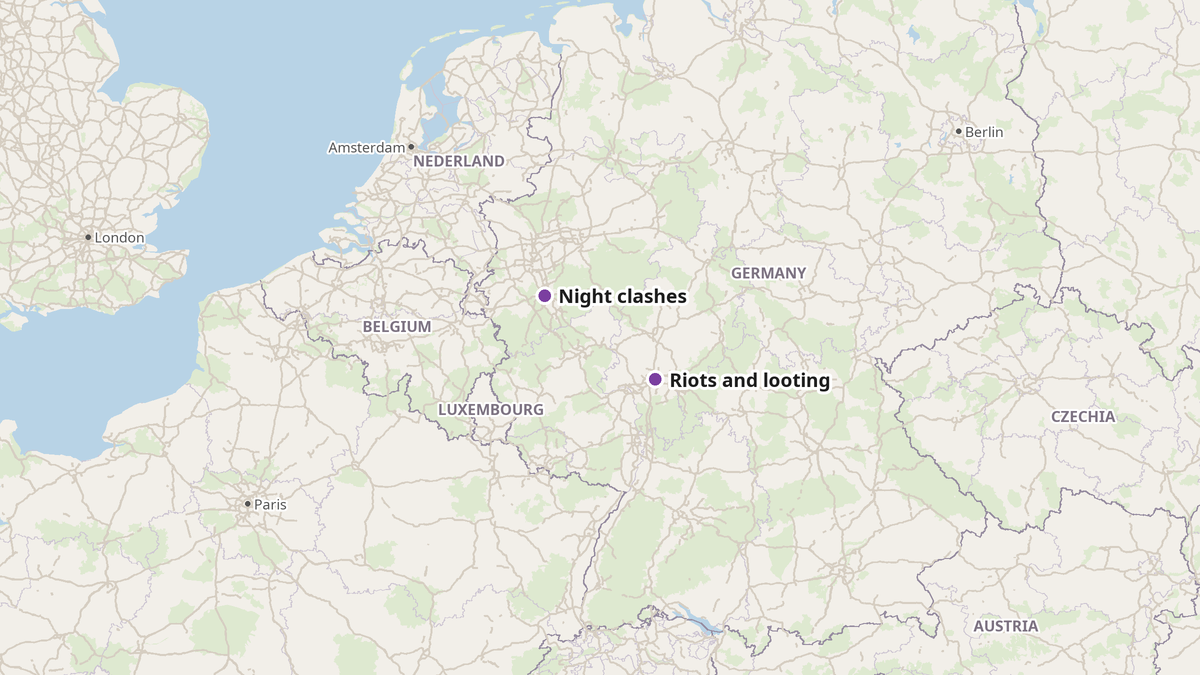
Hesse's interior minister told a press conference on Sunday that police were dealing with "between 1,000 and 1,500 violent troublemakers, predominantly from an immigrant background" after rioting in Frankfurt on Saturday night. Roman Poseck said most of those arrested were German nationals. He cited police information for the immigrant-background claim and offered no figures to back it.
The riots followed a day of largely peaceful, youth-led demonstrations across Germany on Saturday, October 31. More than 100,000 mostly young people protested, according to reports. The alliance of school and university students behind "Gen Z regelt" put the number at 120,000. Their demands: more money for education, housing, climate protection and healthcare, and relief from the cost of living. They also protested social spending cuts, crumbling schools and the return of conscription. Reuters said tens of thousands rallied in dozens of German cities.
Blame Assigned Before Evidence
Federal Interior Minister Alexander Dobrindt, of the conservative Christian Social Union, accused "violent left-wing groups and troublemakers from the immigrant community" of hijacking peaceful demonstrations. According to Reuters, he gave no evidence for the claim and did not say which groups had joined the demonstrations. The Telegraph's headline summed up the framing: "Germany blames migrants and leftists for violent protests."
Dobrindt also said border controls had been tightened ahead of the protests, out of fear that extremist groups from abroad could exploit them to stir riots. A youth movement over schools, rents and conscription was met with a border measure.
He promised punishment. "I expect there to be severe penalties. We are not prepared to accept, in the slightest, that such incidents and such rioting should take place here," he told reporters on Sunday. Boris Rhein, governor of Hesse, said the violence "will not go unpunished" and that anyone behaving like the attackers "places themselves outside our society."
What Happened in Frankfurt
Frankfurt was the main flashpoint. After a demonstration there, rioters attacked police downtown and looted stores, smashing windows and taking streetwear and other goods. Authorities blocked off the main shopping street, Die Zeil. Poseck said hooded rioters damaged 17 stores, five of them looted. Police deployed 1,300 officers, more than 100 were injured, and 54 people aged between 13 and 29 were arrested. AP reported 30 detained and Bloomberg more than 30; the figures differ by outlet. Frankfurt police reported petrol bombs, rocks and bottles thrown at emergency services and used water cannon. One person was arrested on suspicion of breaking into a gun store and stealing two weapons, which police recovered.
Violence also broke out in Cologne, where police used water cannon, and in Berlin, where protesters attacked police with bottles and pyrotechnics. In Hamburg, officers said they were repeatedly pelted with stones and fireworks before organisers called the march off early.
The Organisers' Position
"Gen Z regelt" posted a statement on Instagram distancing itself from "any form of violence, as well as violent acts by other groups or individuals" who were not part of the demonstrations.
The grievances behind the march are on the record. Germany's new military service law, passed in December 2025, is bringing compulsory service back step by step. In September, school students walked out in more than 100 cities against it, according to bne IntelliNews. On October 14, Chancellor Friedrich Merz told the Bundestag: "Not a single euro that flows to Ukraine is being diverted from social spending and education spending in our country." Saturday's marchers, 120,000 by the organisers' count, said otherwise about their schools and their rents.
The protests followed similar youth-driven demonstrations in France, which helped inspire rallies in Portugal, Italy and Germany.
- gen z protests
- germany
- frankfurt
- riots
- police
- protests
- military service
- alexander dobrindt