
Police in Lisbon dragged protesters from Rossio, an iconic square in the city's downtown, overnight, ripping out tents where a few hundred young people had camped to demand affordable housing. Officers moved in early Sunday. A few people were detained.
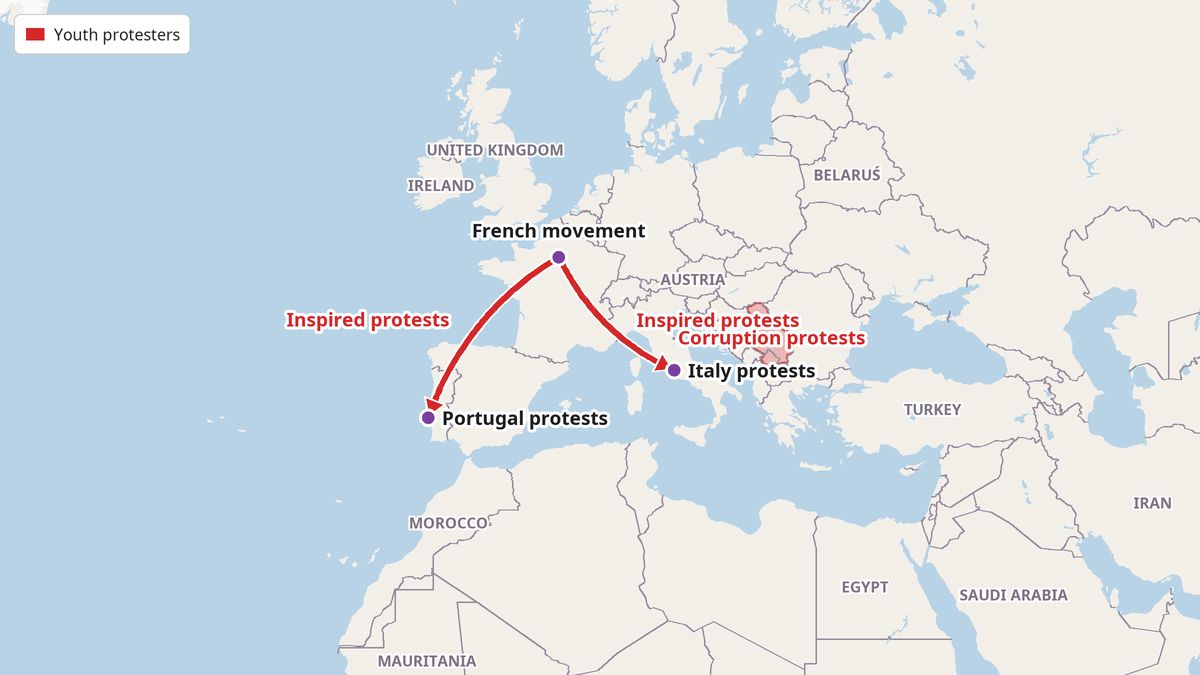
It was the sharpest edge of a continental wave. On Saturday, October 31, hundreds of thousands marched across Europe in overwhelmingly peaceful, youth-inspired demonstrations that began in France and spread to Portugal, Italy and Germany. In France, 320,000 people marched according to the interior ministry, for a third straight weekend.
Germany: 'Gen Z Has Got This'
Germany saw particularly large rallies led by a youth initiative whose name roughly translates as "Gen Z has got this." Demonstrators called for better education and healthcare, stronger climate protection and a more affordable cost of living. They also opposed any return to compulsory military service.
Protests in several major German cities turned violent towards the end of the day, particularly in Frankfurt. The base reporting gives no further detail on who clashed with whom, or how police responded.
Housing, Schools, Rent: A Generation Priced Out
In Lisbon, thousands marched to demand more affordable housing, carrying signs criticising the government of Prime Minister Luis Montenegro. Portuguese demonstrators have been protesting for weeks, inspired by the Spanish movement, over rising living costs, especially housing.
The wave has also reached Belgium, Italy and Spain, according to bne IntelliNews. In Italy, clashes broke out in Milan, Turin and Bologna. In Spain, Catalan police raised their alert to the highest level after rioting in Barcelona on October 24 led to about 130 arrests, most of them minors. In Albania, students have been on the streets since October 13, demanding Prime Minister Edi Rama's resignation.
The triggers differ by country. Schools in France and Belgium, housing in Spain and Portugal, the cost of living in Italy, corruption in Serbia. Thomas Fazi wrote in UnHerd on November 1: "These are the protests of a generation that believes it has been robbed of its future." The social contract their parents knew has collapsed, according to Fazi.
Rearmament and the Squeeze
bne IntelliNews linked the unrest to a cost-of-living crisis it said started with an energy shock and has been worsened as governments divert money to rearmament and the war in Ukraine. The German marchers' rejection of compulsory military service sits inside that same budget fight: money for weapons and conscription pipelines, while schools, hospitals and rents go unaddressed.
The same reporting puts a number on where some of the anger is flowing politically. A third of French under-25s backed the Rassemblement National in 2024, and more than a quarter of young German men voted for the Alternative for Germany (AfD), which tops national opinion polls, according to Fazi.
The base reporting says nothing about how migrants figured in these marches, or whether the same governments that cut housing and welfare budgets are also funding border enforcement. It records what happened on the streets: hundreds of thousands out, a few hundred dragged from a square, about 130 arrested in Barcelona, most of them minors.
- youth protests
- europe
- germany
- france
- portugal
- housing costs
- cost of living
- student protests