
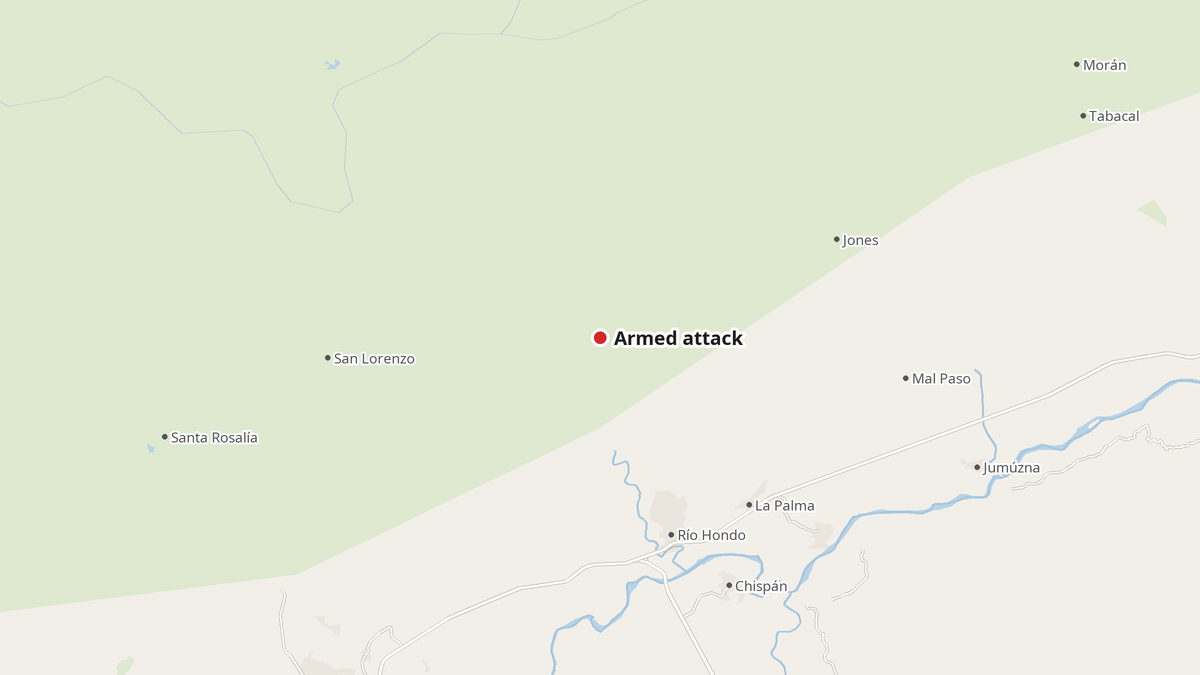
Four people were dead by Friday night. Congressman Julio Portillo and three National Civil Police officers were killed in an armed attack Nov. 6 in Río Hondo, in Guatemala's eastern department of Zacapa, a region known for drug-trafficking activity.
Portillo was first taken to a hospital with serious injuries. His death was later confirmed by his party, the National Unity of Hope, or UNE. The three officers died at the scene or in the line of duty, according to President Bernardo Arevalo.
A Government Under Pressure
Guatemala's Congress marked the loss on X late Friday. "President Luis Contreras, members of the Board of Directors and lawmakers mourn the tragic passing of Congressman Julio Cesar Portillo Paz, representative of the Zacapa district," the post read.
Arevalo said the three officers died in the line of duty. He instructed security forces to cooperate with prosecutors investigating the killings. That's a reasonable first step. But instructions to cooperate are not arrests, and so far there are none to report.
Authorities haven't disclosed a motive. They haven't identified who's responsible. For a country where armed men can kill a sitting legislator and three uniformed officers in a single attack, the silence says plenty.
Cartel Control in Zacapa
The setting matters. The Lorenzana family cartel, which has links to Mexico's Sinaloa cartel, controls the drug trade in Zacapa. That means a criminal organization, not the state, holds sway over commerce in a department where the congressman was elected to serve.
Portillo won his seat in 2023 for the opposition party Cabal, then switched to UNE, which is led by former First Lady Sandra Torres. Torres is expected to run for president in Guatemala's elections next year. A UNE lawmaker's death now lands squarely in the middle of the 2027 election cycle.
A Second High-Profile Killing in Weeks
Friday's attack came about three weeks after former anticorruption prosecutor Juan Francisco Solorzano Foppa was shot dead in Guatemala City. That case heightened concerns about organized crime's influence and the possible return of politically motivated assassinations.
Authorities have not established a connection between the two attacks. Reporters and analysts should take care not to claim one. Still, two killings of public figures inside a month would rattle any government, and the pattern, whether coincidence or not, is exactly what worries people who depend on stable institutions.
What Investigators Face
Prosecutors now have a short list of unanswered questions: who carried out the attack, why Portillo and the officers were targeted, and whether the cartel that dominates Zacapa played any role. None of those answers exist yet in the public record.
The officers' deaths deserve their own accounting. Three members of the National Civil Police died doing their jobs. Their loss falls on families and on a force that's already stretched thin in drug-trafficking regions.
Why This Matters:
When armed groups can kill an elected lawmaker and three police officers, the basic promise of the state, that it holds a monopoly on legitimate force, is in question. Investors, employers and ordinary families in Guatemala depend on predictable law and order to plan, build and hire. Violence tied to trafficking networks raises the cost of doing business and erodes confidence in the institutions meant to protect property and people. With elections expected in 2027, the stakes rise further. Voters and candidates need to know the contest will be decided at the ballot box, not by gunmen. The government's test is simple: identify the killers, prosecute them under the rule of law, and show that Zacapa answers to Guatemala's courts rather than to a cartel.
- julio portillo
- guatemala
- zacapa
- national civil police
- armed attack
- political assassination
- organized crime
- cabal party