
More than 233,000 people have been displaced since fighting escalated in Yemen, the International Organization for Migration said. About 121,000 are in Taiz governorate. Behind that number is a city running out of the basics of survival.
The World Health Organization warned that Taiz city has become functionally isolated. Its 12 hospitals have fuel for only four days. They have no surgical supplies and face critical shortages of oxygen and medicine, while a cholera outbreak grows. For wounded people arriving from the front lines, doctors have little left to treat them.
The Humanitarian Picture
Displacement isn't confined to Yemen's borders. The UN Refugee Agency said more than 4,000 refugees have reached East Africa: 3,800 in Djibouti and roughly 200 in Somalia. Safety is thin even there. UNHCR reported a cholera outbreak at Djibouti's Markazi camp, where health workers are treating 31 cases and one death has been recorded.
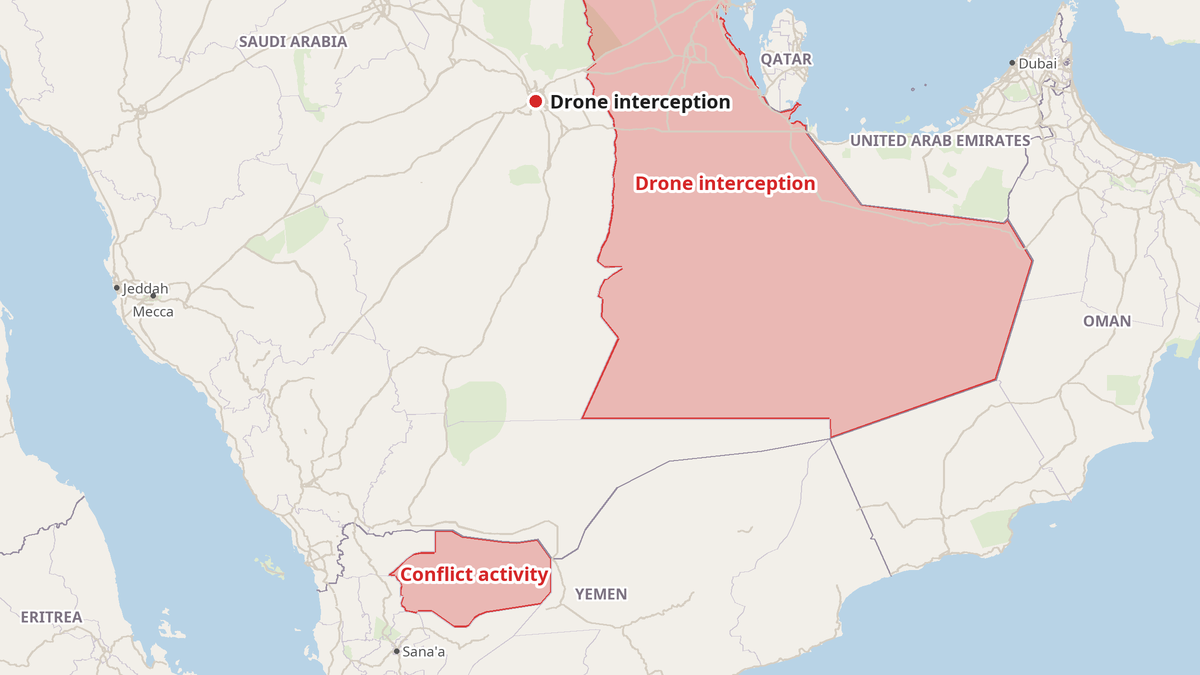
The agencies' warnings come as fighting intensifies on several fronts. Eight soldiers loyal to Yemen's internationally recognised government died in heavy clashes on the al-Maqatirah front in Lahij governorate, the government-affiliated Tur al-Bahah military axis said in a statement on Saturday. In Taiz governorate, government troops said they killed 12 Houthi fighters in al-Aqroud after days of fighting on Taiz city's outskirts. Saudi Arabia-backed government forces said they repelled Houthi advances there. Elsewhere in Taiz, government forces said they broke a Houthi attack on the al-Shaqab front.
A War Widening Across Fronts
The government-aligned Homeland Shield Forces reported destroying a Houthi supply vehicle with a drone in al-Wazziyah. The Southern Giants Brigades said they carried out precision strikes on Houthi positions in al-Madaribah, near the Lahij border. Government troops and allied Popular Resistance fighters continued an offensive in al-Jawf and Marib, where military officials reported artillery barrages and drone strikes on Houthi positions, barracks and troop assemblies. Coalition aircraft bombed Houthi command hubs and supply depots.
The escalation began after the Houthis, an armed group also known as Ansar Allah, or "Supporters of God" in Arabic, seized strategic territory from forces loyal to the internationally recognised government along the Red Sea coast last month. Saudi Arabia-backed government forces responded with a counteroffensive, then launched the "Dawn of Yemen" operation to recapture Houthi-held territory, including Sanaa. The Iran-aligned group seized the capital in 2014, 12 years ago.
The Houthis are fighting back across the border, too. Military spokesperson Yahya Saree said the group's air-defence forces downed a Saudi reconnaissance drone over Hajjah governorate, the fourth of its kind since the latest escalation began. The Houthis also claimed they shot down a Saudi Apache helicopter in Najran. Saudi-led coalition spokesman Colonel Turki al-Maliki offered a different account: an AH-6i reconnaissance helicopter crashed in Najran because of a technical malfunction, killing two crew members. Houthi media reported 10 Saudi air strikes on sites in Saada governorate.
Gulf Alarm and Diplomatic Signals
Gulf Cooperation Council Secretary-General Jasem Mohamed AlBudaiwi condemned continued Houthi attacks on Saudi Arabia as deliberate criminal behavior and called for a firm international stance. He said 7,000 ballistic missiles have targeted Gulf facilities since last February, and that Houthi attacks have hit civilian and energy facilities in Saudi Arabia. Bahrain's Foreign Minister Abdullatif bin Rashid Al Zayani condemned attacks on civilians and civilian infrastructure and backed any measures Riyadh takes to defend itself. "Any attack on a GCC member state is an attack on all GCC states," Al Zayani said at the opening of the GCC Ministerial Council's 168th ministerial meeting in Bahrain. He also voiced support for Oman and Qatar's mediation efforts between the United States and Iran.
A live update from Saudi Arabia reported drones intercepted over Riyadh and the Eastern Province, and said a tug boat was struck by two projectiles off the UAE coast, according to UKMTO. It also said Iranian Foreign Minister Abbas Araghchi backed a "political process" to resolve the Saudi-Houthi conflict, while OIC foreign ministers met in Baghdad. Further details on those incidents and statements weren't available.
At sea, the United Kingdom Maritime Trade Operations agency said at least seven armed men aboard a skiff attacked a liquefied natural gas tanker off al-Mukalla. They fired two shots. The tanker's security detail returned two warning shots, and the attackers changed course and disengaged.
Why This Matters: The humanitarian agencies' figures point to a civilian emergency moving faster than any diplomatic track. A city of hospitals without fuel, surgical supplies or oxygen can't withstand a prolonged siege, and cholera is already spreading inside Yemen and in a refugee camp across the Red Sea. Meanwhile, the military escalation—from the Dawn of Yemen offensive to cross-border drone and missile strikes—is hardening positions just as regional voices, including Iran's foreign minister and Oman and Qatar's mediators, mention political processes. From a humanitarian standpoint, the risk is that mediation talk stays abstract while civilians in Taiz and displaced people across the region bear the cost of every new offensive.
- yemen conflict
- houthi attacks
- saudi arabia
- humanitarian crisis
- taiz
- gulf cooperation council
- displacement
- maritime security