
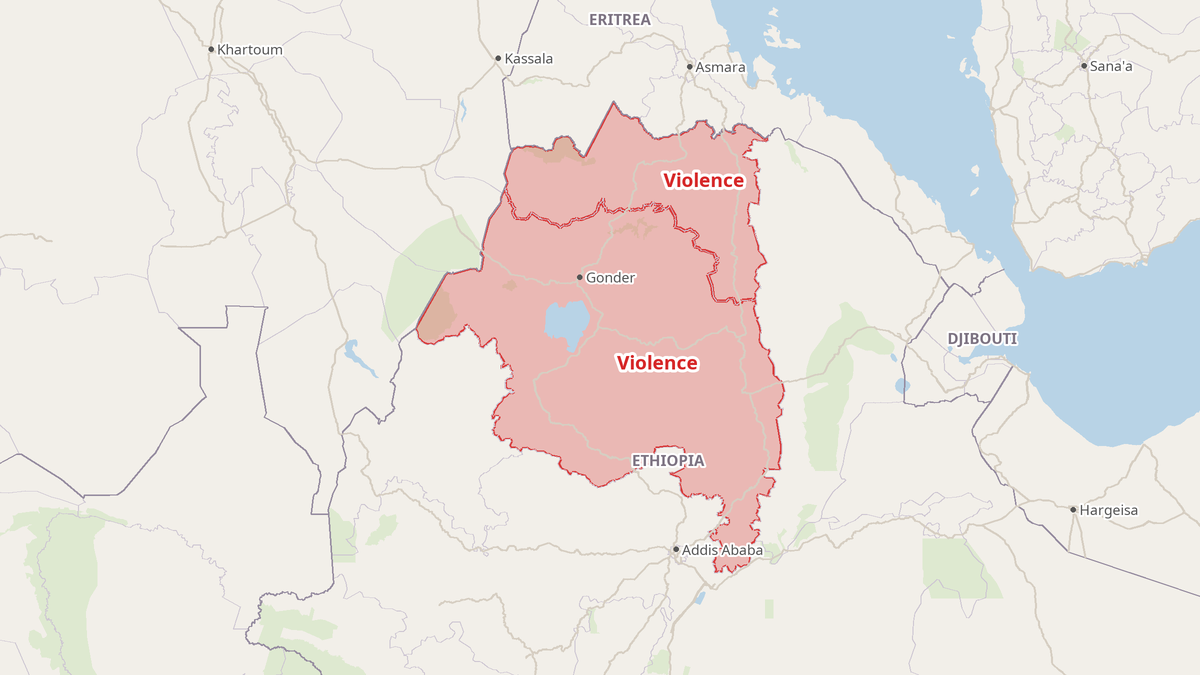
The latest Ebola outbreak in Africa has killed 5,376 people. Renewed fighting in northern Ethiopia has also damaged civilian infrastructure and left health services short of staff, medicine and equipment. The outbreak’s Bundibugyo strain has infected about 10,444 people in the Democratic Republic of the Congo (DRC), Uganda and Kenya, with a death rate above 50%, according to Africa Centres for Disease Control and Prevention data reported Monday.
Cross-border health pressures
The DRC is the outbreak’s epicentre and declared its 17th and largest Ebola outbreak in mid-May 2026. Of the deaths reported, 5,372 occurred in the DRC, while Kenya and Uganda each recorded two.
Uganda recorded 20 cases, almost all among people who had travelled from the DRC, before the country was declared Ebola-free in August 2026. Kenya recorded nine infections and two deaths in October 2026, its first recorded Ebola cases. Abuja reported its first imported case in October 2026, its first in more than a decade; no deaths were reported there.
France reported one case in July 2026 involving a health worker returning from the DRC. In Nigeria, two rounds of tests on two suspected cases in the northeast returned negative results. No approved treatments or vaccines are available for the rare Bundibugyo strain. Clinical trials have begun in recent weeks using the Ervebo vaccine, which has proved effective against the more common Zaire strain.
Attacks and shortages in Ethiopia
On October 29, a drone killed at least 16 civilians and injured 22 at the Hayiq Jari 2 Turk internally displaced persons camp in Amhara. Camp residents told Addis Standard that those killed included women, children and elderly people, including an eight-year-old girl, three pregnant women and students. Witnesses said the camp came under attack at least five times while displaced people sheltered there. More than 20 household shelters reportedly caught fire.
On October 30, at least 12 civilians died when a drone struck people gathering to collect sorghum scattered from a grain truck hit by an earlier drone strike in Rama town, Central Tigray, according to local sources who spoke to Addis Standard. A separate witness who spoke to AFP reported 13 deaths. A medical source at a nearby hospital confirmed 11 fatalities and said two additional deaths had been reported.
World Health Organization Director-General Tedros Adhanom Ghebreyesus (PhD) called for greater protection of civilians after the strikes. He described reports of civilian casualties in Amhara and Tigray as “deeply disturbing” and said drone attacks and civilian casualties had “tragically become frequent across Ethiopia.”
Hospitals lack health workers, medicines and equipment. Ambulance services are severely limited. Insecurity also blocks life-saving medical supplies from reaching some areas. WHO and United Nations partners are working to deliver additional supplies. Tedros warned that continued fighting could deny people emergency services, maternal and child health care, and disease treatment. “Civilians must be protected. Health workers and humanitarian supplies must be allowed to reach those in need,” he said.
Conflict costs and economic risks
Renewed fighting between Ethiopian Government forces and rebel groups in Amhara, Tigray and Afar resumed in September 2026. UN Secretary-General António Guterres warned of escalation and wider destabilization. A statement issued by his spokesperson called on the parties to spare civilians and critical infrastructure and agree to a cessation of hostilities as a first step toward ending the conflict.
The International Monetary Fund forecasts real growth of 9.2% for Ethiopia’s 2025–26 fiscal year, driven in part by agriculture, mining and electricity generation. London-based financial analyst Abdulmenan Mohammed said that “if there is a major conflict [...] the current economic growth will not be sustainable.” He warned that military spending could tie up government resources otherwise available for infrastructure, education and social services.
The IMF forecasts average inflation of 11.7% for 2025–26. Mohammed said further escalation could raise inflation, while domestic borrowing for military spending could make credit harder for private businesses to obtain. He also said military demand for foreign currency could reduce supplies available to private importers, putting pressure on the birr and raising the cost of imported goods, fuel and industrial inputs. The effects would depend on the scale and duration of renewed conflict, export earnings, monetary policy and international markets.
- ebola outbreak
- democratic republic of the congo
- ethiopia
- health systems
- drone strikes
- tigray
- amhara
- world health organization