
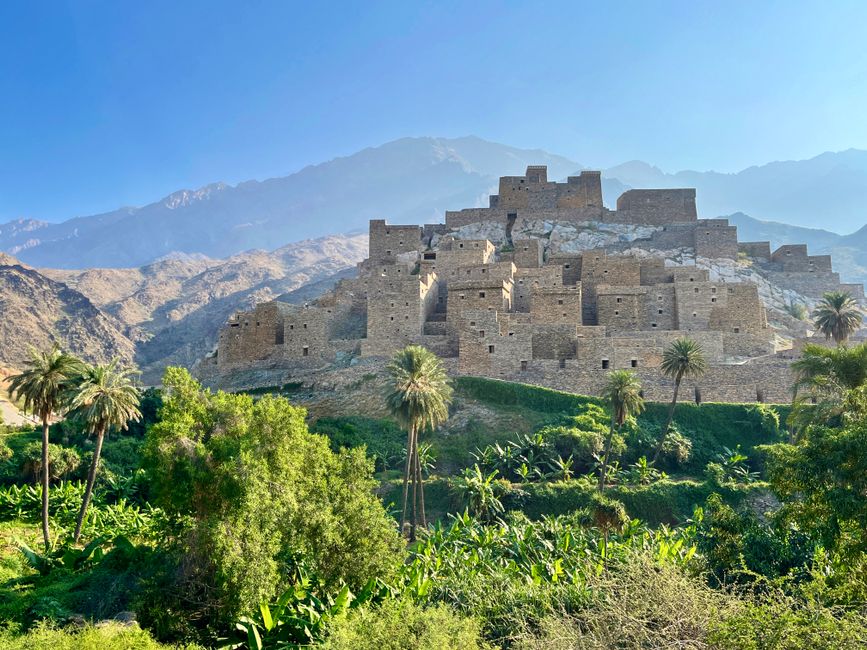
Heritage villages across Saudi Arabia’s Baha region are drawing domestic and international visitors this summer as festivals, cultural events and living museums turn centuries-old sites into tourism attractions under Vision 2030. The pitch is preservation. The machinery is state-led development. More than 72 heritage villages and historical sites are being restored and developed through partnerships between government authorities and local communities, with the Kingdom presenting the project as both cultural protection and an economic engine.
The State Packages Heritage as Growth
Among the best-known destinations are Dhee Ayn Heritage Village, Bin Raqoush Palace, Bin Allas Fortress, Al-Atawlah, and Al-Abadilahand Al-Mousa Village. Spread across Baha’s highlands and the Tihama plain, the sites now host folkloric performances, traditional games, embroidery and handicraft demonstrations, Arabic calligraphy workshops, heritage clothing exhibitions and local cuisine. The old buildings remain the selling point, but the state’s tourism agenda decides how they are used, marketed and monetized.
Al-Atawlah Heritage Festival, one of the region’s flagship summer events, runs for 10 days and recreates traditional customs, including bridal processions and hospitality rituals. Visitors are offered an “immersive look” at daily life and social traditions of earlier generations, packaged neatly for consumption. The festival is not just a cultural event. It is part of a wider administrative project to turn memory into an asset.
Mahdi Al-Kanani, head of the media committee for Al-Atawlah Heritage Festival, said the villages have become an important pillar of both cultural preservation and tourism development. “The villages allow visitors to experience the social life of earlier generations and discover the region’s customs, traditional arts and historic professions,” he said. He added, “They have become an important driver of tourism and support the objectives of Vision 2030.”
Local Labor, Official Objectives
Mohammed Lafi, a resident of Baha, said restoration projects have protected the villages’ historic character while improving infrastructure to accommodate growing visitor numbers. “These projects have preserved the villages’ authentic architectural identity while improving infrastructure and services, transforming them into cultural and tourism destinations without compromising their historical character,” he said.
Lafi attributed the rise in visitor numbers to improved infrastructure, expanded programming and greater public awareness of the region’s attractions. “The increase in visitors is driven by the diversity of events, improved services, better roads and facilities, and media efforts that have introduced people to Baha’s heritage villages, farms, rural lodges and unique mountain landscapes,” he said. The language is familiar: roads, facilities, media efforts, development. The state builds the frame, then calls the result heritage.
He said local communities have played a vital role in the festivals’ success by welcoming visitors, organizing events and promoting traditional crafts and products. “The people of Baha are partners in this success through their hospitality, participation in organizing events, showcasing local products and preserving the customs and traditions that reflect the authenticity of Saudi society,” he said. The communities are not absent here. They’re enlisted. Their labor, hospitality and crafts become part of the official story, folded into a tourism model that leaves the state in charge of the terms.
According to Lafi, the summer festivals have also generated business for hotels, restaurants, cafes and family-run enterprises while creating seasonal employment opportunities for young Saudis. “The festivals give productive families a platform to market their goods and increase their income while offering young people valuable employment opportunities and experience,” he said. The benefits are real enough, but they arrive through a system where local life is reorganized around state priorities and seasonal commerce.
Preservation, Diversion, and the Official Future
The restoration and activation of Baha’s heritage villages is part of Saudi Arabia’s wider strategy to preserve historic sites while turning them into sustainable cultural and tourism assets that contribute to economic diversification and safeguard the Kingdom’s architectural and cultural heritage for future generations. That’s the official line. It treats centuries-old villages as both memory and market, with government authorities and local communities working inside a framework set from above.
What gets preserved is not only architecture. It’s the state’s ability to define culture, direct investment and decide which parts of local life become visible to visitors. The villages may be old. The management model is very much current.