
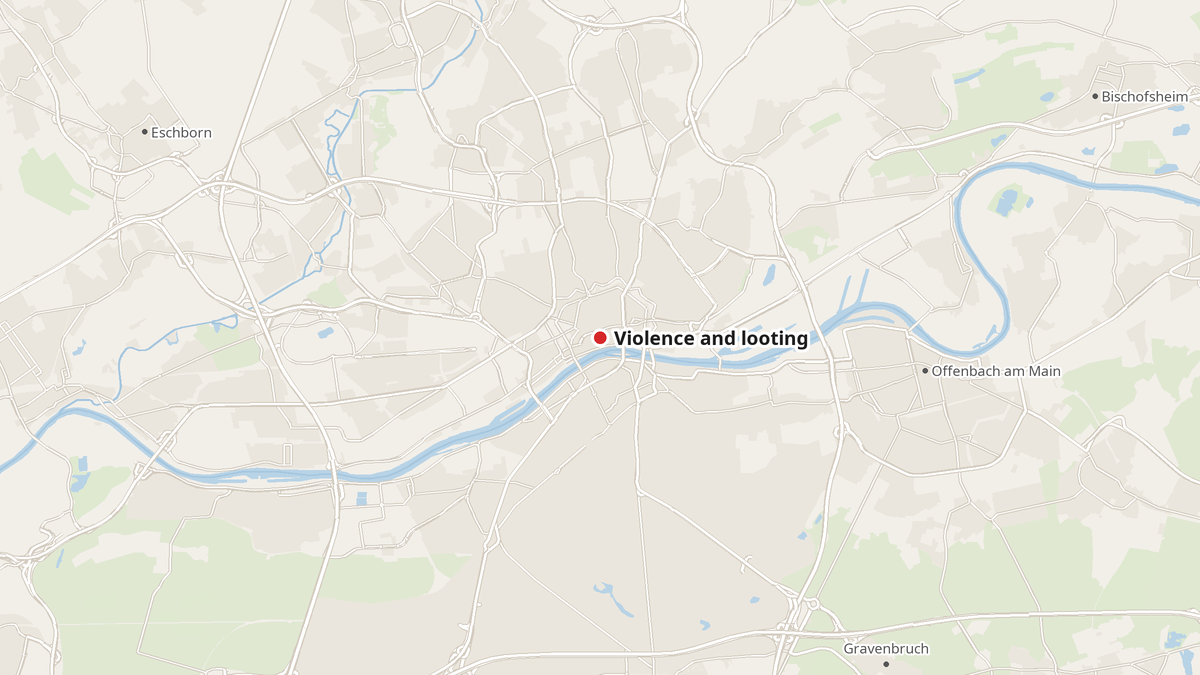
At least 30 people were detained in Frankfurt after protests over the cost of living and education funding turned violent. Germany’s interior minister also blamed “troublemakers from migrant communities” for violence. In Hesse, Interior Minister Roman Poseck said around 100 identified left-wing extremists joined protesters in the city, where police reported looting and attacks on officers.
Violence in Frankfurt
The protests took place on Nov. 1 across Germany, drawing tens of thousands of people to cities including Berlin, Cologne and Frankfurt. Demonstrations began largely peacefully, but police said extremist factions infiltrated them, and violence followed.
Protesters broke shop windows, threw Molotov cocktails at officials and broke into shops, police said. Officers used water cannons to disperse gatherings. Poseck said, “It is shameful how this event here in Frankfurt has ended.” He described the left-wing extremists as “around 100 clearly identified” people who joined the protesters.
German Interior Minister Alexander Dobrindt told Bild newspaper that left-wing groups weren’t the only source of violence. He also cited “troublemakers from migrant communities.” His account didn’t specify how many people he meant or provide further details about them.
The detentions extended beyond Frankfurt. Police detained 60 people in Berlin, where 27 officers sustained injuries. In Hamburg, crowd-control barriers caught fire. Police reported incidents in several cities as protests took place across the country.
Who organised the demonstrations
Gen Z Regelt (Gen Z Takes Charge) organised the protests. The demonstrations addressed the high cost of living and a lack of education funding. Protesters also called for increased action against climate change and opposed plans to reintroduce mandatory military service.
Organizers told Der Spiegal they weren’t involved in the violence. “We had no influence on what happened after the demonstrations ended,” a spokesperson said. Their statement drew a boundary between the demonstrations and the violence that followed, while police and government officials described extremist participation and attacks in the streets.
The reports describe protests over domestic economic and education concerns, climate action and military-service plans. They also record damage to shops, public-order incidents, arrests and injuries to officers. No figures were provided on the cost of the damage or the number of protesters or other members of the public who were injured.
Protests inspired by France
The German demonstrations drew inspiration from protests in France, which also turned violent last month. Officials there imposed curfews and other restrictions. The account reports no comparable restrictions in Germany.
In Germany, police used water cannons to disperse gatherings, alongside detentions in Frankfurt and Berlin. The available information doesn’t describe any EU border measures, migration figures or changes to immigration policy connected to the protests. The immediate questions in the reported events were public order, the arrests and the violence officials attributed to extremist factions and people from migrant communities. Police detained 60 people in Berlin.
- germany protests
- frankfurt
- roman poseck
- police violence
- gen z regelt
- cost of living
- education funding
- climate change