
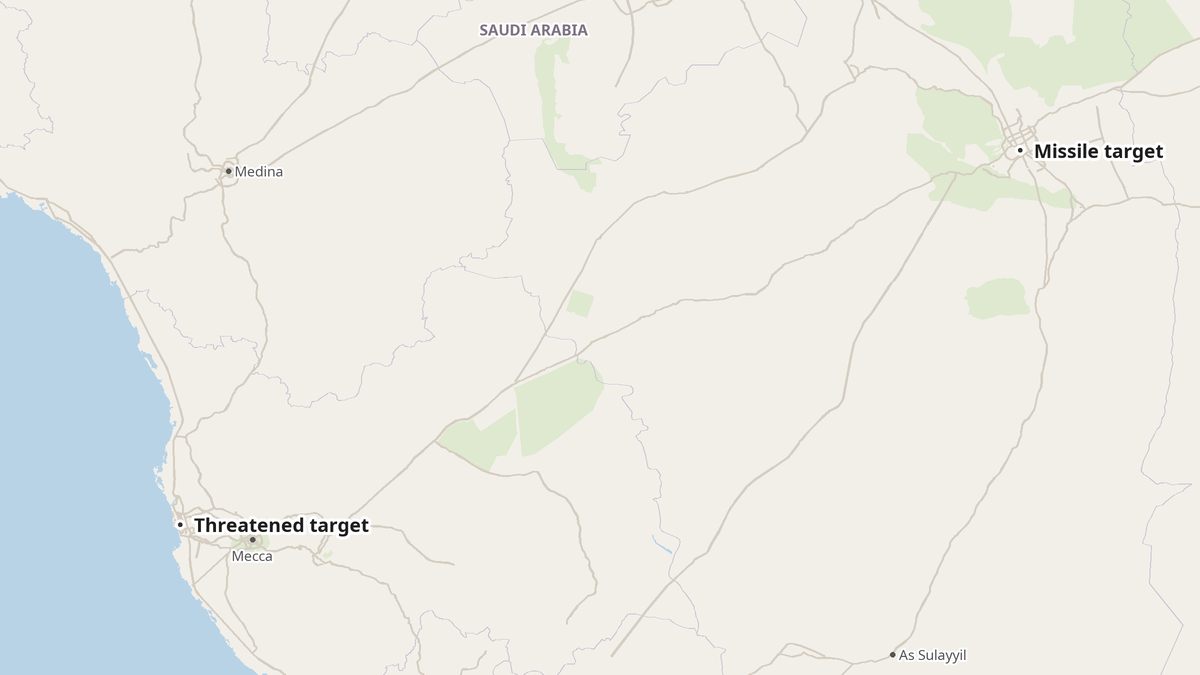
The Iran-backed Houthis launched strikes on Riyadh on Saturday. The Saudi-led coalition said it intercepted and destroyed three ballistic missiles headed for the Saudi capital. The attack followed coalition strikes on Hodeida and other targets on Friday, escalating an exchange involving missile facilities, weapons transport and threats against Saudi civilian and commercial sites.
A journalist reported hearing two explosions after authorities warned that Riyadh was “under a hostile aerial threat.” Authorities later lifted the alert. On X, the Houthis said they were striking targets across Saudi Arabia, including Riyadh.
Missiles and Military Targets
Coalition spokesman Turki al-Malki said the operation targeted “operational capabilities at Hodeida port that were used in smuggling operations and the transport of weapons and ballistic missiles.” The coalition called it a “special operation” against smuggling and weapons-transporting operations in the Red Sea port city.
Coalition forces also attacked targets in Sanaa, Saada and Taiz governorates. Al-Malki said strikes in Sanaa hit “military targets,” including missile and drone facilities and a supply depot. Violence increased after months of hostilities.
The Houthis had threatened to strike Jeddah and other Saudi ports on the Red Sea coast if Hodeida came under attack. After the coalition warned civilians to evacuate Hodeida port, the Houthis’ Humanitarian Operations Coordination Centre emailed shipping companies and other bodies using Jeddah port, telling them to evacuate.
The group also warned “all airlines that Saudi airspace is unsafe, as it will be the theater of our operations in the coming hours, except for the holy airspace over Mecca and Medina.” It threatened Riyadh’s financial district and a power station in Al-Shuqaiq, and told people to avoid Riyadh’s King Abdullah Financial District, which it called a “military target.” Offices there had emptied weeks earlier.
Threats to Saudi Cities and Infrastructure
The coalition said it intercepted two ballistic missiles over the Jizan region near the Yemen border, and debris fell in Al-Shuqaiq. The Houthi military spokesman said the group had targeted Al-Shuqaiq power station and Jizan port with “accurate and direct” strikes that caused “extensive damage.” The statements paint sharply different pictures of the effects.
The coalition strikes followed a Houthi attack on a tower in Riyadh’s financial district. Witnesses said the attack damaged Riyadh’s tallest skyscraper, which houses Saudi Arabia’s sovereign wealth fund. The Houthis’ threats now reached from ports and airspace to a power station and a major financial district.
The Houthis’ Al-Masirah television broadcast images of a power station in Mocha damaged in a coalition air raid. The Houthis said coalition strikes had killed 41 people in the previous 24 hours. Yemen’s Saudi-backed armed forces said dozens of airstrikes and drone attacks, along with hundreds of artillery attacks, had killed or wounded 193 Houthi fighters. Those figures couldn’t be independently verified. Early on Friday, the Houthis accused Saudi forces of striking a civilian boat and killing 19 people.
A Wider Yemen Front
Saudi Arabia backs the internationally recognized government against the Houthis. The two sides have traded attacks since a four-year truce in Yemen’s civil war collapsed in July. Yemen’s Saudi-backed government forces withdrew from areas near the Red Sea’s Bab al-Mandab strait this month, ceding territory to the Houthis, who launched a sweeping offensive in September.
The Houthis have advanced close to Aden, the interim capital of the internationally recognized government, which fled the group’s takeover of Sanaa in 2014. The coalition intervened against the Houthis in early 2015. The conflict has left hundreds of thousands dead and created one of the world’s worst humanitarian crises. The United Nations expressed concern on Friday over the ongoing attacks.
- houthis
- saudi-led coalition
- yemen
- riyadh
- hodeida
- missile strikes
- yemen civil war
- red sea