
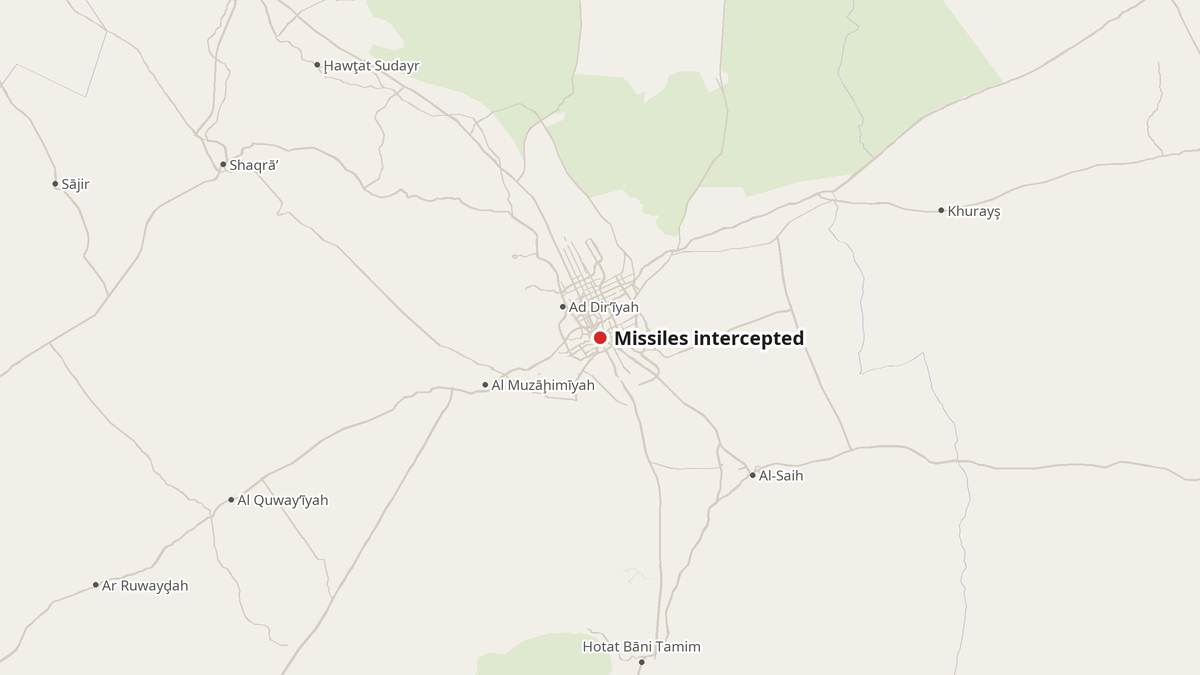
The Saudi-led coalition said it intercepted and destroyed two missiles launched by Yemen's Houthis toward Riyadh, according to a Middle East Eye live-blog entry timed 10 November 2026, 01:10 GMT. Both missiles were destroyed. The target was a national capital.
The Terror Threat
The launch didn't come out of nowhere. Earlier, Saudi Arabia's civil defence authorities warned of a potential threat in the capital. They later lifted the alert after the danger was assessed to have passed. For a stretch of the night, residents of a major city were told to expect incoming fire.
The Houthi launch came from Yemen, aimed at a capital hundreds of miles away. Riyadh is not a front line. It is a city where civilians sleep, and the missiles were fired at it anyway.
The base report doesn't say where the missiles fell or whether debris caused damage. It doesn't record casualties. What it does record is the outcome the coalition claims: two launches, two interceptions, and a civil defence alert issued and then withdrawn. The coalition's statement is the only account of the interception the report cites, and the sourcing is a single live-blog entry.
Iran's Proxy Network
The entry appeared in a live blog titled "Live: Trump says US ready to strike Iran 'if necessary.'" That placement matters. The same blog tracking a possible American strike on Iran carried the report of Houthi missiles flying toward Riyadh. The base article doesn't draw a causal line between the two items, and it contains no statement from any official tying the launches to Tehran or to the US warning.
What the record shows is the proximity. A US president says Washington is ready to strike Iran if necessary, and within the same news cycle, a group in Yemen launches ballistic fire at the Saudi capital. Readers can weigh for themselves how the two developments sit together. The base article offers no Houthi statement claiming responsibility, no Saudi official naming a sponsor, and no analysis of the missiles' origin, and none is attributed here.
Civilizational Defense
The coalition's account is brief but specific: two missiles launched, two destroyed. The interception rate in this incident was total. Whether that holds in the next barrage depends on the defenses in place, and the base report offers no detail on which systems were used or how many remain.
The alert process worked as designed on the night in question. Civil defence authorities flagged the threat, the coalition engaged the missiles, and the all-clear followed once the danger was assessed to have passed. Those are the documented facts of 10 November 2026.
What remains unanswered in the source is who ordered the launch and what response, if any, Riyadh or its coalition partners plan. The report is a short live-blog entry, not a full dispatch, and it leaves those questions open. Two missiles were fired at a capital city, and they were stopped before the base report records any harm.
- houthis
- saudi-led coalition
- riyadh
- missile interception
- yemen
- saudi arabia
- civil defence
- middle east