
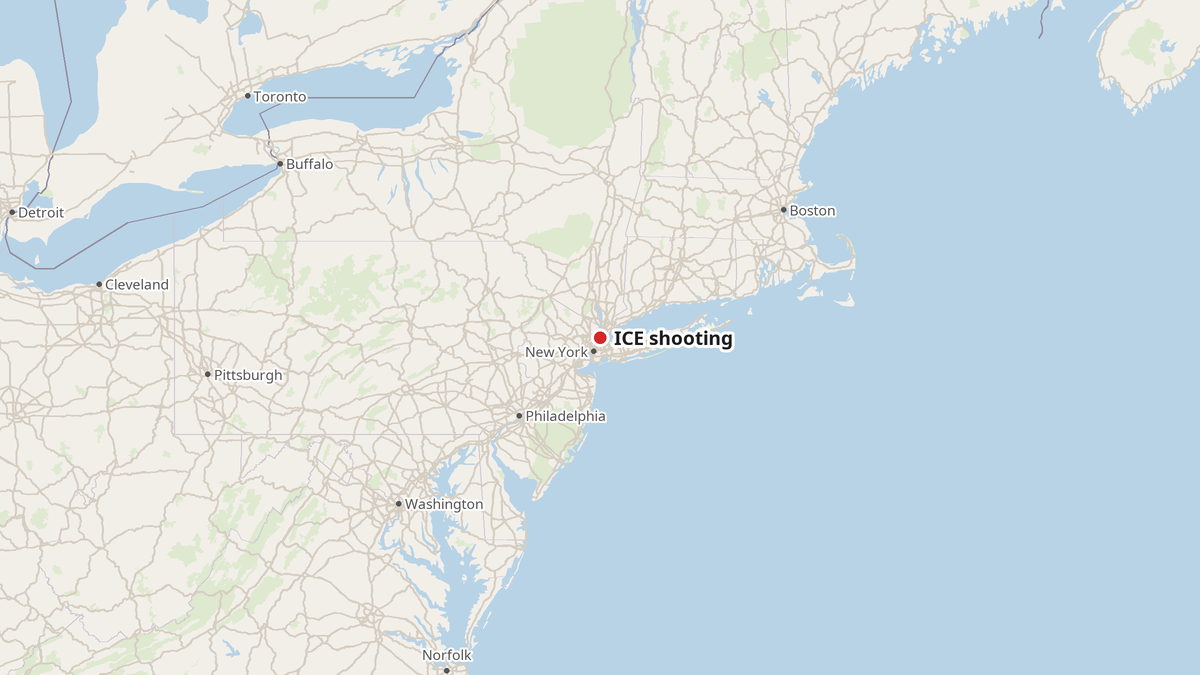
Oscar Belgal has a bullet lodged in his neck, and his lawyers say he remains in a Brooklyn detention center. ICE agents shot the 28-year-old in Marble Hill, New York, while his 5-year-old son sat in the back seat of the vehicle. In a court petition filed Wednesday, attorneys from The Legal Aid Society argue the agents never identified themselves or showed documentation before firing.
A Father, a Bullet, and a Detention Cell
Legal Aid attorneys Perry McAninch and Elyssa Williams put it bluntly. "ICE officers shot him in the neck in front of his 5-year-old son, failed to provide him with immediate medical assistance, and now continue to hold him in a facility notorious for medical neglect," they said in a statement. "With a bullet still lodged in his neck and his serious medical needs unmet, every additional day in custody puts him at further risk. The Court must intervene and order his immediate release."
A judge has already intervened, at least partly. Last Friday, the court temporarily barred Belgal's deportation or transfer to any facility outside the Southern or Eastern Districts of New York or the District of New Jersey without prior court approval. Belgal remains at the Metropolitan Detention Center in Brooklyn.
The Department of Homeland Security didn't comment on the new allegations. It previously said agents fired because they believed their lives were in danger, and alleges Belgal has ties to the Trinitarios gang.
Hundreds of Stories, One Database
Belgal's case comes amid a broader reckoning over how enforcement is carried out. Disappeared in America, a new project backed by Illinois Gov. JB Pritzker's administration and the Illinois Accountability Commission, documents nearly 500 stories from immigrants and U.S. citizens who say the Trump administration's immigration enforcement detained, deported, separated them from their families or otherwise harmed them. The stories include Operation Midway Blitz in Chicago.
The interactive database features profiles that may include photographs, video and audio recordings. Organizers say they want to build a public historical record that can grow over time. Entries include Lorenza Salgado Araujo and Johan Sebastian Duran Guerrero, whom the report said ICE agents shot dead in Texas and Maine in July, and Renee Nicole Good and Alex Pretti, U.S. citizens federal agents fatally shot in Minneapolis in January.
The site says the second Trump administration has deported more than 605,000 people, detained 400,000 by ICE and killed 33 people.
Beatriz Lopez, co-founder and executive director of the Democracy Power Project, described an animated video about a girl named Ophelia, who recounts her father's arrest. "In this case, this young girl has cancer, and so she's going through this and she's seen what happened to her dad," Lopez said. She said the story reflects what "many daughters and sons" are seeing happen to their parents. Advocates say government announcements often reduce enforcement actions to numbers, while coverage of individual cases fades.
Pritzker said last year's operation was "an unprecedented military-style assault against our communities, sending thousands of masked federal agents to harass, intimidate, and abuse our people." He added that administration officials "allowed agents to act unconscionably and told them their actions would be immune from investigation or accountability—they are not."
The Illinois Accountability Commission, created in October 2025 amid Operation Midway Blitz, was the first state effort to investigate federal officers and their activities while an operation unfolded. By October 2026, a year will have passed since its creation. Agents faced accusations of abuse during raids on Chicago apartment buildings and in their treatment of local police and reporters. Hina Mahmood, the group's executive director, said people "had the courage to come forward and tell the truth" at a moment "when many people were afraid to speak."
Lopez said other states that have experienced ICE operations are expected to join in the coming months. She described the effort as a future mandate: "we must hold ICE accountable. We have to have real policy changes that ensure that this can never happen again."
The Administration's Case
DHS and the wider Trump administration say ICE targets dangerous offenders, including people with alleged gang ties or violent convictions. The federal government highlights arrests on a webpage and says people who enter the country illegally have broken the law and are eligible for enforcement. An ICE spokesperson told Newsweek that officers are "held to the highest professional standard" and are "heroes as they put their lives on the line to arrest murderers, rapists, pedophiles, gang members, and terrorists."
Supporters of the new database point to a gap between that message and the record: they argue many people detained by ICE have no criminal convictions, despite the administration's stated priority on that group. Critics say ICE has separated families, including those with mixed immigration statuses.
Deported Without an Order?
Then there's Ernesto Zuniga Hilario. The Mexican national lived in the United States for nearly two decades. His attorneys filed a writ of habeas corpus Tuesday in the U.S. District Court for the Western District of Texas, alleging officials deported him without a valid removal order or a meaningful chance to understand or challenge the legal basis.
Zuniga Hilario says he last entered the country without inspection around 2008 and lived near Lometa, Texas, about 18 years ago by now. He's married to Obdulia Cervantes Vega, whom the filing identifies as a lawful permanent resident, and has four U.S.-citizen children. Court filings say officers apprehended him while he traveled with his family to a therapy appointment and held him at the T. Don Hutto detention facility in Taylor, Texas.
The petition says officers repeatedly asked whether he wanted to depart voluntarily. He declined because he wanted to present his case before an immigration judge. It alleges authorities instead put him on a bus, drove him to an airport and flew him to Mexico City. The lawsuit says officials lacked legal grounds because he wasn't subject to an expedited removal order or an order from an immigration judge. His attorneys add that if officials reinstated an earlier removal order, they had to notify him and give him a chance to contest it.
DHS flatly rejects that account. "Any allegation that Ernesto Zuniga Hilario didn't receive due process is FALSE," a spokesperson told Newsweek, saying he signed a voluntary departure form on September 6 and returned to Mexico on September 16. DHS said ICE arrested him after a traffic stop by the Lampasas County Sheriff's Office. The petition acknowledges a possible jurisdictional hurdle: officials had already removed him when his attorneys filed the case. But it argues the case differs because no underlying removal order existed and he had no real chance to challenge the action.
Why This Matters: Three cases, one common thread: who checks federal immigration agents' power when something goes wrong? A man shot in front of his son is asking a court to order medical care and release. A state is building its own archive because it says federal accountability isn't coming. A father of four U.S.-citizen children says officials flew him out of the country without an order a judge ever reviewed. Each case depends on courts, state governments and civil society to provide the oversight that critics say the enforcement apparatus itself won't. The administration says it's removing dangerous people. The documented cases raise a harder question about due process, proportionate force and transparency for everyone swept up, including U.S. citizens and families who've lived here for years. How those questions get answered will shape whether enforcement operates under law or around it.
- ice agents
- marble hill
- oscar belgal
- legal aid society
- department of homeland security
- disappeared in america
- jb pritzker
- immigration enforcement