
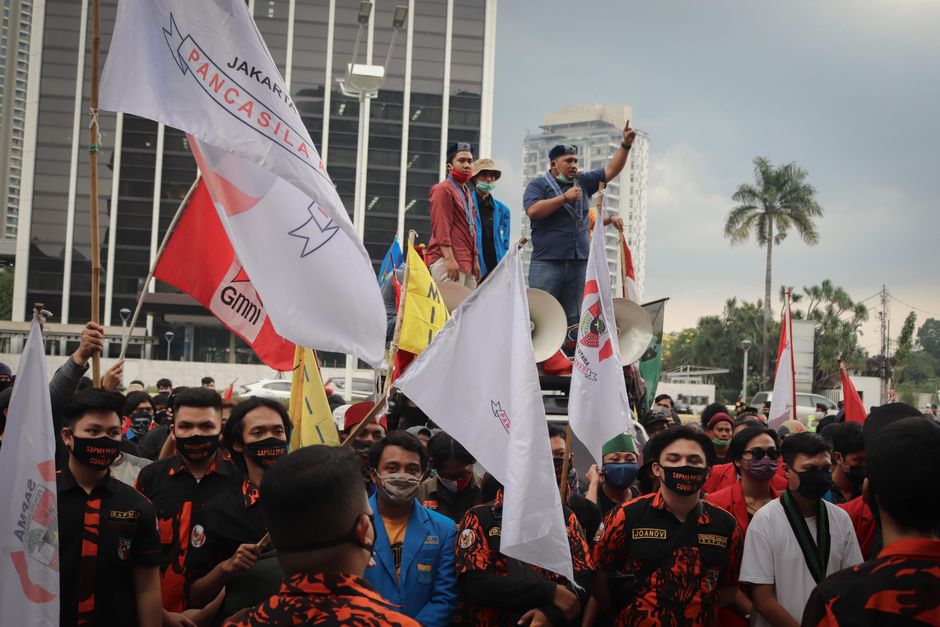
Indonesia’s economy grew 5.47% year on year in the July-September quarter, with robust government expenditure helping drive growth while public discontent and capital outflows clouded the outlook. That’s the headline number. It doesn’t erase the demonstrators in Jakarta or the economists’ bleak forecast for 2026-27.
Growth From the Top
Nikkei Asia reported that the expansion exceeded expectations. Government expenditure was robust, and household spending remained resilient. Those are the drivers identified in the report: spending by the government and continued spending by households. The figure measures economic growth, but the article gives no breakdown showing who benefited from that growth or how its gains were distributed.
That distinction matters when the reported growth figure sits beside public discontent. A national number can announce expansion without describing ordinary people’s experience of it. The report does not provide household-level figures, wages, or details about what government expenditure funded. It gives a growth rate and two spending drivers, not an account of how power or resources are shared.
The reported 5.47% is specific. The limits of what it tells readers are just as specific: no figures in the article establish that the expansion eased public discontent, or that households shared equally in the result. Resilient household spending is part of the report’s account of economic growth; it isn’t presented as proof that people are satisfied with the direction of the economy.
Discontent in the Streets
Demonstrators rallied in Jakarta on Oct. 28 as public discontent and capital outflows clouded the outlook for Southeast Asia’s largest economy. The rally is the reported grassroots response. The article gives no demands, organizer names, participant count, or direct quotations from demonstrators, so none can be supplied here. What it does say is that people gathered while the economic outlook faced pressure from discontent and money moving out of the country.
That street action appears alongside, not underneath, the growth number. The article reports both an economy expanding faster than expected and demonstrators rallying amid public discontent. It does not say the rally caused capital outflows, nor does it identify a particular policy demand or response from officials. The facts stop there. No electoral proposal, legislative remedy, or institutional aid group appears in the report; there’s no basis here to claim that any such route answered the concerns behind the rally.
A Bleak Forecast Beside the Growth
Economists painted a bleak 2026-27 forecast amid capital outflows and public discontent. That warning puts a limit on any easy celebration of the quarterly result. The report offers no forecast figures and names no economists, so the warning cannot be made more precise without adding information that isn’t in the account.
The picture is narrow but unsettled: 5.47% growth, robust government expenditure, resilient household spending, demonstrators in Jakarta, capital outflows, and a bleak forecast. A quarterly figure can record expansion. It cannot, by itself, tell readers what demonstrators wanted or whether the people carrying the costs of economic decisions will share in the gains.
- indonesia
- economic growth
- government spending
- household spending
- jakarta
- capital outflows
- public discontent