
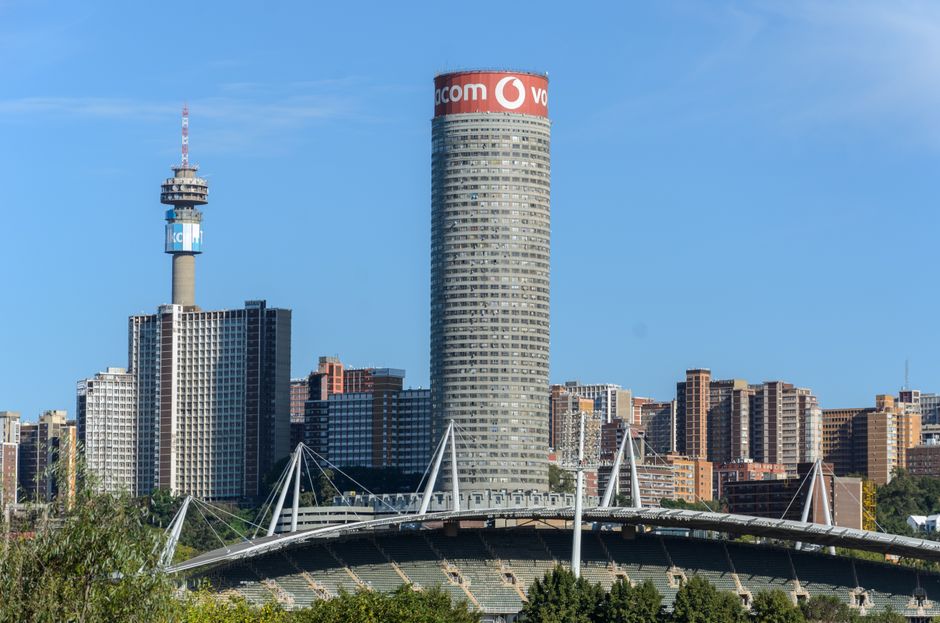
Johannesburg lost about 90,000 jobs in the one-year period ending in June 2026, while Cape Town added 57,000. In the second quarter of 2026, the city’s official unemployment rate hit 35.9%, the highest among metros and above South Africa’s national rate of 33.6%. Behind those numbers are failing municipal services—and workers and households left to bear the consequences.
The cost of a failing city
Johannesburg is South Africa’s most important economic centre and home to the country’s largest concentration of businesses and financial institutions. Ann Bernstein, executive director of the Centre for Development and Enterprise (CDE), says municipal failures have weakened the city’s economic potential, making it harder to do business, invest, find work and build a secure family life.
For more than a decade, the city’s economy has barely grown. Average per capita GDP, adjusted for population growth and measured in real terms, dropped from R99,858 in 2013 to R95,737 in 2023. Those figures show the gap between the city’s economic importance and what people can expect from it.
Deteriorating roads drive up transport costs and disrupt supply-chain efficiency. When electricity and water systems fail, businesses must spend more to keep operating and absorb production losses. Municipal dysfunction thus acts as an implicit tax on economic activity.
In Selby, extended water shortages have left factories unable to operate and hundreds of factory workers without permanent or full-time work. Bernstein puts it bluntly: “You have to stop falling before you can grow.”
Every three months, Johannesburg businesses lose an average of 20.6 hours to power outages—equivalent to two and a half working days. Smaller businesses and start-ups can’t compensate for these failures as easily as established companies. Poorer households can’t outsource the consequences of unreliable services, either. The cost reaches far beyond firms’ balance sheets.
Big plans, thin capacity
The current Johannesburg administration recently approved an economic growth strategy proposing almost 30 projects, with a total estimated cost of R111.47bn over five years. Among them are an R1.5bn international convention centre in Lanseria, an R2.14bn film and clothing cluster, and a R546m biodiesel production plant.
Private investors and donors are expected to provide 98% of the funding. Yet the strategy concedes that successful delivery would take substantially more resources and administrative capacity than Johannesburg currently has. Bernstein says the projects also require substantial planning, coordination and oversight. The strategy calls the plans realistic and implementable, even as the same document lays out the city’s capacity gap.
Gazetted in late 2025, the Johannesburg Township Economies By-Law requires township businesses to register with the city by January 17 2027. Its stated aim is “to support township enterprises.” Bernstein says the requirement instead adds red tape for the very businesses it is supposed to help: the city is imposing another administrative burden while basic services remain unreliable.
What comes after the elections
Bernstein says the city should prioritize reliable services, reduce its infrastructure backlog, rebuild municipal institutions, combat corruption and stabilize its finances. She also points to crime, housing and public transport as challenges, but says they must wait until the basics of city government work effectively.
The new government, she says, should focus on its top priorities from the day after the November elections. Her proposal is an appointed task force of five to eight leaders from across society, backed by a small secretariat, funded from the city’s economic development allocation and reporting within one year. Bernstein says its recommendations should be ambitious, while remaining realistic about resources, institutions and capabilities.
The task force would consider whether Johannesburg could again become a leading centre for mining, finance and technology, or become the continent’s professional services hub. Bernstein also proposes privately run special economic zones, some exempt from existing legal obligations on business, to test whether employment growth would increase. These proposals would change rules and attract investment; they aren’t a description of a grassroots response.
She asks how large companies could move beyond small projects to make more substantial contributions, pointing to the Columbus partnership in the US state of Ohio as a model of a stable city-level business-government partnership. She also asks whether Johannesburg-based companies and business organizations could push national and provincial governments to enact reforms more quickly.
The article draws on “Joburg needs faster growth,” the sixth report in the CDE series Johannesburg Matters: Fixing South Africa’s Growth Engine. Bernstein says fixing what is broken should be the next government’s essential priority, alongside considering how to build a more dynamic economy for faster and more inclusive growth. For workers in Selby and households living with outages, the immediate test is whether water and electricity work.
- johannesburg
- ann bernstein
- centre for development and enterprise
- municipal services
- unemployment
- economic growth
- infrastructure
- job creation