
Mohsen Rezaei, secretary of Iran's Supreme National Security Council, put Europe on notice early Thursday, Tehran time. "If the US launches another war against Iran, every military base involved in the aggression — from West Asia to Europe — will be a legitimate target for Iran's lethal strikes," he wrote on X.
The threat didn't come in isolation. A day earlier, senior Islamic Revolutionary Guard Corps (IRGC) commander Mohammad Reza Naqdi said Supreme Leader Mojtaba Khamenei had ordered the armed forces to prepare for operations "in any geographic area deemed appropriate," Iranian media reported. Any geographic area. That's the language of a regime that no longer pretends its ambitions stop at its own borders.
The Missile Buildup
Behind the rhetoric sits a weapons program in active expansion. Iran is rebuilding its missile capabilities, according to the base reporting. Tehran recently said it lifted self-imposed limits on the range of its ballistic missiles, and reporting suggests the regime is seeking to rebuild and expand its missile program.
The sequence matters. A government that names European soil as a legitimate target, orders its Revolutionary Guard to prepare for operations anywhere, and removes the range restrictions on its own ballistic missiles is telling the world what it intends to build and where it may aim it. European capitals that have spent years urging restraint on Washington and its allies are now named in Iranian threats.
Attacks on Shipping Infrastructure
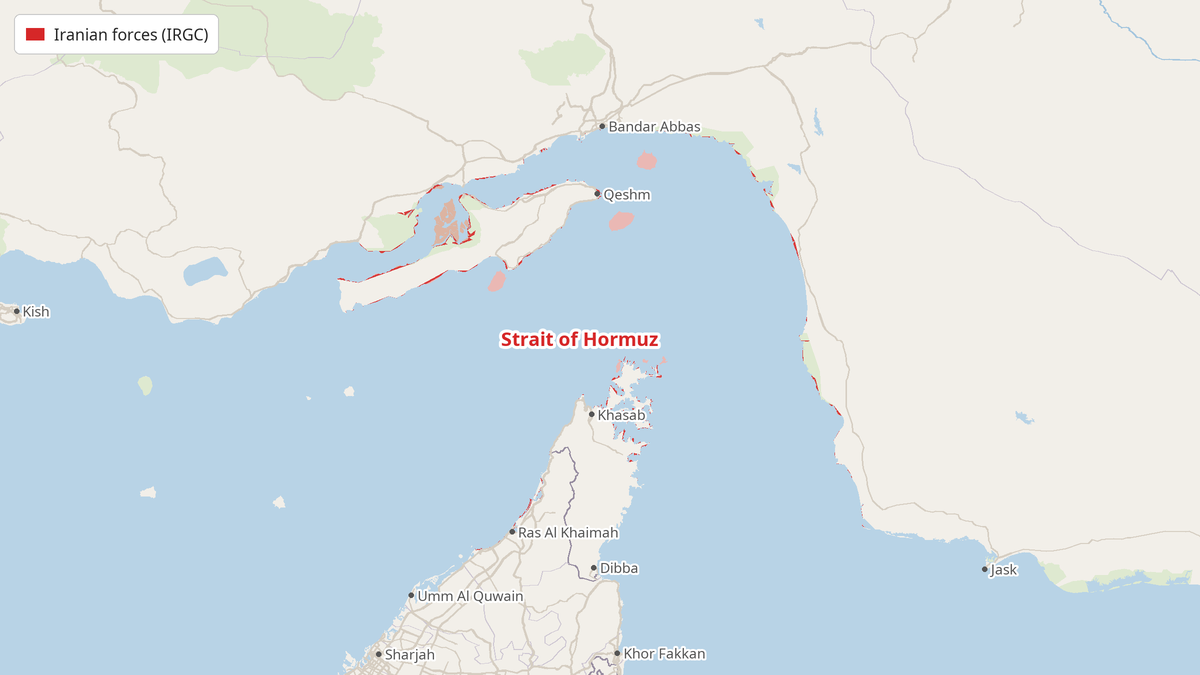
The IRGC's reach into the maritime domain is already on display. Iranian state media claimed on Tuesday that the Guard had carried out strikes destroying "enemy navigation systems" on Didamar island. Three sources with knowledge of the matter later confirmed to Reuters that Iran had attacked ship navigation systems on Didamar.
That confirmation is significant. Tehran's claims were corroborated by independent sourcing: the Revolutionary Guard targeted the systems that guide commercial and military vessels through contested waters. Navigation infrastructure isn't an abstraction. Ships that lose it risk collision, grounding and disruption of the sea lanes that carry global trade.
Separately, Iranian official sources said Sirik, in the southern province of Hormozgan, was hit by "an enemy" strike, state news agency IRNA reported on Thursday. IRNA said the strike was military in nature, without giving further details on damage or casualties. Tehran offered no evidence and no specifics, a pattern familiar from a regime that controls its own information flow.
Civilizational Defense
The picture that emerges from these reports is of a regime preparing on several fronts at once: threatening European installations by name, mobilizing its Guard Corps under a new Supreme Leader's order, rebuilding its ballistic arsenal, and striking at maritime navigation. Each element is drawn from Iran's own officials and from Iranian state media.
The Islamic Republic has made its position plain through the mouths of its senior security officials. Rezaei's post on X set no limit on geography. Naqdi's account of Mojtaba Khamenei's order set none either. What remains unanswered is how Europe, which Tehran has now explicitly placed in its target set, intends to respond to a government that announces its reach in public and builds toward it in private.
- iran
- mohsen rezaei
- islamic revolutionary guard corps
- mojtaba khamenei
- mohammad reza naqdi
- us bases in europe
- iran missile program
- didamar island