
Iran’s foreign minister warned Sunday that new attacks “will put civilian lives and the well-being of all regional states and the global economy at great risk.” Tehran and Washington traded threats, denials and ultimatums over the Strait of Hormuz, which remains closed to unauthorized shipping. Writing in the Financial Times, Abbas Araghchi argued that another round of fighting wouldn’t stay on any battlefield. Civilians in Gulf cities would find themselves in its path, many nowhere near the dispute.
Diplomacy itself fell into contradiction. Iran’s ambassador to Islamabad, Reza Amiri Moghadam, said Saturday that Tehran had told Pakistani mediators it was prepared to reopen the strait if Washington lifted its blockade of Iranian ports. He said Iran conveyed that position during visits to Tehran by Pakistan’s army chief, Field Marshal Asim Munir, and accused President Donald Trump of rejecting it by insisting the blockade would continue. A source affiliated with the Revolutionary Guard Corps, quoted by the Tasnim news agency, called a separate Al Arabiya report of a new proposal “lies and fantasy.” The source said Iran “fundamentally does not accept any equation of the Strait of Hormuz in exchange for the blockade.” Tasnim’s denial addressed the Al Arabiya report, not Moghadam’s remarks as reported by the Associated Press.
Threats Aimed at Civilian Infrastructure
The Jerusalem Post, citing a Wall Street Journal report, said Tehran had threatened publicly and through diplomatic channels to attack U.S. bases and warships, as well as natural gas pipelines, airports and other civilian targets across the Persian Gulf region. The report also said Iran had threatened to use nuclear weapons. Mohammad-Saleh Jokar, head of the Iranian parliament’s International Affairs Committee, asked authorities to allow “the use of deterrent weapons, including nuclear weapons, in the event of a US attack on Iran,” according to Iran International. He said countries hosting U.S. forces in their territory or airspace would “pay a heavy price.”
The damage isn’t hypothetical. The Jerusalem Post reported that recent fighting hit energy and industrial facilities in the United Arab Emirates, along with gas plants and airports in Qatar, Dubai, Kuwait and Bahrain. Farzin Nadimi, a Washington Institute senior fellow, told the Wall Street Journal that Iran has “the capability to inflict major damage to the region’s energy and internet infrastructure,” though Iranians would “most likely lose their own in reciprocal attacks.”
Washington Keeps Its Options Open
Trump said Saturday that military action and an agreement were both possible. “Do you really think I’m going to tell you if I’m going to do it?” he told reporters. “There’s a possibility I will. There’s also a possibility we’ll have a nice big beautiful agreement.” He said Iranian leaders want a deal, but asked, “will they hold the deal?” He argued that ending the military campaign after the 2025 B-2 bomber strikes would have let Iran rebuild its nuclear capabilities. “I’ve got to make it permanent,” he said.
The Hill reported, citing two people familiar with planning, that the U.S. military had prepared options for renewed strikes after November’s midterm elections. The Wall Street Journal reported that sailors aboard American warships, including the USS George Washington carrier strike group, were loading munitions and readying aircraft. A Pentagon official said the department’s “job is to develop and present military options to the President.” Reports also conflicted over whether the Israel Defense Forces planned to strike Iran on October 10 before Trump stopped the operation.
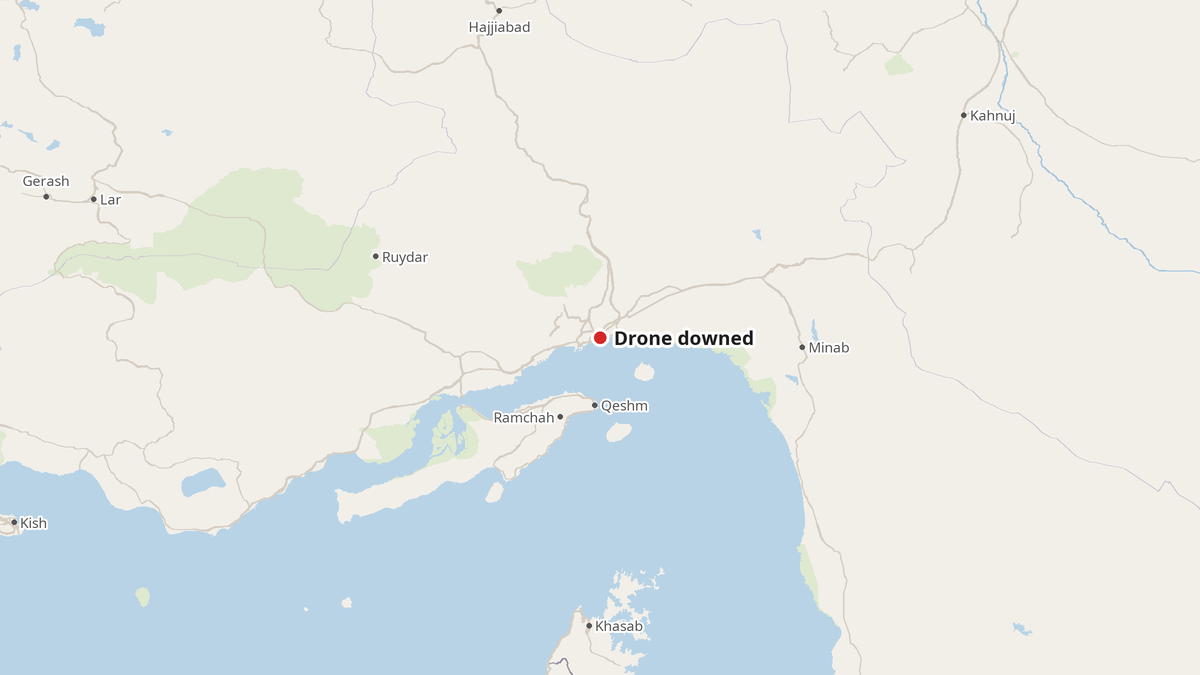
At a televised event in Tehran on Sunday, Araghchi said a resumption of war wouldn’t change Iran’s positions. “Whether there is war or not, our policies remain the same,” he said. Iran’s army also claimed its air defenses shot down a U.S. LUCAS drone over the port city of Bandar Abbas on Sunday, according to Tasnim. The report gave no further details.
A Diplomatic Track Without Traction
An April 8 ceasefire ended the most intense fighting, aside from sporadic exchanges around the strait. In June, Iran and the United States agreed to a memorandum of understanding, brokered with help from Pakistan and Qatar, that envisaged restoring shipping, lifting the blockade and opening talks on Iran’s nuclear program. The agreement unraveled as each side accused the other of violations. Tehran now calls for a return to it. Negotiations have been deadlocked for months, and Trump has repeatedly warned that failure could lead to a U.S. attack after the early-November midterms.
Sina Toossi of the Center for International Policy said the consensus in Tehran is that “deterrence requires imposing immediate, sustained and substantial costs on its adversaries.” Saeid Golkarat, an expert on the Revolutionary Guard, cautioned that Iran “runs the risk of overreaching if it tries to make good on all its threats.”
Why This Matters: The two governments are arguing over sequencing: who moves first on the strait and the blockade. The people most exposed to failure have no seat at the table. Gulf residents who depend on power plants, airports and desalination-adjacent infrastructure have, in effect, been named as potential targets. A framework that Pakistan and Qatar helped build in June already exists on paper, and both sides say they want it, yet neither has found a way back to it. Each week of deadlock narrows the room for diplomacy, and a collapse would hit civilians across the region first.
- iran
- united states
- strait of hormuz
- donald trump
- iran nuclear program
- military strikes
- iran blockade
- pakistan