
Iran's parliamentary foreign affairs chief has asked authorities to allow "the use of deterrent weapons, including nuclear weapons, in the event of a US attack on Iran," Iran International reported. Mohammad-Saleh Jokar, head of the International Affairs Committee, also called for suspending Iran's cooperation with the Nuclear Non-Proliferation Treaty if an attack comes. Countries hosting U.S. forces in their territory or airspace, he said, would face a "harsh response" and "pay a heavy price."
That is the backdrop to a weekend of contradictory signals out of Tehran.
Conflicting Messages on the Strait
Iran's ambassador to Islamabad, Reza Amiri Moghadam, said Saturday that Tehran had told Pakistani mediators it was ready to reopen the Strait of Hormuz if Washington lifted its blockade of Iranian ports. He said the position was conveyed during visits to Tehran by Pakistan's army chief, Field Marshal Asim Munir, and accused President Donald Trump of rejecting it by insisting the blockade would continue.
A source affiliated with the Revolutionary Guard Corps told the Tasnim news agency something very different. The source called an Al Arabiya report of the proposal "lies and fantasy." "Iran fundamentally does not accept any equation of the Strait of Hormuz in exchange for the blockade," the source said, adding that Tehran would find ways around the blockade and ultimately break it. Tehran, the source said, stood by seven conditions already conveyed through mediators, and insecurity would persist until its demands were met. Tasnim's denial addressed the Al Arabiya report specifically, not Moghadam's remarks as relayed by the Associated Press.
The two accounts can't both be the whole story. Iran says it wants a return to a June memorandum of understanding brokered by Pakistan and Qatar, which envisaged restoring shipping, lifting the blockade and opening talks on Iran's nuclear program. That agreement unraveled as each side accused the other of violations. Meanwhile Iran has claimed control of the strait since the war began and regularly targeted vessels crossing without its authorization.
The Military Picture
Trump left both options open Saturday. "There's a possibility I will. There's also a possibility we'll have a nice big beautiful agreement," he told reporters. Of Iran's leaders he said: "They want to make a deal. But the problem is, will they hold the deal?" Ending the campaign after the 2025 B-2 bomber strikes, he argued, would have let Iran rebuild its nuclear capabilities and eventually develop a bomb. "I've got to make it permanent," he said.
The Hill, citing two people familiar with planning, reported that the U.S. military had prepared options for renewed strikes after the November midterms, with Central Command holding follow-up plans subject to White House authorization. The Wall Street Journal reported that sailors were loading munitions and readying aircraft aboard American warships, including the USS George Washington carrier strike group. A Pentagon official said the department's "job is to develop and present military options to the President."
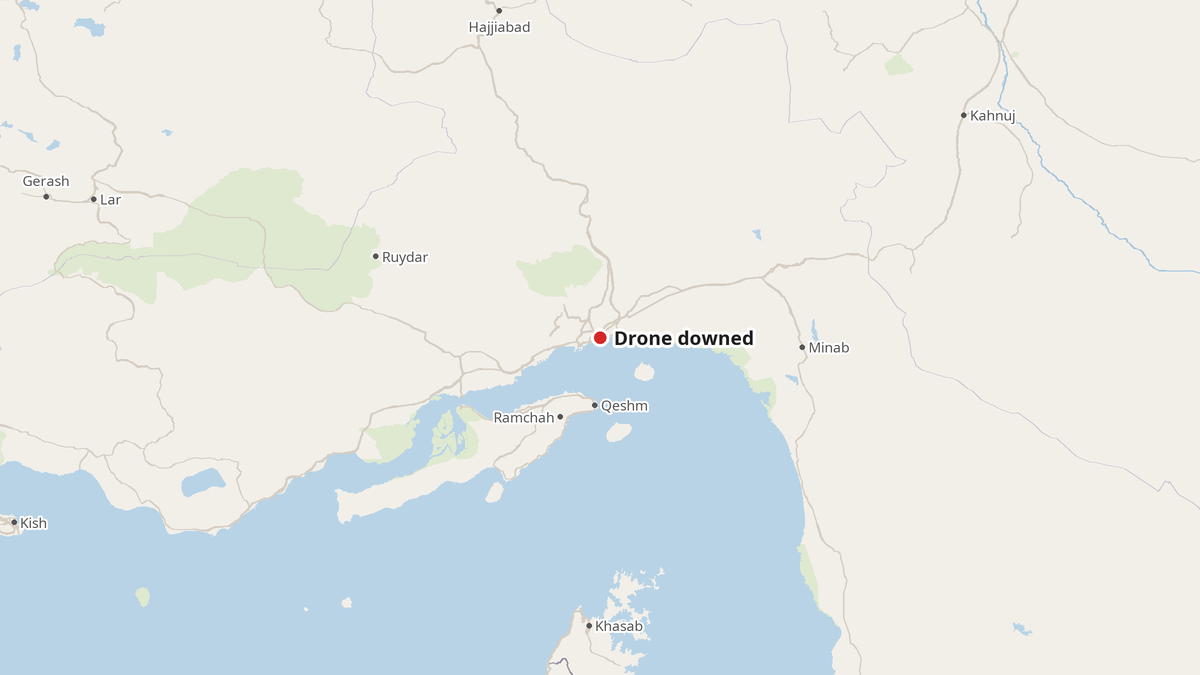
Iran's army said Sunday that its air defenses shot down a U.S. LUCAS drone over Bandar Abbas, according to Tasnim. The report gave no further details.
Foreign Minister Abbas Araghchi dismissed the threats. "Whether there is war or not, our policies remain the same," he said, adding that "our region must move towards the complete absence of foreign forces." In the Financial Times he warned that new attacks would put civilian lives and the global economy at great risk.
Gulf Infrastructure in the Crosshairs
The Jerusalem Post, citing the Wall Street Journal, said Tehran had threatened, publicly and through diplomatic channels, to hit U.S. bases and warships along with energy infrastructure, gas pipelines, airports and other civilian targets across the Persian Gulf. It reported that energy and industrial facilities in the United Arab Emirates, and gas plants and airports in Qatar, Dubai, Kuwait and Bahrain, had already been hit in the fighting.
The Pentagon said up to 90% of Iran's drones, missiles and naval industry had been destroyed. Analysts told the Journal that Tehran had resumed missile production in underground facilities and was prepared to widen its retaliation. Sina Toossi of the Center for International Policy said the consensus in Tehran held that deterrence required "immediate, sustained and substantial costs" on adversaries. Saeid Golkarat, a Revolutionary Guard expert, cautioned that Iran risked overreaching and needed to manage a shrinking missile stockpile. Farzin Nadimi of the Washington Institute said Iran could inflict major damage on regional energy and internet infrastructure but would likely lose its own in reciprocal attacks.
An Al Arabiya column by Raghida Dergham, an opinion piece, argued that Gulf Arab states want de-escalation and that Hezbollah's weapons and tunnels put Lebanese infrastructure at risk.
Why This Matters: The dispute over who offered what in Islamabad matters less than the pattern behind it. Tehran's officials send mixed messages to mediators while its parliament's top foreign affairs figure floats nuclear deterrence and threatens states that host American forces. For Gulf governments, the exposure is concrete: pipelines, airports and gas plants have already been hit. For Israel and Washington, the question is whether a deal can be enforced against a government that, by its own Revolutionary Guard-linked account, rejects trading the strait for the blockade. Security guarantees, not another unraveling memorandum, will decide whether anything holds.
- iran
- united states
- strait of hormuz
- donald trump
- iran nuclear program
- military strikes
- iran blockade
- pakistan