
At least 25 seafarers have died in roughly 130 attacks on vessels since the Iran war began, the International Maritime Organization said. The toll comes as the United States and Israel consider a new assault and Washington expands enforcement of its naval blockade.
The danger reaches beyond the battlefield. An internal U.S. Maritime Administration alert warned that merchant ships face attacks from both sides, and that threats have spread beyond the Strait of Hormuz. Higher insurance costs, crew refusals and reduced tanker capacity could follow. The agency didn’t respond to requests for comment.
Seafarers and Shipping Under Pressure
October was the worst month for shipping since the war began, the International Maritime Organization said, with 35 vessels targeted. U.S. Central Command, or CENTCOM, has claimed responsibility for destroying or disabling at least two dozen vessels, some identified as part of the IRGC shadow fleet.
The blockade now reaches further. In a Wednesday advisory, CENTCOM said ships that receive cargo through ship-to-ship transfers from vessels loaded at Iranian ports or along Iran’s coastline could count as evading the blockade, even if they hadn’t entered those areas. CENTCOM said it could stop, board, divert or capture such ships. Vessels that don’t comply could face enforcement action, including force.
The Maritime Administration alert came after CENTCOM attacked the Panama-flagged bulk carrier Ocean Molica for attempting to breach the blockade, as well as unattributed attacks on three other tankers in and around the Strait of Hormuz. Al Jazeera obtained the documents through a Freedom of Information Act request.
On October 12, MARAD administrator Stephen M. Carmel sent the alert to subordinate Michael Yarrington and asked how the insurance market was responding. Yarrington forwarded a summary of rising premiums compiled from news reports, along with details of work considered crucial to MARAD’s war-risk insurance efforts. The details were redacted.
OPEC said insurance for an oil tanker carrying crude from the Middle East to East Asia rose about 200-fold from January to the end of October, reaching $12.29 per barrel. During the war, crude oil and fertilizer prices each rose at various points, by as much as 60% and 112%, respectively.
Todd Huntley, a retired U.S. Navy captain who leads the National Security Law Program at Georgetown University Law Center, said some U.S. officials either failed to consider the shipping risk or ignored it when they ordered and implemented the blockade. “To me, it was pretty obvious this was a likely development given past Iranian actions and threats,” he said.
The Risk of a Wider War
Israeli officials worry that Iran is rebuilding ballistic-missile manufacturing and moving military and nuclear infrastructure underground, sources familiar with the matter told CBS News. Israel’s military is ready for renewed fighting, and its government would prefer a joint operation with the United States. Whether President Trump will order an attack, or what form it might take, remains unclear.
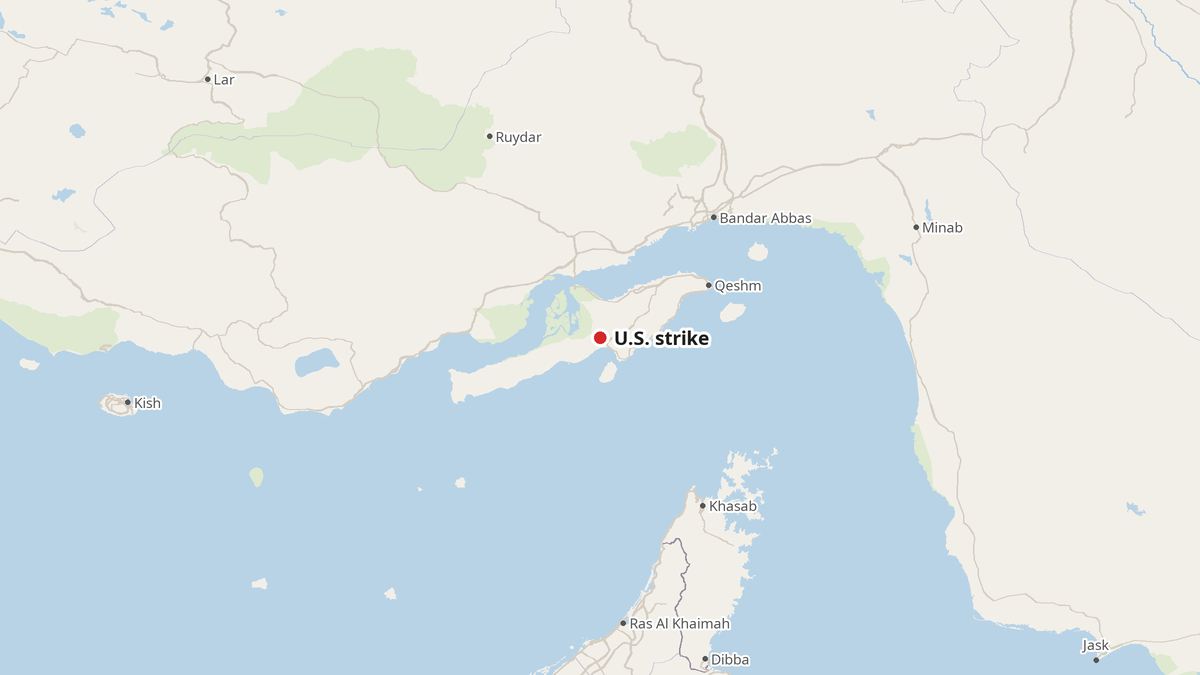
On Tuesday, the U.S. struck Iran’s strategic Qeshm Island in the Strait of Hormuz. American officials called the strike self-defense after Iranian attacks on U.S. assets in Bahrain, which the U.S. military said it intercepted. Iranian strikes on Kuwait this week caused no damage, officials said.
Iranian officials have threatened U.S. military infrastructure in Persian Gulf states, U.S. bases in Europe, Gulf energy infrastructure and undersea internet cables. A statement attributed to Iran’s Supreme Leader Ayatollah Mojtaba Khamenei said that, if open hostilities resume, “there would be no geographical limit for Iranian missiles.”
Andreas Krieg, associate professor in Security Studies at King’s College London, said Iran couldn’t sustainably break the blockade by military means, but could make enforcement politically and economically difficult. He said an attack on an Iranian vessel could prompt retaliation against Gulf energy infrastructure and pull neighboring countries deeper into the conflict.
“The danger is that an operation intended to test American resolve becomes the trigger for another full-scale regional war,” Krieg said.
Accountability and the Diplomatic Standoff
Trump said this week that Iran may be seeking chemical or biological weapons, but offered no evidence. Iran’s Foreign Ministry spokesperson Esmaeil Baqaei rejected the allegations and compared them with U.S. claims before the 2003 invasion of Iraq.
Prime Minister Benjamin Netanyahu’s administration has long accused Iran of seeking nuclear weapons; Iran denies it wants to build them. After Trump withdrew the United States from a previous international nuclear agreement, Iran enriched uranium beyond the level needed for civilian nuclear programs. International monitors believe Iran still has about 900 pounds of uranium enriched to 60% purity beneath damaged nuclear facilities, a short technological step from weapons-grade.
Indirect U.S.-Iran negotiations haven’t produced a ceasefire deal to reopen the Strait of Hormuz. Iran has refused nuclear talks unless the United States lifts its blockade and accepts other conditions, including ending hostilities on all fronts in the Middle East. Trump has repeatedly said Iran wants a deal while threatening further force.
The war remains deeply unpopular in the United States, and CBS News reported it was a key factor in Republicans’ recent midterm defeat. Democrats won control of Congress, but the GOP-led U.S. Senate rejected a measure aimed at curbing the war on Thursday.
Why This Matters: Seafarers have already paid with their lives as merchant vessels face threats from both sides. The blockade also carries costs beyond Iran: the U.S. maritime alert identified risks to crews and shipping capacity, while OPEC documented a sharp rise in tanker insurance costs. Those consequences warrant scrutiny alongside officials’ claims about security and blockade enforcement. Ceasefire talks remain stalled, and new strikes are under consideration. Governments’ choices will shape whether this dangerous confrontation pulls neighboring countries further into war—or whether negotiations can address the impasse before more lives are lost.
- iran
- united states
- israel
- naval blockade
- strait of hormuz
- military strikes
- nuclear program
- ceasefire negotiations