
Iranian attacks on U.S. bases and facilities in Bahrain and Kuwait continued through the week as oil tankers in the Gulf were struck, including one belonging to Emirati oil company ADNOC, and the United States attacked Qeshm Island. The strikes point to a dangerous slide toward another round of war, Haaretz analysis writer Zvi Bar'el reported on Nov. 20, 2026.
Iran's Proxy Network
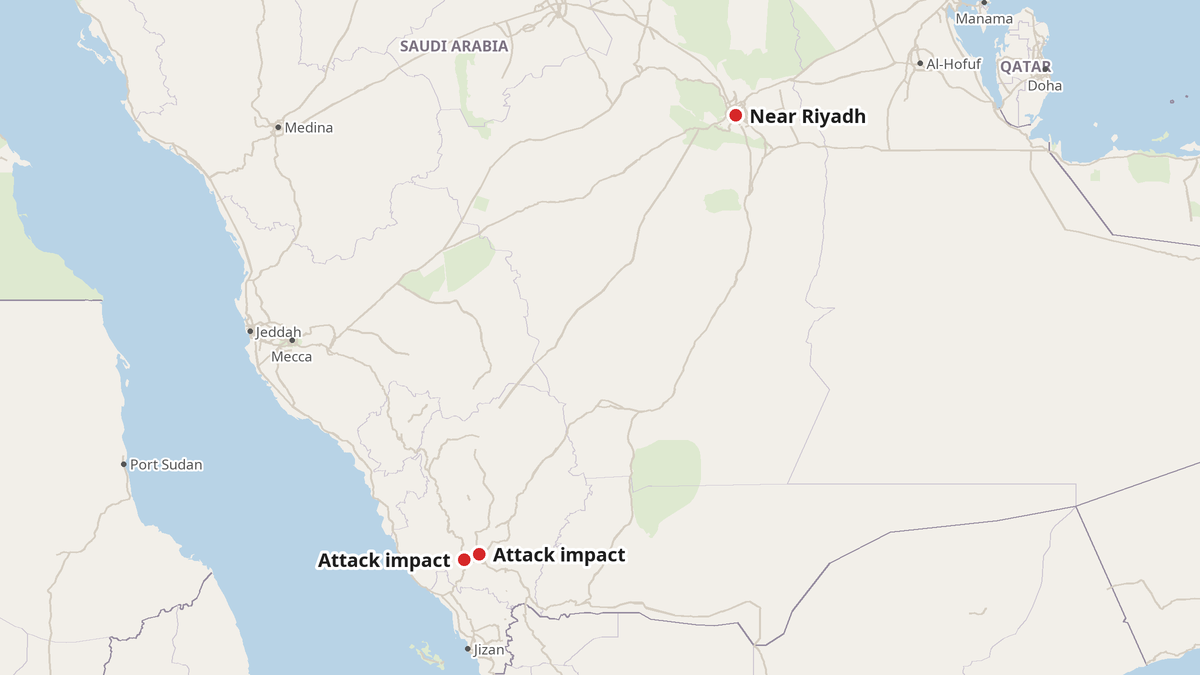
Saudi air defenses intercepted and destroyed a ballistic missile launched by Yemen's Iran-aligned Houthi movement toward the kingdom's southern region on Friday, the Saudi-led coalition said. Saudi Civil Defense also reported intercepting drones in the south and issued early-warning alerts for Jazan, Abha and Khamis Mushait before announcing that the danger had passed.
Houthi-run Al-Masirah TV reported Saudi airstrikes on Sanaa on Friday. Saudi Arabia had not immediately commented on those reported strikes. The Houthis' health ministry said attacks on Yemen's capital had killed 10 people over the past two days as the internationally recognised Yemeni government and the Saudi-led coalition traded fire with the Iran-backed rebel group.
The Houthis also struck a tower in Riyadh's financial centre, Saudi Arabia said. Qatar, Kuwait and the Gulf Cooperation Council condemned the attack. Al Jazeera reported that Saudi-led coalition forces intercepted multiple Houthi missiles, in what it described as the second night of attacks after a skyscraper in Riyadh's business district was damaged the previous day. Its live-update headline said the conflict was leaving a “lasting mark” on global energy.
Southern Saudi Arabia, which borders Yemen, has repeatedly faced Houthi missile and drone attacks on military installations, airports and energy infrastructure. Jazan is home to an Aramco refinery with a capacity of 400,000 barrels per day on the Red Sea coast. The Houthis have previously claimed attacks on the East-West pipeline, which carries crude from the kingdom's eastern oilfields to Red Sea export terminals, bypassing the conflict-hit Strait of Hormuz.
Khamis Mushait hosts King Khalid Air Base, which the Houthis have repeatedly said they targeted. The latest attacks in the south came less than a day after Riyadh's tallest skyscraper, the headquarters of the Saudi sovereign wealth fund, was struck in a Houthi attack on Thursday.
Threats to Gulf Infrastructure
Attacks between Saudi Arabia and the Houthis resumed in July after a period of relative calm following a 2022 truce. The Houthis have since stepped up missile and drone attacks on Saudi territory, while Saudi Arabia has carried out airstrikes against Houthi targets in Yemen. Saudi Arabia intervened militarily in Yemen in 2015 to support the internationally recognized government against the Houthis, who seized Sanaa in 2014 and control much of northern Yemen.
The conflict's impact reaches beyond the battlefield. Oil tankers in the Gulf have been struck, and attacks have threatened Saudi oil infrastructure, including facilities and routes used to move crude. The available reporting identifies the Houthi attacks and their targets; it does not establish that civilian buildings were being used for military purposes.
U.S. Military Response and Costs
The USS Theodore Roosevelt reached the western Arabian Sea overnight into Monday, en route to join two other U.S. aircraft carriers amid the Trump administration's pressure campaign against Iran, Al-Monitor reported. A U.S. official confirmed the arrival to the outlet. It marked the first time the Pentagon had shifted three aircraft carriers to the Middle East since the war in Iraq. The Roosevelt was described as joining roughly 20 other U.S. Navy surface warships in the Arabian Sea.
The estimated cost of the Iran war reached $48.3 billion as of Nov. 13, excluding damage to U.S. bases attacked in the Middle East. Arthur Miller, a Pentagon budget official, gave the estimate to the Senate Armed Services Committee on Thursday. It includes military operations and the replacement of equipment and munitions.
Democratic Sen. Richard Blumenthal of Connecticut asked Miller for an estimate of damage to U.S. installations; Miller said he didn't have one. Republican Sen. Roger Wicker of Mississippi, the committee's chair, directed him to try to provide an answer as soon as possible. An Associated Press analysis found that Iran attacked aircraft hangars, systems that detect incoming strikes, warehouses, troop housing and other facilities, causing billions of dollars in equipment damage.
Senator Elizabeth Warren, a Democrat from Massachusetts, cited independent estimates and media reports that the U.S. naval blockade on Iranian shipping cost about $32.5 million a day and an Iranian attack on the Navy's regional headquarters in Bahrain caused at least $400 million in damage. Acting Navy Secretary Hung Cao confirmed the blockade figure but said he couldn't provide a full damage assessment for Bahrain because “it's a nonpermissive area for us to go.”
- iran war
- houthis
- saudi arabia
- united states
- middle east
- aircraft carriers
- oil infrastructure
- military spending