
A six-day local ceasefire in Ukraine's Kherson region expired on Sunday night with no extension announced, and with no violations reported by either side. The truce had allowed hundreds of residents of Russian-occupied Oleshky to leave in a rare joint operation between Kyiv and Moscow. A Ukrainian official told AFP that Russia reportedly refused a proposal from Kyiv's Foreign Ministry to extend it.
The ceasefire was due to expire at 10:59 p.m. Ukraine time (20:59 GMT). It applied to Oleshky and the surrounding area, and it was described as the longest multi-day truce between Russia and Ukraine.
Who Left, and Who Stayed
About 2,000 civilians were in Oleshky when the truce began. They were offered three choices: evacuation to Ukrainian-controlled territory, evacuation to Russian-occupied territory, or staying in the city with replenished food and medical supplies. France 24 reported that residents who had requested evacuation were reunited with loved ones in Ukraine on Saturday, October 31. The city sits on the front line under Russian occupation and faces a humanitarian crisis, with civilians lacking basic necessities.
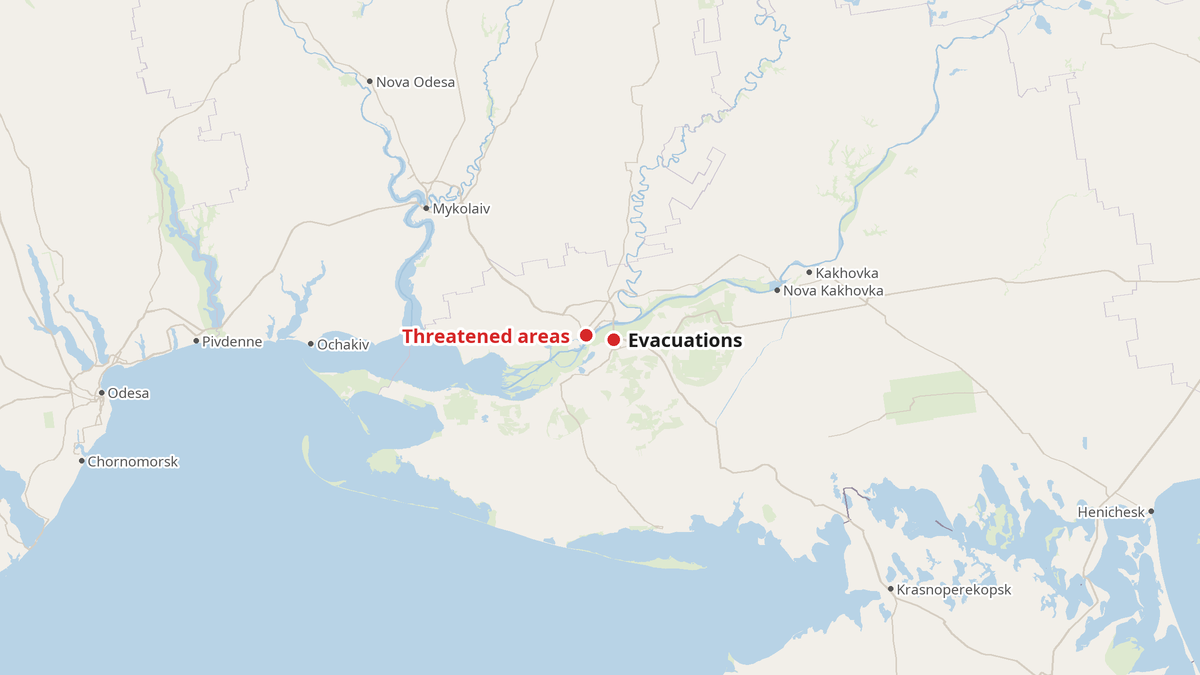
On Sunday, Ukraine's military said it had evacuated 167 more people from threatened areas of the southern Kherson region, including 22 children and 21 people with limited mobility who needed special assistance. "Units of civil-military cooperation of the 'South' group of forces, in cooperation with representatives of local authorities, evacuated 167 civilians to safer points in the Kherson region," Ukraine's General Staff wrote on Telegram.
The diplomacy behind the truce ran through Washington and Rome rather than Brussels. It followed mediation by United States First Lady Melania Trump and involved Pope Leo XIV. Trump said on social media that the ceasefire had given residents "the freedom to move, access to food, clean water, medicine, plus a renewed sense of dignity without the constant threat of attack. Let Oleshky become the starting point for lasting peace." Kremlin spokesman Dmitry Peskov, quoted by Russian news agencies, said Moscow viewed the operation positively, as well as the coordination between the two countries' human rights commissioners.
The Security Picture Resumes
The quiet didn't last beyond the clock. Kherson Governor Oleksandr Prokudin urged residents to stay vigilant as the truce neared its end. "I also strongly urge you not to visit the so-called 'red zones' – areas and settlements near the Dnipro [River]," he wrote on Telegram. "The intensity of Russian strikes there remains high, and the threat to life is extremely high."
In Kherson city, one of the remaining areas of the region still controlled by Ukraine, residents stayed calm. "Don't be afraid, keep holding on," Oleksandr Knyha, head of the Mykola Kulish Kherson Regional Academic Music and Drama Theater, told an audience as he opened a concert. Knyha is from Oleshky and used to commute to Kherson for work. "That's also what keeps me here," he told the Associated Press.
Elsewhere the war carried on at scale. Ukrainian President Volodymyr Zelenskyy said Russian strikes on Sunday left hundreds of thousands of households without power, and that Russia continued targeting Ukraine's energy systems before winter. Attacks on power infrastructure in four regions overnight cut electricity to hundreds of thousands of households, he said. Ukraine's State Emergency Service said a Russian drone strike on the grounds of a vocational school in Vinnytsia killed three people, including a 13-year-old girl, and wounded four others. Drone attacks on Kyiv region for a second consecutive day wounded a woman and damaged homes, energy infrastructure and a retail establishment, regional authorities said.
Drone War Numbers
Ukraine's Air Force said Russia attacked with 433 drones overnight, of which 371 were destroyed or suppressed. On the Russian side, Nizhny Novgorod governor Gleb Nikitin said more than 100 Ukrainian drones were shot down over the region, east of Moscow. Russian media reported that the attack sparked a blaze at the Kstovo oil refinery. Zelenskyy said Ukraine also struck a factory for missile components and air defence facilities in Russia's southern Rostov region. "We are justly defending ourselves against Russian aggression and doing everything to reduce Russia's capability to continue it," he said.
Why This Matters:
The Oleshky truce showed that narrow, practical arrangements can protect civilians even while the broader war grinds on, and that the mediators who delivered it came from outside the EU's own institutions. Its expiry, with Russia reportedly refusing an extension, leaves the energy-grid campaign before winter as the immediate pressure point. For European governments, that carries a fiscal and security consequence: sustained support for Ukraine's air defence and power resilience, alongside the question of whether Europe can carry more of the burden itself. The drone figures, 433 launched in a single night, show the scale of what that defence demands. This is a perspective on the stakes, not a forecast, but the pattern is clear: humanitarian pauses are fragile, and Europe's own capacity to act is what remains when they end.
- kherson region
- oleshky
- ceasefire
- evacuations
- ukraine
- russia
- humanitarian crisis
- melania trump