
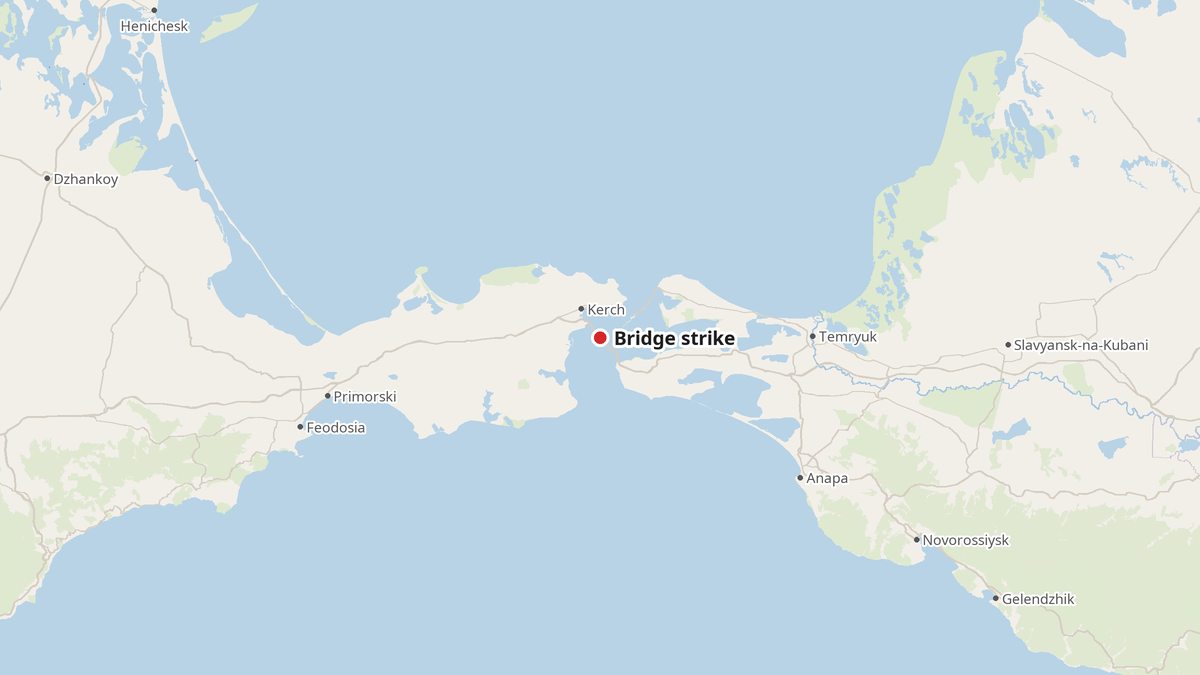
Russian President Vladimir Putin said on Nov. 19 that Moscow would no longer discuss ceasefires covering energy infrastructure and Black Sea shipping after Ukrainian strikes on the Crimean Bridge. His warning removes the prospect of talks on two limited measures Ukraine had sought to protect civilian infrastructure and commercial vessels.
Putin threatened retaliation. “Our retaliatory actions... will be far more painful than what (Ukraine) did to the bridge... With today's precision weapons, it's not that difficult to do,” he said. “We will respond.”
His remarks were his first public reaction to the attacks. Putin said the bridge had sustained “serious damage.” A section of its roadway collapsed after a Ukrainian Flamingo missile strike overnight on Nov. 17.
Security and infrastructure
The Crimean Bridge serves as a critical supply and transport route for Russian forces in occupied Ukrainian territories. It was built after Russia's occupation of the peninsula in 2014.
Putin said he had discussed possible ceasefires covering energy infrastructure and commercial vessels in the Black Sea with members of Russia's Security Council. Those discussions, he said, would not continue after the bridge strikes.
“I asked everyone to think it over and return to this issue in the hope that, perhaps, we might be able to agree on something. But after the strikes ... we will not negotiate,” Putin said.
Kyiv had repeatedly urged Moscow to agree to limited ceasefires covering specific sectors. One Ukrainian proposal offered to halt attacks on Russian oil refineries in exchange for an end to Russian strikes on Ukraine's civilian energy infrastructure. Moscow rejected it.
The limits of negotiations
The latest peace talks in Abu Dhabi had already exposed difficulties over an energy ceasefire. A person familiar with the discussions told the Kyiv Independent earlier that the Russian delegation arrived with strict instructions and showed little willingness to discuss such a measure or other steps to de-escalate the war.
Putin's account placed the Crimean Bridge strikes at the centre of his decision not to negotiate. Ukraine's earlier proposal, however, had already met with rejection from Moscow, according to the account of the proposed exchange.
Russian forces also struck Kyiv's Northern and Southern bridges over the Dnipro River on Nov. 17. Those strikes formed part of a wider attack on cities across Ukraine.
President Volodymyr Zelensky described repeated Ukrainian offers to reduce the fighting and continued Russian attacks on infrastructure. “We have repeatedly offered Russia steps toward de-escalation — and every proposal has been met with loud rejection. Russia strikes our infrastructure every day, including bridges in Zaporizhzhia, Dnipro, Kyiv, and the Odesa region,” he said.
Zelensky said Ukraine was restoring its infrastructure. “But we are also reminding Russia that war will always return to where it began,” he added.
Why This Matters: Putin's refusal to negotiate puts the security of civilian energy infrastructure and commercial vessels at the centre of the conflict. Kyiv had offered to stop strikes on Russian oil refineries in exchange for an end to attacks on Ukraine's civilian energy network, but Moscow rejected the proposal. The reported Russian stance at the Abu Dhabi talks also casts doubt on the prospects for limited de-escalation. With Russian forces striking bridges and Putin threatening a more painful response to the Crimean Bridge attack, Ukraine's infrastructure remains exposed while its government works to restore it.
- vladimir putin
- crimean bridge
- ukraine
- russia
- black sea
- ceasefire
- energy infrastructure
- flamingo missile