
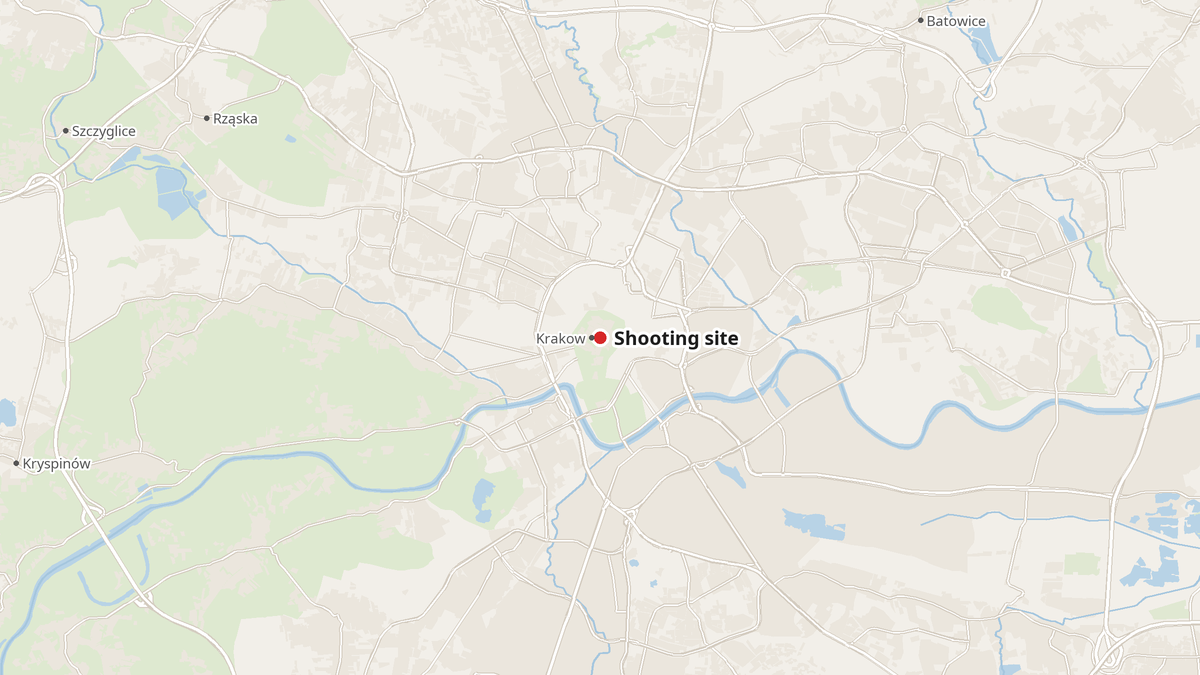
The 24-year-old gunman who killed six people in Krakow's Main Market Square died in hospital on Monday morning, Polish police said, leaving a country in two days of national mourning and a continent asking how far-right violence took root. "We inform you that the perpetrator of the tragic events died this morning in the hospital," police wrote on X.
He had been in critical condition since Saturday's attack, which began shortly before 15:00 local time in one of Poland's busiest tourist destinations. Wearing military-style clothing and a bulletproof vest, the Polish man drove into the square and opened fire from his car, police said. He kept firing even after officers wounded him. Armed officers shot him within three minutes of the attack beginning, which officials said prevented a further massacre.
Human Impact
Six people were confirmed dead: four women and two men. Four of the victims were Polish. A man from the United Kingdom and a woman from Austria were also killed. Sixteen people, including five foreigners, two police officers and the attacker, were taken to hospital. The interior ministry said the foreign wounded came from Austria, Britain, Germany, Portugal and Russia. France 24 described it as Poland's worst fatal shooting since the end of communism 37 years ago.
The two police officers who stopped him, hailed by authorities as heroic, remain in hospital. Both were conscious by Sunday afternoon.
Ordinary people did extraordinary things. Two surgeons eating near the square rushed in because, as Professor Michal Pędziwiatr told the BBC, "there were no ambulances available, there were no professionals around." His colleague, named by local media as Dr Mateusz Wierdak, used his hand to stem the bleeding from the most severely injured policeman, which Pędziwiatr said "undoubtedly" saved the officer's life.
Tourists described flight. Ruby Catherine Warren, from London, "yelled at my friends to run and we all sprinted for our lives." Tom Brook, from West Yorkshire, saw "a dead body covered in foil blankets 20 meters away." By Sunday night, mourners were laying candles and flowers beside the bullet holes. Resident Maciej Sikorski told The Associated Press: "I come here so as not to get caught up in a spiral of fear and anxiety."
A Family Destroyed, a Motive Unresolved
Investigators found the bodies of the suspect's sister, mother and father at the family home in Ostrowiec Swietokrzyski. Police confirmed they were his 53-year-old father, 52-year-old mother and 21-year-old sister; they likely died from gunshot wounds. France 24 reported he is thought to have killed nine people in all.
Four firearms were found in his car, including two AR-15 rifles and two handguns, with several hundred rounds of ammunition, said Przemysław Nowak of the National Prosecutor's Office. Polish media reported the suspect held a firearms permit and may have taken the weapons from his family home. Prosecutors have opened an investigation treating the act as a terrorist offence.
Poland's interior minister said the suspect was fascinated by "far-right ideologies," and a minister described him as an "ultra-nationalist." Nowak said on Monday that investigations into the motive are ongoing. The interior minister's statement drew the ire of the conservative and nationalist opposition, France 24 reported.
Prime Minister Donald Tusk said: "Until now in Poland we haven't had such drastic cases of terrorism...that's what we have to call this cruel attack on people's lives here in Krakow." EU flags flew at half-mast. French President Emmanuel Macron, German Chancellor Friedrich Merz and Italian Prime Minister Giorgia Meloni sent solidarity, as did UK Prime Minister Andy Burnham, who said the United Kingdom "stands in solidarity with the people of Poland."
Jacek Siewiera, the former head of Poland's National Security Council, told Euronews that avoiding terrorist attacks for three decades was a huge success, but that the security apparatus fell short here.
A Week of Political Tension
The grief lands in a polarised week. A high-stakes Constitutional Tribunal meeting is due Tuesday, central to the fight between Tusk's government and its opponents over judicial appointments. The right-wing opposition accuses the government of undermining the constitutional order; the coalition says it is correcting "political" nominations and reforms made by the nationalists. Law and Justice (PiS) called off protests planned for Monday and Tuesday, though they could resume later in the week.
Wednesday's Independence March worries observers most. It draws up to hundreds of thousands of right-wing supporters, from Catholic conservatives to white-supremacist fringe groups and antisemitic, pro-Russian far-right elements. President Karol Nawrocki plans to attend. Tusk dismissed rumours of a ban: "No one intends to ban the Independence March... Speculation on this matter is nothing but disinformation." He urged participants to "refrain from aggression."
Writer Boguslaw Chrabota warned in Rzeczpospolita of "an extremely destructive polarisation" that "gives rise to Polish Breiviks." Political scientist Ewa Marciniak of Warsaw University said tragedies like Krakow "only serve to sharpen political divisions," and with elections due in autumn 2027, about one year away, such events are likely to be used "to deepen conflicts."
Why This Matters:
Six people are dead, a family is destroyed, and Poland has its first case it officially calls terrorism since 1989. The investigation into motive isn't finished, and conclusions shouldn't run ahead of evidence. But the details that are established — a man with a legal firearms permit, AR-15 rifles taken possibly from home, a security apparatus that Siewiera says fell short — raise questions about gun access and prevention that no single country can answer alone. Europe's democracies are also watching how Poland handles grief in a climate of mutual hostility. Marciniak's warning is the test: whether shared mourning can hold before the political season swallows it.
- krakow shooting
- mass shooting
- main market square
- poland
- terrorism
- far-right ideology
- police officers
- krakow