
Hundreds of thousands of people, many of them students and young workers, marched across France on Saturday, October 31, 2026, in the third consecutive weekend of youth-led protests over the cost of living and the state of education. By late evening, the interior ministry said police had arrested 565 people. Some of the demonstrators wore Halloween costumes, from Spider-Man to Frankenstein.
The day's images were split. On one side, families and students in fancy dress marching through eastern Paris in bright sunshine. On the other, masked groups prying up paving stones and hurling them at police, who answered with tear gas, water cannon and baton charges.
Human Impact
The movement began with ordinary grievances: rising living costs, inequality and deteriorating learning conditions. It brings together Yellow Vest activists, trade unions, and high school and university students. Placards in Paris captured the mood. One read: "No need for tear gas to make our future look bleak." Another: "Dressed up as an angry citizen for Halloween."
In Lille, 47-year-old Aurelie Herrmann danced at the march. "I dance because on television they only show damage and destruction, whereas you can perfectly well demonstrate in good spirits," she said.
Authorities counted some 320,000 marchers nationwide, including 70,000 in Paris. Youth organisations put the figure at nearly half a million, with 200,000 in the capital. The gap between the two counts is wide, and it says something about how contested this movement has become.
Violence and the Official Response
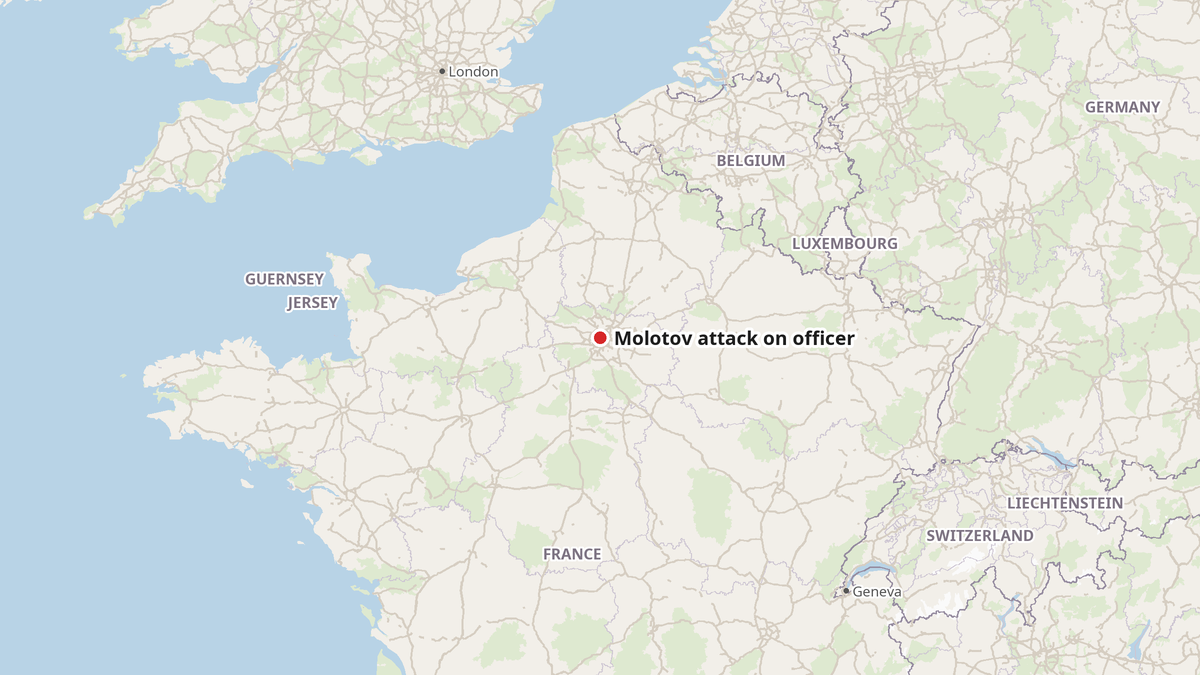
Four police officers and one gendarme were injured in Paris, three of them burned by Molotov cocktails. Interior Minister Laurent Nunez said the marches had been largely orderly but denounced what he called an "extraordinary" level of violence from some protesters, blaming far-left extremist groups for attacks on security forces. He described a Molotov cocktail thrown at a riot police officer in Paris as an "attempted murder", adding that the officer had escaped with minor injuries. "We are fully prepared for those looking for confrontation tonight," he warned.
Marine Le Pen said those responsible must be "punished with the utmost severity", calling images of the officer in flames "unbearable". The interior ministry said "radical elements" in cities including Bordeaux, Toulouse and Marseille had tried to enter city centres to vandalise and loot. In Lyon, projectiles were thrown at police, who fired tear gas. In Toulouse, water cannon was used against an unauthorised protest that drew several thousand people. A night-time curfew was set for the Republique and Chatelet-Les Halles neighbourhoods of central Paris from 11:00 pm to 6:00 am on Saturday and Sunday.
Civil Liberties Enter the Frame
What started as an economic protest has widened. After a security clampdown and serious injuries to some protesters, the movement added demands for greater protection of civil liberties and the right to protest. Alice Hien, a video game developer who marched in Paris, put it plainly: "The fact that demonstrations are being pushed outside city centres, and that so many protests are being banned, is really an attack on freedom."
Student protesters complained that police had not authorised a march through the centre of the capital. They vowed new blockades of high schools and universities next week, including on November 5, when unions have called a demonstration. Jean-Luc Melenchon, leader of the far-left France Unbowed party, joined the Paris march and hailed the turnout.
A Febrile Political Moment
The unrest comes less than six months before presidential elections, with Le Pen topping opinion polls. France is the eurozone's second-largest economy, now on the brink of recession and under pressure to rein in its debt, which leaves the government limited room to answer protesters with extra spending.
France isn't alone. Mostly young protesters have recently taken to the streets in Belgium, Ireland, Spain, Portugal, Italy, Greece, Serbia and Albania as well.
Why This Matters: The facts here point two ways at once. A Molotov cocktail thrown at an officer is violence, and the injured officers are real. But so are the young people who say their futures look bleak and who now find the right to march itself contested. With the same anger surfacing from Lisbon to Belgrade, this isn't a purely French problem, and it won't be settled by policing alone. A government with little fiscal room, a presidential campaign under way and a far-right leader leading the polls faces a hard test: whether it can answer cost-of-living and education grievances, and protect the right to protest, before the street fills again on November 5. For the centre-left, the task is to keep the focus on those grievances rather than let the violence define the movement.
- france protests
- cost of living
- education
- police clashes
- laurent nunez
- marine le pen
- paris
- yellow vest